The train doors slide open with a crisp, mechanical hiss, spilling commuters onto the platform of a quiet suburban station in Chiba. It is a scene of rhythmic, grey-toned precision. Among the crowd is Kenji, a retired schoolteacher who has lived in this neighborhood since the concrete was poured forty years ago. He knows the weight of every silence in his town. He knows the routine of the morning sun hitting the local shrine.
Then, there is the sound.
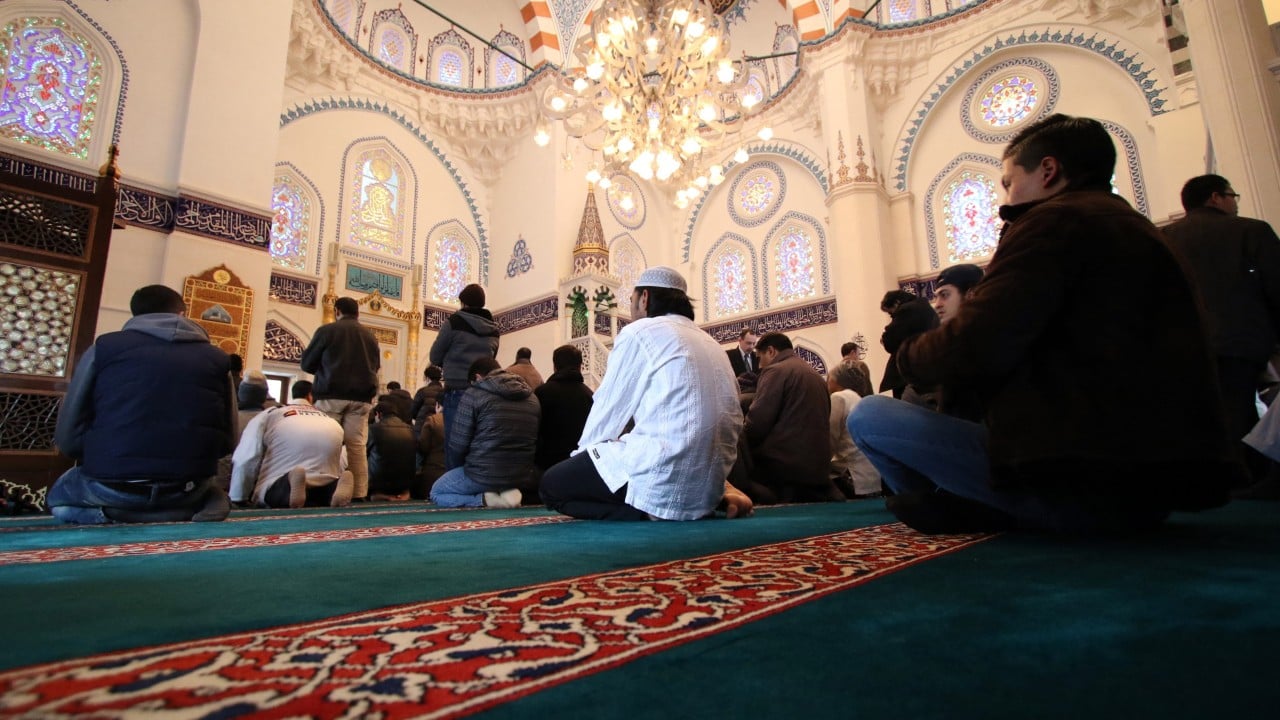
It is not loud, but it is distinct. It is the rhythmic, melodic cadence of the Adhan—the call to prayer—issuing from a newly repurposed house on a narrow side street. To Kenji, it feels like an unexpected tremor beneath his feet. He does not hate the newcomers who have gathered there, but he feels an ache in his chest. A sense of displacement. The familiar lines of his world are shifting, and he cannot find the edge of the new map.
This is not a story about religion. It is a story about the fragility of belonging.
Japan, a nation famously defined by its homogeneity and its unspoken social contracts, is experiencing a quiet, profound demographic pivot. For decades, the Muslim population here remained a whisper, consisting mostly of international students or transient businessmen passing through the glass towers of Shinjuku. But that time has passed. Today, roughly 200,000 Muslims reside in Japan. They are families. They are workers. They are becoming neighbors.
They are building mosques.
In the eyes of a local resident, a house of worship is more than bricks and mortar. It is a permanent marker of presence. When a mosque opens in a sleepy neighborhood, it signals that the transient has become the rooted. And for a culture that places a premium on wa—social harmony achieved through collective adherence to established norms—the sudden appearance of an institution that does not share those historical rhythms can feel like a jagged tear in the fabric.
Consider the neighborhood of Oita or the tension that flickered in Niigata. Residents gathered, not with torches, but with petitions. They worried about parking. They worried about the sound. They worried about the loss of the quiet, orderly life they had spent a lifetime curating.
Beneath the bureaucratic complaints about zoning permits and traffic flow, there is a much more human fear. It is the fear of being misunderstood in one’s own backyard.
My own experience with this friction comes from a small town further north. I watched as a local community hall was purchased by a collective of Bangladeshi families. The initial reaction was a stiff, polite wall of silence. I remember sitting in a meeting where an elderly woman stood up, her hands trembling slightly. She didn’t speak of theology. She spoke of her fear that she would no longer know how to greet her neighbor when they met at the trash collection point.
The analogy here is like trying to play a symphony when the new arrivals are playing a different composition entirely. Both are beautiful, but in the same room, they create a dissonance that feels like noise.
But there is another side to this, one that rarely makes the headlines.
Meet Malik. He arrived in Tokyo fifteen years ago, a software engineer with a dream of building a life. He spends his weeks navigating the hyper-polite, high-pressure world of Japanese corporate culture. He bows correctly. He drinks the cold tea. He absorbs the silence. But on Fridays, he walks into that house in Chiba. For those moments, he is not the "other." He is just a man finding a sliver of home.
Malik is not trying to erase the local culture. He is not trying to colonize the street. He is simply trying to survive the alienation that comes from living in a society that was never built for him.
The friction arises because the two sides are speaking past one another. The residents see a mosque and think of a loss of privacy, a loss of the "old ways." The Muslims see a mosque and think of survival, of a place to teach their children who they are before the world washes that identity away.
The stakes are invisible but immense. Japan faces a shrinking population. The demographic winter is real, and the tax base is crumbling. The country needs these newcomers, yet it hasn't yet found a language for their integration. The conflict over these mosques is a proxy war for a much larger question: Can a society built on the bedrock of a shared, centuries-old identity ever truly make room for someone who arrives with a different set of sacred memories?
Resistance is not always rooted in malice. Sometimes, it is just the biological reaction of a system trying to protect its equilibrium. But the world is growing smaller, and the borders of the mind are proving more difficult to guard than the borders of a country.
Perhaps the solution does not lie in the legal battles or the shouting matches in town halls. Perhaps it lies in the awkward, stuttering conversations that happen on the sidewalk. It starts when a neighbor finally asks, "Why do you pray at that hour?" And it grows when the answer is given with the patience of a stranger who hopes to become a friend.
In the end, the mosque stands. The train continues to arrive at the station. Kenji walks past the building, his pace slowing, his eyes scanning the windows. He is still uncomfortable. He is still mourning the loss of the world he knew. But he looks at the young girl walking out the door in a hijab, clutching a schoolbag, and he gives a small, stiff nod.
It is not an embrace. It is not an end to the tension. But it is an acknowledgment of a shared space.
The sun sets behind the hills of Chiba, casting long, golden shadows across the street. The calls to prayer have faded. The train whistle blows in the distance, a lonely, industrial sound that cuts through the dusk. Two worlds exist here, side by side, pressing against each other like tectonic plates, waiting to see if they will shatter or simply settle into a new, complex geometry of life.
The silence that follows is not empty. It is heavy with the weight of everything left unsaid, and everything still waiting to be discovered in the space between two prayers.