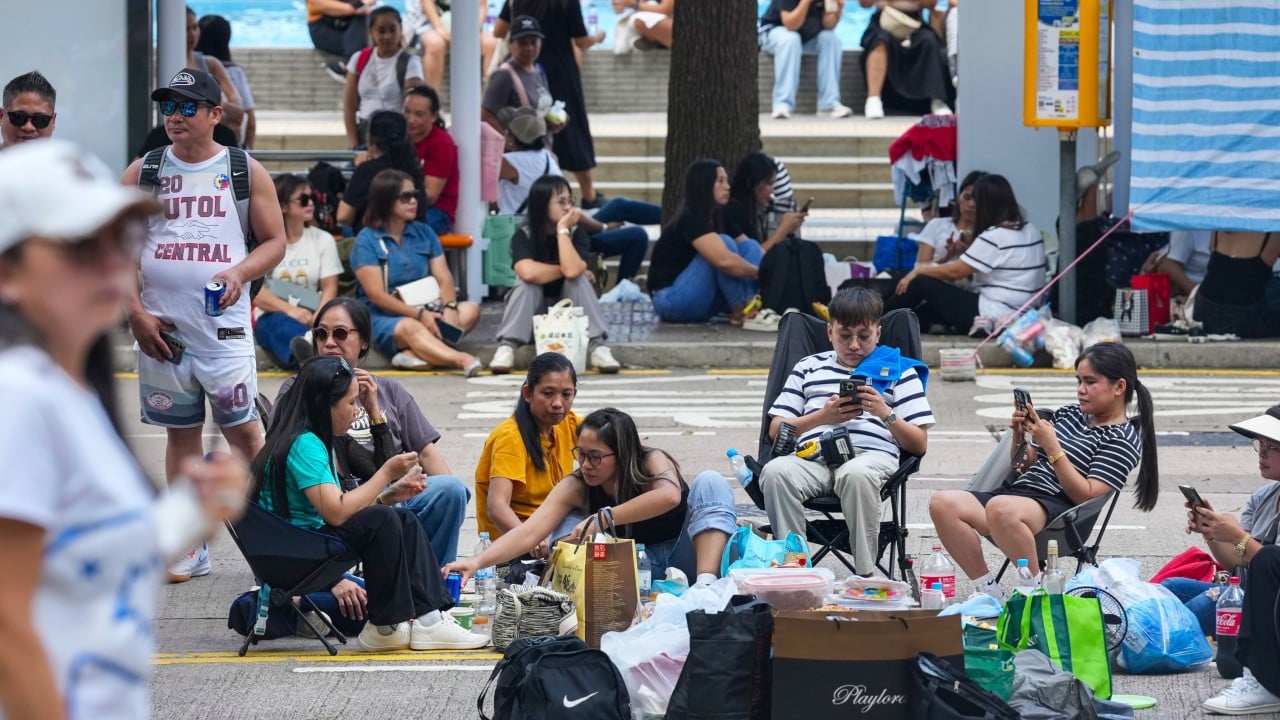
The fluorescent lights of Hong Kong’s Central MTR station hum with a peculiar energy on any given Sunday. Walk through the pedestrian subways, and the concrete is invisible. It is covered in cardboard. On these flattened boxes sit thousands of women, packed shoulder to shoulder, sharing plastic containers of adobo, painting each other’s nails, and laughing over the roar of transit crowds.
To a passing tourist, it looks like a massive, weekly street party. To anyone who looks closer, it is a survival tactic.
These are the city’s foreign domestic helpers, primarily from the Philippines and Indonesia. For six days a week, they cook, clean, and raise the children of Hong Kong's middle and upper classes. On the seventh day, the law mandates they leave their employers' homes for twenty-four hours. But in a city where a tiny apartment costs a fortune and a coffee can equal a few hours' wages, the sidewalk becomes their living room.
But what happens when Sunday ends? Or worse, what happens when the job vanishes overnight?
Consider a hypothetical worker named Maria. She is thirty-two, holds a degree in education from a province in Luzon, and left her own two children behind to care for someone else's toddlers in a high-rise in Kowloon. One Tuesday morning, her employer loses their job, or relocates, or simply decides the arrangement isn't working. Maria is handed her termination papers and two weeks' wages.
By Hong Kong law, she now has exactly fourteen days to find a new employer or leave the territory.
Now consider the immediate, physical crisis of that moment. Where does Maria sleep tonight? She cannot stay in the employer’s home; the contract is severed. She cannot afford a hotel. A hostel bed will eat her meager savings in forty-eight hours. The glittering skyline of Asia’s world city suddenly transforms into a labyrinth of locked doors.
This is the invisible stakes of the domestic worker crisis in Hong Kong. It is a reality that exists in the shadows of the city's towering financial success. While the macroeconomic data points to a robust labor market, the human ledger tells a different story. The vulnerability is structural, woven into the very fabric of the live-in requirement that governs nearly 340,000 migrant workers in the city.
For years, non-governmental organizations and charities have tried to plug these gaps, turning church basements and cramped apartments into makeshift sanctuaries. But these spaces are perpetually overflowing. They are band-aids on a systemic wound.
A new beacon of hope currently sits empty, waiting for bureaucratic gears to turn. A dedicated charity has completed preparation on a brand-new, purpose-built shelter specifically designed to house Filipino domestic helpers who find themselves displaced, distressed, or in legal limbo. The beds are made. The kitchen is ready. The structural blueprints have been approved by engineers.
Yet, the doors remain locked.
The project is currently suspended in a state of administrative animation, awaiting the final official green light from the Hong Kong government. It is a classic bureaucratic bottleneck. Fire safety certifications, zoning verifications, and cross-departmental sign-offs form a barrier as impenetrable as concrete. While papers sit on desks in climate-controlled government offices, women continue to navigate the precarious edge of homelessness.
To understand why this shelter matters so deeply, one must understand the unique vulnerability of the terminated domestic worker. When an average professional loses a job, they lose an income. When a domestic helper loses a job, they lose their income, their shelter, their legal right to exist in the city, and their ability to send money back home to families who depend on them for food and schooling. It is a total erasure of security in a single afternoon.
The legal framework compounds this pressure. The "two-week rule" was originally designed to prevent workers from job-hopping, but its practical application often forces women into a corner. If a worker accuses an employer of abuse or non-payment of wages, she must remain in Hong Kong to pursue the case in court. However, she is legally forbidden from working during this period. She becomes a person trapped in place, legally required to stay, legally forbidden to earn, and practically unable to afford shelter.
Without a dedicated facility like the new proposed shelter, these women are forced into the unregulated underbelly of boarding houses. These are often crowded, unregistered rooms where dozens of workers sleep in shifts on bunk beds, paying exorbitant daily fees to employment agencies who exploit their desperation.
The proposed shelter represents more than just a roof and a mattress. It represents dignity. It provides a space where a woman can process the trauma of sudden unemployment without the immediate fear of where she will lay her head that night. It offers a centralized location where legal aid, psychological counseling, and re-employment resources can be delivered efficiently.
The delay in opening this facility highlights a broader, cultural cognitive dissonance. Hong Kong’s economy relies heavily on this workforce. Without foreign domestic helpers, thousands of local women would be forced to exit the workforce to handle childcare and eldercare, causing a massive contraction in the city’s productivity. The labor of these migrant women is the invisible scaffolding holding up the middle-class lifestyle of the city.
Yet, when the scaffolding buckles, the system is slow to offer support. The argument from official quarters often centers on regulatory compliance and the prevention of precedents that might encourage illegal immigration or strain public resources. These are logical, administrative concerns. But administrative logic looks incredibly cold when contrasted with the sight of a woman sleeping in a public park with her entire life packed into two striped nylon bags.
The solution does not require a overhaul of the entire immigration system overnight. It requires a recognition of immediate, humanitarian necessity. The approval of a charity-run shelter costs the public purse nothing; it merely requires the expediting of paperwork that has already been vetted for safety and compliance. It requires the bureaucracy to move at the speed of human crisis rather than the speed of committee meetings.
The wait continues. Every day the green light is delayed is another day that displaced workers must rely on the charity of friends, the kindness of strangers, or the cold concrete of public plazas.
As night falls on Sunday, the cardboard sheets in Central are folded up. The plastic containers are packed away. The laughter fades, replaced by the clatter of suitcases rolling toward subways as thousands of women return to the apartments where they work. But for those who have no apartment left to return to, the end of Sunday is not the start of a work week. It is the beginning of a terrifying blank space.
The beds are ready inside the new shelter. The sheets are clean. The keys are cut. All that is missing is a single signature on a government document to turn an empty building into a sanctuary.