The kitchen table in the Rizzolo home holds a silence that carries more weight than any physical object. On ordinary mornings, it used to be the epicenter of a predictable, beautiful chaos. Breakfast plates clicking against ceramic, the rustle of school bags, and the bright, unmistakable voice of an eleven-year-old girl named Ava.
Now, the silence is total.
When a tragedy strikes a community, the public record captures the event in a series of rigid, clinical markers. The flashing sirens on the streets of LaSalle, a borough of Montreal. The police tape fluttering in the sharp wind. The emergency vehicles crowded outside an apartment building on a Tuesday evening. The cold text of a breaking news alert pulsing on thousands of smartphones across Quebec. But those facts only outline the perimeter of the loss. They do not tell you about the unfinished drawings left on a desk, or the sudden, agonizing transition a father must make from raising a child to protecting her memory.
For Nick Rizzolo, the world fractured permanently on that Tuesday. Ava was not just his daughter; she was his compass. She was a vibrant young girl with an infectious laugh, a love for her family, and a future that should have stretched out for decades. Instead, her life became a story cut short in a moment of unimaginable violence, leaving a father to navigate a landscape of grief that few can truly comprehend.
The Anatomy of an Echo
Grief does not arrive all at once in a grand, dramatic wave. It waits in the small corners of a house. It hides in the routine tasks that used to be shared.
Consider what happens next when a parent walks into a room and realizes they no longer need to buy a specific brand of cereal, or when the time for the school bus passes and the front door remains firmly shut. The human mind is built on these tiny, repetitive loops of expectation. When the subject of those loops is suddenly gone, the brain keeps reaching out into the empty air, grasping at nothing.
"She was my best friend," Nick Rizzolo said, his voice carrying the exhaustion of a man who has spent days staring into the abyss of an altered reality. "She was my everything."
Those words are often used in the wake of a loss, but for those who watched the bond between the father and daughter, they were a literal description of their daily life. Ava was a fixture by his side. They shared a sense of humor, a quick-witted approach to the world, and a deep, unspoken understanding. In a tight-knit community like LaSalle, their presence together was a familiar comfort to neighbors and friends.
To understand the scale of this loss, one must understand the neighborhood itself. LaSalle is a place defined by its proximity to the St. Lawrence River, a mix of quiet residential streets, parks, and multi-family duplexes where generations of families often live blocks apart. It is the kind of community where children play outside and neighbors recognize each other's cars. It is not a place where people expect the outside world's violence to breach the front door.
But violence is indifferent to geography.
The Invisible Weight
When the news first broke of the tragedy inside the LaSalle apartment, the immediate reaction from the public was a demand for details. People wanted to know the how, the why, and the who. It is a natural human instinct to seek a sequence of events, to find a cause-and-effect chain that makes sense of the senseless. We want to believe that if we can understand the mechanics of a tragedy, we can protect ourselves from it.
But for the family caught in the center of the storm, the logistics of the event are secondary to the massive, crushing weight of the aftermath.
The investigation will wind its way through the Montreal police department and the court system. Investigators will meticulously log evidence, interview witnesses, and compile a timeline of that fateful evening. Attorneys will debate the legal definitions of accountability. Journalists will write updates as each new piece of information is entered into the public record.
None of that matters to a father standing in a quiet bedroom, looking at a collection of stuffed animals.
The true cost of these events is paid in the currency of the unsaid. It is the high school graduation that will never happen. It is the wedding day that remains an unfulfilled dream. It is the simple, ordinary conversations about nothing at all that would have taken place over the next forty years.
A Community Forged in Shared Pain
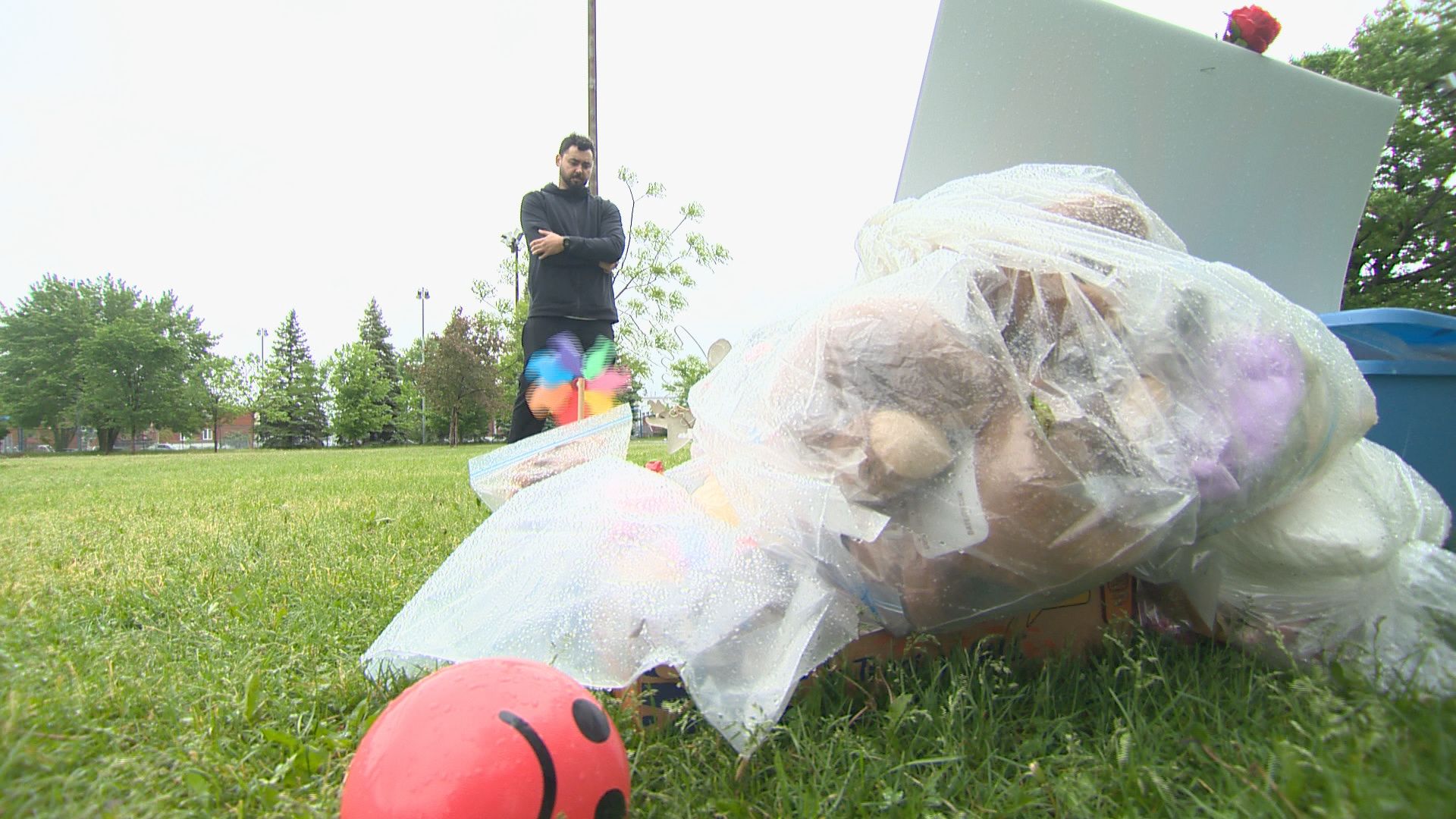
In the days following Ava's death, something shifted in LaSalle. The initial shock gave way to a collective, quiet mobilization of support. Flowers began to pile up near the scene, their bright petals a stark contrast against the gray pavement. Stuffed animals, handwritten notes from schoolmates, and candles created a makeshift sanctuary of public mourning.
This is the dual nature of a community tragedy. It exposes the profound vulnerability of our lives, showing how quickly everything can be taken away. Yet, it also reveals the invisible threads that tie us to one another. Neighbors who had never spoken more than a passing greeting stood together in the cold, weeping for a girl they knew only by sight.
For the Rizzolo family, this outpouring of grief from strangers was both a comfort and a painful reminder of the light that had been extinguished. It showed that Ava's impact extended far beyond the walls of her home. She had woven herself into the fabric of the neighborhood, and her absence was felt as a physical tear in that fabric.
The struggle now is to ensure that the narrative of Ava's life is not defined solely by its end. It is a common trap in the public consciousness to remember a victim only through the lens of the tragedy that took them. The headlines focus on the final hours, the police reports highlight the trauma, and the person themselves can become a symbol rather than a human being.
Nick Rizzolo is actively fighting against that erasure.
The Persistence of Light
"She’ll always live on," he insisted, a flash of fierce determination cutting through the exhaustion in his eyes.
That statement is not a cliché or a comforting fiction. It is a deliberate choice. It is a declaration of resistance against the finality of death. To keep someone alive in memory requires an act of daily, conscious effort. It means telling the stories of her laughter when it hurts to speak. It means remembering her triumphs, her quirks, and her dreams even when the weight of her absence threatens to overwhelm the room.
Ava was a child of Montreal, a girl who loved the city, her friends, and her family with a fierce, youthful intensity. Her legacy is not the yellow police tape that cordoned off her street, nor is it the court dates that will populate the calendar in the months to come. Her legacy is the love she generated during her eleven years on this earth, a love that continues to compel a community to stand together in her name.
The road ahead for the Rizzolo family is long, dark, and entirely unmapped. There are no guides for how to survive the loss of a child, no instructions that can ease the ache of a quiet house. The legal system will do its work, the news cycle will eventually move on to other stories, and the public attention will fade.
But in that apartment in LaSalle, the light will be kept on. The stories will be told. A father will continue to speak his daughter's name into the silence, ensuring that the world never forgets the vibrant, irreplaceable girl named Ava.