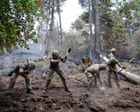
Smoke chokes the valleys long after the flames die down.
If you stand on the ridges above the South Wales coalfield during a dry spring, the air tastes of ash and burnt gorse. It is a familiar, heavy taste for the people living in the shadow of these mountains. For generations, communities across Rhondda Cynon Taf, Neath Port Talbot, and Caerphilly have watched orange glow lines creep up their local hillsides as the weather warms up.
It is brutal, exhausting work. Firefighters spend days hauling heavy knapsack sprayers across treacherous, steep terrain where modern fire engines simply cannot go. They battle not just the wind and dry bracken, but the sheer physical toll of cutting firebreaks by hand under a punishing sun.
Yet, mainstream news coverage usually drops the story the moment the flames are out.
The public forgets until the next dry spell hits. That cycle has to break.
The Reality Behind the Valleys Fire Crisis
South Wales faces a wildfire problem unlike almost anywhere else in the United Kingdom. This isn't just about dry weather or accidental sparks from a discarded cigarette. It is a complex mix of social history, changing land management, and geography.
Decades ago, heavy industry dominated these valleys. Coal mines and steelworks shaped the economy and the local culture. When those industries collapsed, entire communities faced deep economic scars. The landscape changed too. Grazing animals vanished from many upper slopes. Unmanaged bracken, gorse, and scrub grew thick and tall across the mountain plateaus.
When spring arrives, that dead vegetation turns into tinder.
Arson plays a massive role here, though officials often hesitate to talk about it bluntly. A significant percentage of these fires are started deliberately. Young people with few local prospects, boredom, and a lack of constructive recreational outlets sometimes turn to setting fires as a destructive outlet. It is a symptom of systemic neglect. When youth services get slashed and community centers close, the mountains pay the price.
Local fire crews know the hotspots by heart. They track the patterns year after year. But knowing where a fire might start does not stop it from tearing through valuable habitats and threatening people's homes.
What the Official Reports Miss
When government agencies or mainstream outlets report on South Wales wildfires, they lean heavily on standard talking points. They praise the emergency services, warn the public about dry grass, and urge people to report suspicious behavior.
That advice is fine, but it barely scratches the surface.
It ignores the ecological disaster unfolding beneath the smoke. These blazes do not just scorch grass. They destroy peat soils that have stored carbon for thousands of years. They wipe out ground-nesting birds like the curlew and nightjar. They kill amphibians and reptiles that cannot escape fast enough when a wall of fire sweeps across a hillside at twenty miles per hour.
Recovery takes decades, not weeks. Once the topsoil bakes hard under an intense fire, rain washes the nutrients straight down into the rivers. This causes severe runoff issues, choking local waterways with silt and destroying fish populations.
Nobody talks enough about the psychological cost either. Imagine sitting in your living room while a wall of flames creeps down the mountain toward your back fence. Imagine smelling smoke inside your house for three days straight while crews work around the clock. That chronic stress wears communities down. People feel abandoned by policymakers in distant capital cities who view the valleys as a distant, rural problem rather than a densely populated region facing a climate emergency.
Shifting From Reaction to Prevention
Throwing water at burning mountains is a losing battle. Everyone on the ground knows it. The real solution requires a complete shift in how the Welsh landscape is managed and funded.
Prevention starts with the ground itself. You have to bring livestock back to the hills. Heavy grazing by hardy sheep and cattle keeps the bracken and gorse under control naturally, creating green breaks that stop fires from spreading. For years, environmental schemes made it difficult for local farmers to graze their animals effectively on the commons. That policy needs a complete reversal.
Controlled burning—or prescribed burning—is another tool that forestry experts use around the world, though it remains controversial in the UK. When managed by professionals during safe weather windows, clearing small patches of dense scrub prevents massive, uncontrollable inferno seasons later.
At the same time, investment in rural communities cannot be an afterthought. If you want to stop deliberate fires, you have to give teenagers and young adults better options. Creating outdoor education programs, funding local sports clubs, and offering real job training in environmental conservation changes the trajectory of a neighborhood.
Communities want to protect their mountains. They just need the resources to do it.
What Needs to Happen Now
If you want to understand the crisis in South Wales, stop looking at it as a seasonal weather anomaly. It is a year-round challenge rooted in land use, economic history, and climate shifts.
Support local organizations and voluntary groups who work on habitat restoration. If you live in or visit the area, report fire risks immediately, respect access restrictions during high-risk dry spells, and back policies that invest in long-term environmental management rather than short-term emergency responses. The hills deserve better than to burn every single spring.