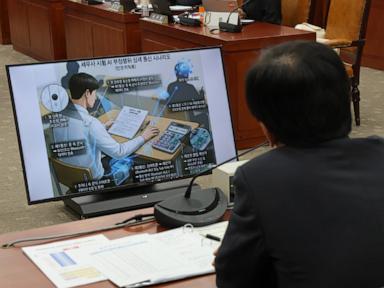
Every November, Western tech journalists rediscover South Korea’s College Scholastic Ability Test—the Suneung—and write the exact same breathless story. Planes get grounded. Stock markets open late. Police cars shuttle panicked teenagers through Seoul traffic. And now, the latest lazy addition to this annual media ritual: officials are terrified that artificial intelligence will ruin the integrity of the exam.
It makes for a tidy headline. It is also completely backwards.
The panic surrounding AI and the Suneung isn't a story about vulnerable test security. South Korea runs the tightest analog lockdown in modern education. Proctors sweep rooms with metal detectors. Smartwatches, digital pens, and even basic electronic erasers are confiscated at the door. Nobody is sneaking ChatGPT into a Suneung testing center on an Apple Watch.
The real crisis keeping education officials awake in Sejong and Seoul has nothing to do with contraband smartphones. It is the realization that the Suneung was accidentally engineered to test the exact cognitive skills that large language models just rendered obsolete.
For decades, South Korea’s hyper-competitive hagwon (cram school) industry perfected an industrial assembly line for human pattern-matching. If you train an eighteen-year-old for twelve hours a day to recognize syntactic traps in English reading passages and execute memorized calculus shortcuts under extreme time pressure, you aren't building a scholar. You are building a biological transformer model. And now, a twenty-dollar-a-month API does the exact same thing faster, cheaper, and without needing three energy drinks to stay awake.
The Security Theater Myth
Let’s dismantle the physical cheating narrative first, because mainstream coverage treats the Suneung like an American high school mid-term where kids hide phones in their hoodies.
Anyone who has actually observed the administration of the Suneung knows the security apparatus rivals an international border crossing. Months before exam day, the Korea Institute for Curriculum and Evaluation (KICE) locks its test-writing committee—hundreds of professors and high school teachers—in a secret, undisclosed resort. Their phones are confiscated. Their trash is inspected before leaving the compound. Nobody enters or exits until the exam concludes nationwide.
On test day, every student passes through electromagnetic screening. Even analog watches are scrutinized to ensure no hidden digital components sit beneath the dial. The idea that generative AI poses an acute on-site cheating threat during the exam itself is pure fantasy.
Why, then, are education ministries and university admissions boards scrambling?
Because the cheating isn't happening inside the exam hall. It is happening in the ecosystem around the exam—and worse, in the very design of the questions themselves.
The Killer Question Trap
To understand why AI broke the Suneung’s intellectual foundation, you have to understand "killer questions" (killeo munhang).
Because virtually every top student in South Korea masters the standard national curriculum, KICE historically relied on ultra-obscure, labyrinthine problems to separate the top 1% from the top 0.1%. These weren't questions testing deep conceptual mastery or original synthesis. They were linguistic and mathematical obstacle courses—contorted English paragraphs translated from dense academic journals with artificially twisted grammar, or math problems requiring five layers of obscure algebraic tricks that no university professor would ever use in actual research.
These questions fueled a multi-billion-dollar private tutoring economy in Gangnam's Daechi-dong district. Parents mortgaged apartments to buy access to proprietary mock exams created by star instructors who spent their lives reverse-engineering KICE’s syntactic quirks.
Then researchers fed those exact "killer questions" into frontier language models.
The models didn't just pass. They crushed the trickiest reading comprehension and logic problems in seconds. Why? Because pattern-matching across high-dimensional statistical noise is literally what next-token prediction was built to do. What South Korea treated as the pinnacle of human academic rigor turned out to be a parlor trick of token probability.
Are Universities Asking the Wrong Question About AI Detection?
When people search for how schools are handling AI in high-stakes testing, the dominant queries revolve around surveillance: How do proctors detect AI cheating? What software catches ChatGPT on admissions essays?
Asking how to catch AI cheating on traditional assessments is like asking how to build a better hitching post for horses after the Model T hit the assembly line.
I have watched ed-tech startups and university consortia burn through millions of dollars chasing probabilistic AI-text detectors. Every single one of them hits the same mathematical wall. As language models align closer to human baseline distributions, false positives skyrocket—disproportionately flagging non-native English speakers and neurodivergent writers whose syntax follows rigid, learned rules. Meanwhile, a student who prompts a model to "write like a slightly stressed Korean high school senior with a 750 TOEFL score" bypasses detection effortlessly.
South Korean universities actually learned this the hard way during the early wave of non-exam admissions tracks (susi), which rely heavily on student activity records (saenggibu) and personal statements. Once generative AI hit mainstream adoption, admissions officers suddenly faced thousands of immaculate, deeply reflective student portfolios that read like they were drafted by a McKinsey partner.
The ministry's response? They banned personal statements entirely from university admissions starting with the 2024 academic year and stripped out external awards and unsupervised essays from the student record.
Look at what happened when they removed the essays: the entire admissions system snapped right back onto the Suneung.
And that is the trap. By retreating away from AI-vulnerable essays and doubling down on a closed-room, multiple-choice standardized test, South Korea didn't escape the AI disruption. They walked straight into its jaws.
What Happens When Your National Exam Trains Humans to Lose to Software?
Imagine a scenario where a nation spends twenty trillion won—roughly fifteen billion dollars—every single year in private household spending to train its youth to perform a specific cognitive task. Now imagine that by the time those students graduate from college four years later, the commercial market value of that exact cognitive task drops to zero.
You don't need to imagine it. That is the current macroeconomic reality of South Korea’s education pipeline.
Let's look at the mechanics of what the Suneung rewards versus what an AI-saturated economy actually demands:
- Speed of Recall vs. Quality of Formulation: The Suneung gives students roughly 100 seconds per math question and less than two minutes per dense English passage. There is zero reward for asking whether the premise of the problem is flawed. In an environment where AI generates answers instantaneously, human value migrates entirely to problem formulation—knowing which questions are worth asking and spotting when a plausible-sounding output is subtly rotten.
- Elimination of Ambiguity vs. Navigation of Uncertainty: Multiple-choice exams require every problem to have one defensible, legally airtight correct answer. If a Suneung question has even a whisper of interpretive ambiguity, parents sue, KICE issues public apologies, and officials resign. Real-world engineering, medicine, law, and business operate almost entirely inside ambiguity. Training teenagers for twelve years to panic whenever a problem lacks a single neat multiple-choice bubble induces learned helplessness.
- Solo Isolation vs. Tool-Augmented Synthesis: Taking the Suneung in complete isolation without reference materials is treated as the ultimate measure of merit. Yet no software engineer at Samsung, no researcher at KAIST, and no analyst in Yeouido works in an air-gapped room without computational tools. Measuring human potential strictly by what someone can do without tools is like judging a surgeon's skill by taking away their scalpel and handing them a sharpened rock.
The Uncomfortable Truth About Meritocracy and Standardization
Before we tear down the Suneung completely, let's be honest about why South Korea clings to it with white knuckles—and why Western critics who preach "holistic admissions" usually miss the point.
In a hyper-dense, status-conscious society where a degree from SKY (Seoul National University, Korea University, or Yonsei University) still dictates marriage prospects, corporate hiring tracks, and social standing, subjective admissions are viewed as an open invitation to corruption.
South Koreans remember the high-profile admissions scandals of the late 2010s, where wealthy, politically connected parents fabricated academic internships, falsified research co-authorships, and gamed subjective portfolio reviews while working-class kids played by the rules. When admissions rely on recommendations, interviews, and extracurricular portfolios, rich families buy the narrative.
The Suneung, for all its brutal psychological toll, is ruthlessly egalitarian in one specific way: on the third Thursday of November, a chaebol heir's son and a convenience store clerk's daughter get the exact same sheet of paper, the exact same No. 2 pencil, and the exact same 470 minutes.
That is the trade-off nobody in Silicon Valley wants to admit when they demand that schools "just switch to project-based AI assessments." The moment you replace a standardized, closed-book exam with open-ended, AI-assisted projects, inequality explodes. The student with access to elite private tutors, custom fine-tuned models, and parents who know how to direct complex research will lap the student working alone on a budget laptop in a provincial town.
So if you can't rely on subjective portfolios without inviting corruption, and you can't keep testing robot-grade pattern matching without producing obsolete graduates, how do you actually fix high-stakes assessment?
Three Counter-Intuitive Fixes That Actually Work
You don't beat AI by banning calculators and locking doors tighter. You change the architecture of what you measure. If I were handed the keys to KICE tomorrow, here is how I would rebuild high-stakes assessment from the ground up:
1. Kill Multiple Choice—Bring Back the Oral Defense
You cannot fake understanding when a human examiner asks you why you chose step three over step two.
In France, the Grand Oral of the Baccalauréat forces students to present an argument and defend it under live cross-examination. In Oxford and Cambridge tutorials, professors dismantle a student's essay line by line in real time. You can use whatever AI you want to prepare for an oral defense; the moment you sit across from a domain expert who asks follow-up questions, borrowed intelligence evaporates in thirty seconds.
Yes, oral exams are expensive to scale. Yes, grading rubrics require strict calibration to prevent bias. Record every session on video, blind-score the transcripts and audio with randomized panels from outside the student's region, and audit scoring variance statistically. It costs a fraction of what South Korean parents currently spend on private cram schools.
2. Test Error Detection, Not Answer Generation
Instead of asking students to solve fifty standard calculus or reading comprehension problems from scratch, hand them ten complex, AI-generated solutions—and tell them that seven contain subtle, catastrophic flaws in logic, hidden assumptions, or hallucinated citations.
Make the exam about auditing the machine.
This flips the cognitive hierarchy completely. A student who merely memorized formulas will get seduced by smooth, confident-looking syntax. A student who genuinely understands underlying first principles will spot where the derivation quietly violates a boundary condition or misinterprets a premise. It mirrors the exact workflow of every high-value knowledge job on earth right now: supervising, verifying, and correcting probabilistic systems.
3. Introduce Controlled, Sandboxed Tool Access
Stop pretending software doesn't exist. Create a locked-down, offline testing environment where every student has access to the exact same local, standardized model and computational sandbox.
No internet. No custom prompts pre-loaded from home. Every student gets the exact same raw engine.
Then, make the exam problems ten times harder. If every student has a calculator, you stop testing long division and start testing mathematical modeling. If every student has a standardized language model, you stop testing grammar drills and start testing synthesis across conflicting primary sources, experimental design, and strategic trade-offs. The student who knows how to interrogate the tool, verify its outputs, and synthesize a coherent conclusion wins—and the student who just copies the first output fails miserably.
The Real Threat Isn't in the Exam Room
The headlines warning that "AI cheating fears spook South Korea" treat technology like an external burglar trying to pick the lock on an otherwise healthy institution.
The lock is fine. The building inside is what's burning.
Every year that South Korea spends defending the Suneung against the modern world—banning digital watches, rewriting obscure grammar traps, and pretending that bubble-sheet endurance equals intellectual readiness—is another year spent training the brightest generation on earth to compete head-to-head against algorithms at the exact game algorithms have already won.
Stop worrying about whether a teenager sneaks an AI into the test center. Worry about what happens when they walk out of the test center having spent their entire youth becoming one.