The locker room smells of icy-hot, stale sweat, and old linoleum. If you have ever played competitive sports at any level that mattered, you know that exact scent. It is the smell of shared exhaustion and unspoken promises. You look to your left, and you look to your right. You trust the person sweating beside you with your physical safety, your competitive pride, and, in moments of high-stakes pressure, your emotional sanity. That trust is not built on a handshake. It is forged in the grueling sprints run when the coaches have gone home. It is hammered out in the film room after a brutal loss.
When that trust shatters, it does not make a loud noise. It just cracks.
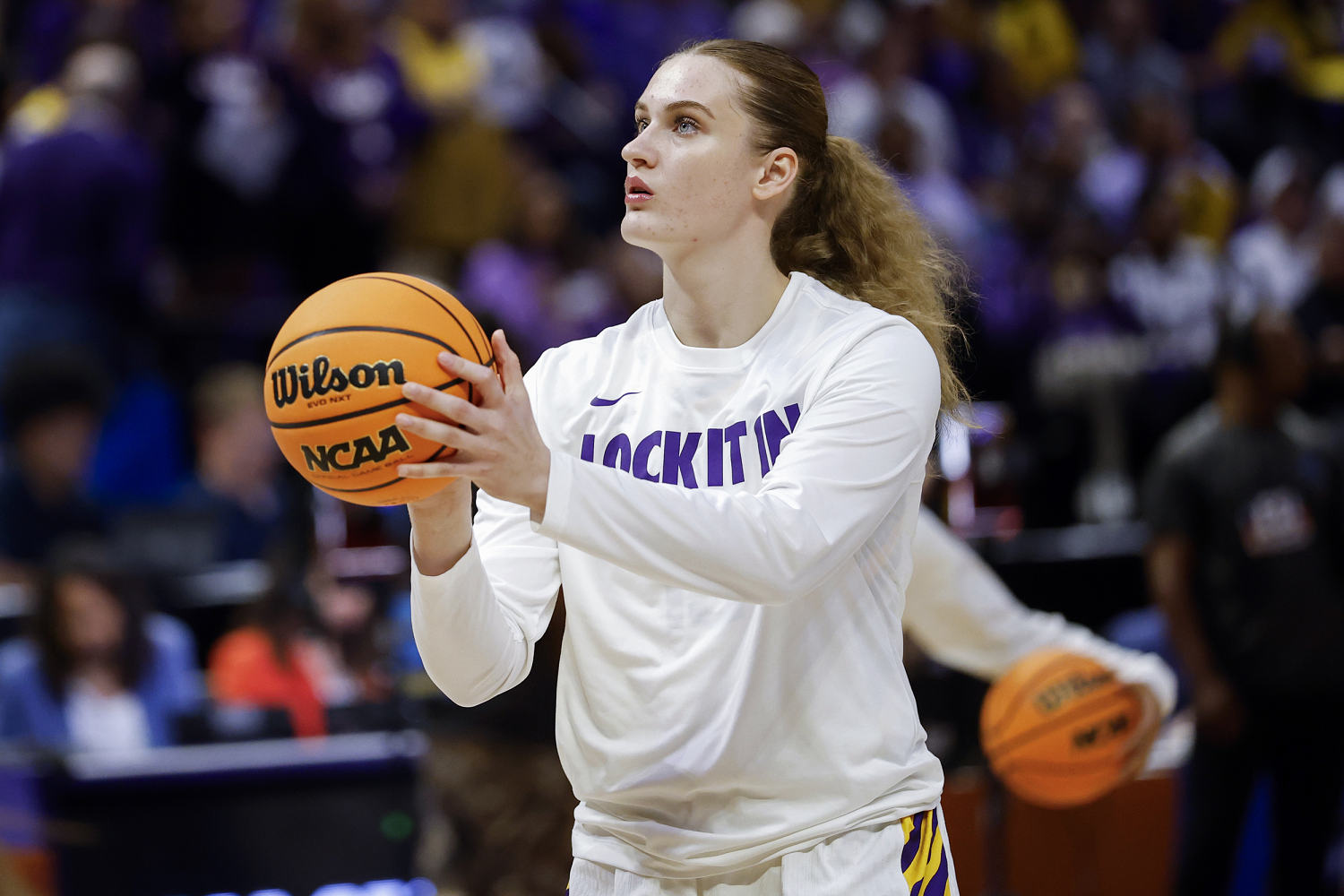
Imagine standing on a court where every bounce of the orange leather is a heartbeat, and suddenly, the rhythm stops. That is what happened at Louisiana State University when a young woman from Ukraine, wearing her purple and gold jersey, looked at the roster sheet and made a choice that cost her everything she had built.
Khrystyna Hrytsyk did not come to Baton Rouge to become a political symbol. She came to play basketball. She came because the hardwood is a universal language, a flat expanse of polished wood where accents disappear under the squeak of sneakers and the sharp blast of a whistle. But language has a way of following you across oceans. It pools in the corners of the gym. It sits heavily in the air when the news alerts on your phone flash with another siren, another explosion, another crater in a city where your friends still sleep in hallways.
Then, the roster changes. A new teammate arrives. She is young, talented, and holds a Russian passport.
To an outsider sitting in the upper deck with a bag of popcorn, this might look like a logistical puzzle for a sports administrator. It looks like a scheduling conflict, or a quirky headline about international diversity on a college campus. It looks like something that can be smoothed over with a press release about sportsmanship and the unifying power of athletics.
Those outsiders have never checked their phone in the middle of a tactical walk-through to see if their hometown is still standing.
Consider what happens inside the human chest when the abstract horrors of geopolitics walk through your front door and start lacing up matching sneakers in your locker room. This is not about basketball anymore. It is about a dissonance so violent that it makes physical play feel pale by comparison. How do you pass the ball to someone whose country is currently leveling yours? How do you celebrate a fast-break layup with a peer whose national flag represents the sirens that wake your mother in the middle of the night?
We love to pretend that sports exist in a pristine vacuum. We build multi-million-dollar arenas and talk endlessly about how the locker room is colorblind, nationality-blind, and politics-blind. It is a comforting myth. It helps us sleep at night, wrapped in the blanket of entertainment. But it is a lie.
The locker room is a mirror of the world, magnified ten times over by adrenaline and pressure. When the world is bleeding, the locker room bleeds too.
Khrystyna Hrytsyk chose to walk away.
Let that sink in. She walked away from an SEC basketball program, from the glittering lights of a powerhouse athletic department, from the scholarship that secured her American education, and from the dreams she had chased since she first picked up a basketball in her native land. People sacrifice a lot to play at this level. Knees are shredded. Relationships crumble. Social lives are traded for conditioning sessions. To willingly walk away from all of that requires a pain that outweighs ambition.
Ambition is a powerful engine. Grief is stronger.
When the news broke, the internet did what the internet does. It flattened a complex human tragedy into a binary shouting match. Comment sections filled with people who have never laced up high-tops outside of a local YMCA began drafting moral verdicts. Some called her brave. Others called her petulant, suggesting she should have put politics aside for the sake of the team.
That second group terrifies me. Because it reveals a fundamental misunderstanding of what a team actually is.
A team is not a corporate office where you tolerate a difficult colleague in the next cubicle because your mutual employer cuts a paycheck. A team is a tribe. It demands a level of intimacy and vulnerability that borders on the sacred. You cannot compartmentalize an existential threat. You cannot simply turn off the news notifications when your family is sleeping in a bomb shelter.
If you ask me about the invisible stakes of this moment, I will tell you they are about empathy exhaustion. We are currently demanding that victims of ongoing aggression be the bigger person, turn the other cheek, and maintain professional decorum while their world burns. We ask the displaced to be graceful. We ask the traumatized to be accommodating. It is a cruel tax we levy on the suffering, all so we can enjoy our Saturday afternoon entertainment without feeling uncomfortable.
Hrytsyk’s departure wasn't a tantrum. It was a boundary. It was the only tangible way a college student thousands of miles from home could say: My reality matters. My pain is not a footnote to your roster depth.
Behind every athletic headline is a human being trying to figure out how to survive the day with their dignity intact. The cold facts of the transfer portal and recruiting cycles will tell you that players come and go. Rosters churn. Programs rebuild. But statistics do not measure the weight of an empty locker. They do not calculate the quiet courage it takes to pack your bags and walk out the gym doors into the Louisiana humidity, choosing your own integrity over a championship ring.
The court is empty now of that specific friction. Practice continues. The balls keep bouncing, echoing off the rafters in an arena designed for noise. But if you listen closely, underneath the squeak of the sneakers and the shouted instructions of the coaches, there is a lingering question that no recruiting class can answer.
What is a game worth when you lose yourself to play it?