The coffee goes cold on the counter. The television hums in the corner of a dimly lit room in Johannesburg, casting a pale, flickering blue light across walls that have heard too many sirens. Another name added to a ledger. Another family told that the mathematics of violence has claimed one more soul, pushing the national death toll from recent mass shootings to twenty-eight.
Statistics are comfortable. They let us file tragedy away under headings and subcategories. Twenty-eight lives extinguished in sudden, concentrated bursts of gunfire. It is a clean, orderly number that fits neatly into a news bulletin. But numbers do not bleed. They do not leave behind half-finished meals, school uniforms draped over chairs, or keys sitting on a hook by the front door, waiting for an owner who is never coming home.
To understand what is happening across communities in South Africa, you have to look past the macro-level political analysis and step into the living rooms where the air feels too heavy to breathe.
When Safety Becomes an Illusion
Imagine walking down a familiar street at dusk. The golden hour casts long, warm shadows over corrugated iron roofs and brick-paved driveways. Neighbors wave. Children kick a deflated football against a fence. It looks like life, ordinary and enduring.
Now, imagine that calm shattering in less than three seconds.
Mass shootings do not happen in cinematic vacuums. They erupt where people gather to celebrate, to drink, to forget the daily friction of survival. A neighborhood tavern. A crowded yard party. A weekend social where the music covers the approach of footsteps.
When automatic weapons speak, they do not negotiate. They do not distinguish between intended targets and bystanders. They simply rewrite reality in a fraction of a second. Twenty-eight deaths mean twenty-eight distinct implosions of community trust. Every single fatality sends shockwaves through dozens of relatives, friends, and coworkers, multiplying the trauma exponentially.
The Anatomy of an Escalation
Why now? Why this sudden, brutal spike in coordinated violence?
The answer lies in a toxic convergence of illicit firearms, local protection rackets, and a profound crisis of institutional deterrence. Weapons that should be locked away in military armories or seized at borders find their way into neighborhood hands with terrifying ease. When law enforcement is stretched thin, responding to hundreds of distress calls across sprawling townships and urban peripheries, informal power vacuums open up.
Local extortion rings operate like shadow governments. They tax the vulnerable. They regulate commerce through intimidation. And when rival factions clash over territory, the disputes are no longer settled with fists or knives. They are settled with high-powered rifles in crowded spaces, treating human lives as collateral damage in a war for economic control of the streets.
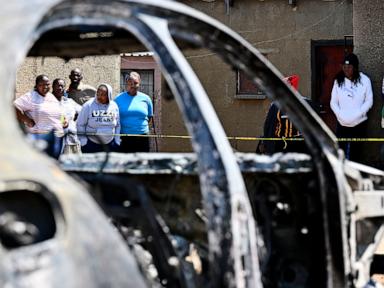
Consider what happens next. The police arrive. Yellow tape flutters in the night breeze. Detectives collect shell casings, logging them into evidence bags. Media crews capture the grief from a respectful distance. For forty-eight hours, the nation is transfixed. Op-eds are written. Politicians issue statements condemning the senseless bloodshed, promising swift justice and heightened security patrols.
And then, the news cycle turns. The cameras pack up.
The yellow tape comes down, leaving only stains on the asphalt. But for the mothers, fathers, and children left behind, the calendar freezes on that single, horrific night.
The Weight of Unanswered Questions
There is a profound exhaustion that settles over a population when survival feels like a game of chance. People begin to alter their daily rhythms. Curiosities fade into caution. Night gatherings shrink. The social fabric—the vibrant, interconnected community life that defines so much of South African culture—begins to fray at the edges.
Fear is an effective architect of isolation. When you cannot trust that a weekend gathering is safe, you stay indoors. You bolt your doors twice. You listen to every passing car, wondering if it will slow down or keep going.
This is the true cost of twenty-eight lives lost. It is not just the absence of those individuals; it is the erosion of peace for the millions who remain. It is the quiet, grinding anxiety of wondering whose name will be read aloud on the evening news tomorrow.
The silence that follows a gunshot is never peaceful. It is heavy, expectant, and charged with grief. Until the structural roots of this violence—the illegal arms trade, the systemic impunity, the desperation born of economic neglect—are addressed with ruthless honesty, that silence will remain the soundtrack of too many ordinary neighborhoods.
The television screen goes black. The room returns to darkness. Outside, somewhere in the distance, a dog barks, and the night holds its breath.