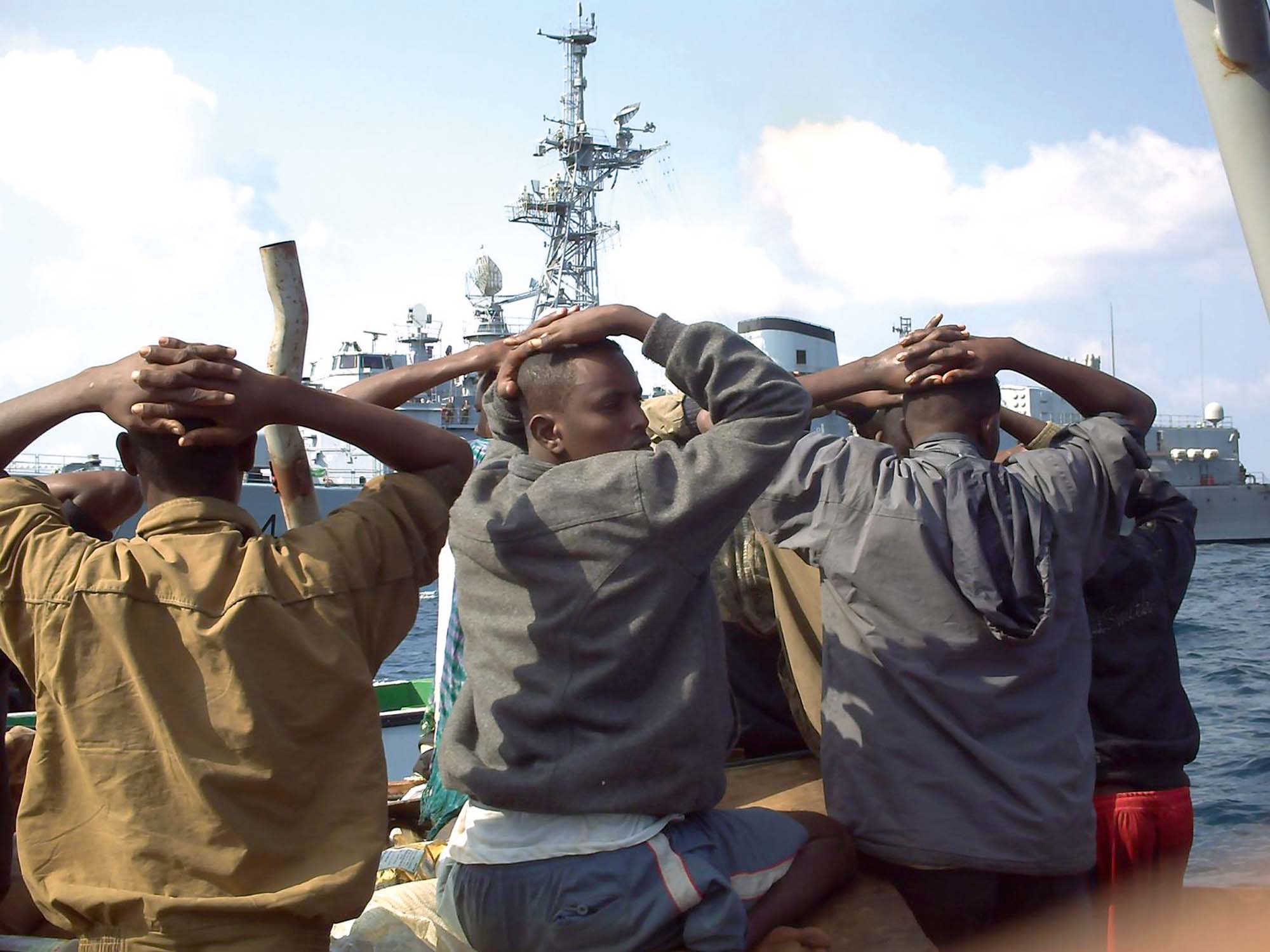
The narrative being peddled by mainstream defense analysts is as predictable as it is lazy. They want you to believe that the sudden spike in Somali piracy is a direct byproduct of a "distracted" global navy—that because warships are busy intercepting Houthi drones in the Red Sea, the Indian Ocean has turned into the Wild West.
This is a fundamental misunderstanding of maritime economics.
Piracy is not a shadow cast by war. It is a calculated response to the collapse of local resource sovereignty and the massive inefficiencies of global shipping. If you think a few missing destroyers are the only reason a skiff of armed men can hijack a 300-meter bulk carrier, you aren't paying attention to the math.
The Myth of the Security Vacuum
Standard reporting suggests that the US-led Operation Prosperity Guardian shifted assets away from the Horn of Africa, creating a "vacuum." This assumes that the presence of multi-billion dollar frigates was ever a sustainable solution to $50,000 pirate ventures.
It wasn't. It was an expensive band-aid.
For a decade, the international community treated piracy as a military problem. They deployed some of the most advanced sensor arrays on the planet to track fiberglass boats. But piracy is a business model. It has a low barrier to entry, high scalability, and an incredible ROI. When the "cost" of doing business (the risk of being sunk by a predator drone) dropped slightly, the business expanded.
The "vacuum" didn't cause the piracy. The piracy was always there, simmering under the weight of an artificial military subsidy. We didn't solve piracy in 2012; we just made it too expensive to operate. Now that the subsidy is gone, the market is correcting itself to its natural state.
Why the Houthi Diversion is a Scapegoat
The diversion of naval forces to the Red Sea is a convenient excuse for shipping conglomerates. It allows them to lobby for more taxpayer-funded protection rather than investing in their own hardening.
The real catalyst for the resurgence isn't a lack of guns; it’s the return of illegal, unreported, and unregulated (IUU) fishing. While the world's eyes were fixed on the Gaza-Israel conflict and the subsequent Red Sea escalation, industrial trawlers from distant nations returned to Somali waters. They are vacuuming up the protein that sustains local coastal economies.
I’ve seen this cycle play out in maritime hubs from Lagos to Aden. You take away a man's ability to fish, and he will use his boat to "tax" the people who are passing by his front door. To the Somali "pirate," the container ship carrying iPhones isn't a victim; it’s a giant, floating ATM that owes him back-rent for the destruction of his ecosystem.
The Efficiency Trap
The global shipping industry is obsessed with "just-in-time" logistics. To save on fuel and maximize cargo space, these ships are often understaffed and slow. They are floating vulnerabilities.
The industry’s refusal to adopt universal, non-lethal defensive measures—like automated high-pressure water cannons or long-range acoustic devices—is a choice. They would rather wait for a Navy destroyer to bail them out than spend $200,000 on a permanent security retrofit.
We are seeing a massive failure of private-sector accountability. If a bank left its vault open on a busy street, we wouldn't blame the police for being busy at a riot three blocks away. We would blame the bank. Shipping companies are the banks of the ocean, and they’ve left the vault door swinging in the wind.
The Insurance Paradox
Here is the truth that nobody in the Pentagon or the Lloyd’s of London boardroom wants to say out loud: Piracy is good for certain sectors of the economy.
When piracy risks go up, insurance premiums skyrocket. War risk surcharges become a standard line item on every bill of lading. Private maritime security companies (PMSCs) see their stock prices jump. There is a whole ecosystem of "security experts" who profit more from a moderate level of piracy than they do from total peace.
If the goal was truly to end piracy, the solution wouldn't be more warships. It would be the formalization of the Somali blue economy. But there’s no money in that for the military-industrial complex. There is, however, plenty of money in a perpetual "threat" that requires a permanent naval presence.
The Wrong Question
People ask: "How do we get the Navies back to the Horn of Africa?"
That is the wrong question. It’s a 20th-century question.
The right question is: "Why are we still using $2 billion ships to protect $50 million cargoes from $1,000 boats?"
The asymmetry is laughable. It’s a losing game for the West. For every dollar a pirate spends on a ladder and a rusted AK-47, the US Navy spends ten million dollars in operational costs to stop him. That isn't "security." It’s a slow-motion economic defeat.
The Solution No One Wants to Hear
If you want to stop piracy, stop looking at the water. Look at the shore.
- De-incentivize the Ransom: As long as insurance companies find it cheaper to pay a $5 million ransom than to fight a legal battle, piracy will remain a viable career path.
- Aggressive Prosecution of IUU Fishing: If you protect the fish, you protect the ships. It is that simple. The "pirates" are often just unemployed fishermen with better hardware.
- Hardened Autonomy: We need to move toward autonomous or semi-autonomous vessels that don't require a human crew to be held hostage. You can’t kidnap an algorithm.
The current rise in piracy isn't a tragedy. It’s a wake-up call. It’s proof that the era of "free" security provided by the US Navy is over. The "distraction" in the Red Sea isn't a fluke; it's the new normal. Conflict is becoming decentralized, asymmetric, and constant.
If a shipping company can't protect its own assets against a guy in a skiff, that company doesn't have a security problem—it has a broken business model. Stop asking for more warships. Start building better ships.
The ocean doesn't care about your geopolitical "distractions." It only cares about who is prepared to defend what they own. Right now, the pirates are the only ones playing the game with any level of honesty.