The sound begins before the sun clears the canopy. It is a rhythmic, metallic scrape against the earth, followed by the heavy thud of displaced clay. In the North Kivu province of the Democratic Republic of Congo, this has become the new dawn chorus. It is the sound of shovels.
When you stand in a freshly cleared clearing just outside of Beni, the air smells of crushed ferns, damp earth, and woodsmoke. But beneath those familiar scents is something else. It is the sharp, clinical sting of chlorine. It clings to the back of your throat. It reminds you that the ground being broken is not for crops, and it is not for foundation stones.
Ebola has returned. It did not knock. It simply broke down the door.
To read the official dispatches from international health organizations is to encounter a world of sterile geometry. They speak of geographic clusters. They publish graphs with steep, jagged lines. They tell you that the death toll has officially reached 80. Eighty. It is a round, clean number. It fits neatly into a headline. It can be categorized, archived, and filed away.
But numbers do not weep. Numbers do not leave behind a row of small, brightly colored plastic sandals on a porch, waiting for feet that will never wear them again.
The Weight of eighty
To understand what 80 means, you have to look away from the spreadsheets and look at a man named Jean-Pierre. He is a hypothetical composite of the fathers, brothers, and sons currently standing on the periphery of these clearings, but his grief is entirely real. Jean-Pierre is thirty-four. His hands are calloused from working the fields, capable of clearing thick brush or carrying a child with equal ease. Right now, those hands are empty, pressed hard against his thighs to stop them from shaking.
Three weeks ago, his family was whole. Today, he is a spectator at his own life.
Consider the mechanics of a modern Ebola response. When a loved one dies of a standard illness in the village, the community gathers. There is a protocol to grief. The body is washed by the elders. It is dressed in fine clothes. Family members lean over the threshold to press a final kiss against a cold cheek. It is a heartbreaking ritual, but it is a human one. It provides a bridge between the living and the dead.
Ebola destroys that bridge.
Because the virus remains highly contagious even after life has departed, the traditional burial becomes a weapon. The very acts of love—the washing, the holding, the kissing—are the vectors of transmission. Enter the burial teams. They arrive in white, impervious suits, looking less like medical professionals and more like astronauts who have blundered into the jungle. Their faces are hidden behind thick plastic visors. They carry heavy sprayers filled with chlorine solution.
Imagine watching your mother or your child being lifted by strangers who cannot even show their faces. They are placed into thick, opaque body bags. Zip. The sound is brutal. It cuts through the weeping of the village like a blade. The bag is sprayed with disinfectant, turning the black plastic a dull, mottled gray.
Jean-Pierre cannot touch the bag. He cannot step within six feet of the grave. He must stand behind a perimeter of bright red plastic tape, watching through a haze of heat and dust as his family is lowered into the earth by mechanical men.
The report states that burials are constant. What it means is that the soil never has time to settle. One grave is filled, and the shovels immediately move five yards to the left to begin the next. The earth is wounded, pockmarked with raw, red gashes that stretch toward the tree line.
The Geography of Fear
The epidemic is not happening in a vacuum. The Democratic Republic of Congo has borne the weight of this virus before, alongside decades of conflict, displacement, and systemic neglect. This is not just a medical crisis; it is an psychological siege.
When the fever begins, it looks like malaria. It starts with a headache that throbs behind the eyes, a fatigue that settles deep into the marrow, and a warmth that flushes the skin. In these communities, malaria is a frequent visitor. You take some pills, you rest under a net, you wait for the sweat to break.
But with Ebola, the sweat never brings relief. The fever climbs. Then comes the vomiting, the diarrhea, and the terrifying realization that this is something else entirely.
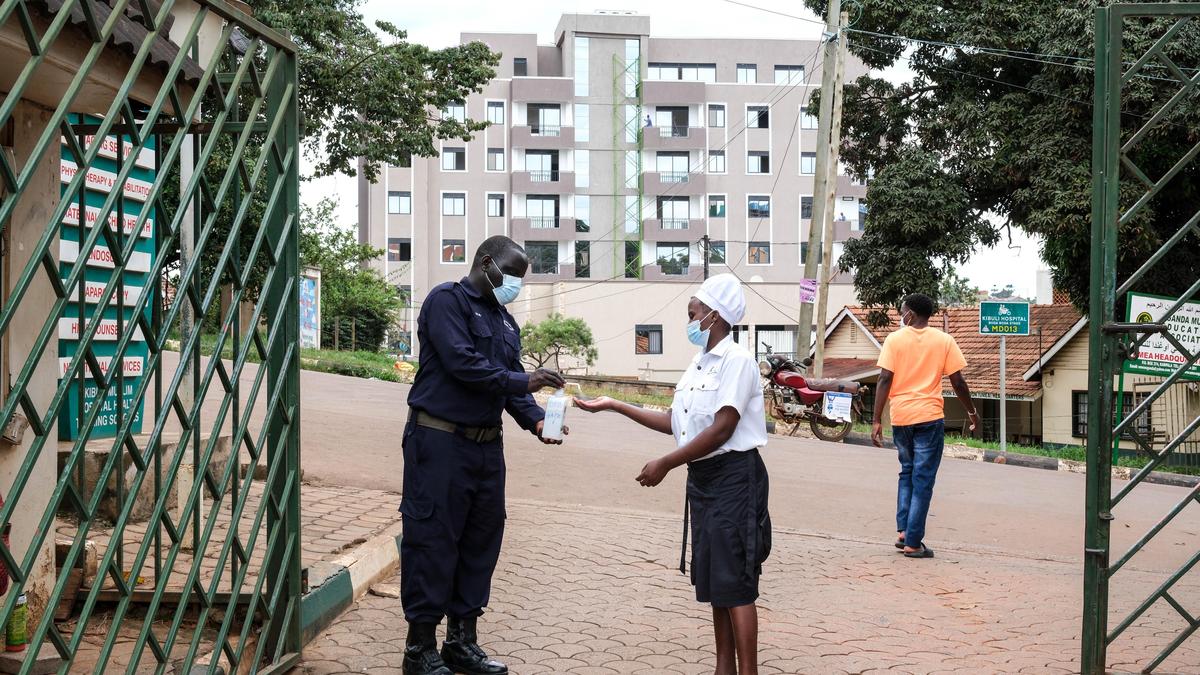
Fear changes the architecture of a town. In the markets of Butembo and Beni, people no longer shake hands. They offer elbows, or they simply nod from a distance, eyes scanning the other person for the telltale signs of exhaustion or glassy eyes. The vibrant, tactile warmth of Congolese social life has been chilled. Every neighbor is a potential source of infection. Every surface is a gamble.
This fear creates a dangerous paradox. When people see that those who enter the Ebola Treatment Centers rarely return, the center becomes the enemy. Rumors grow in the fertile soil of terror. They are stealing organs, some whisper. The white suits are bringing the disease to kill us, others say.
It is easy for an outsider sitting in a comfortable room thousands of miles away to dismiss these rumors as ignorance. It is not ignorance. It is trauma. When your world has been upended by violence and poverty for generations, trust is a luxury you cannot afford. When a medical team arrives with armored escorts and aggressive sanitation protocols, it looks less like a rescue mission and more like an invasion.
Consequently, people hide. They keep their sick hidden in the dark corners of their homes, covering their coughs, tending to them with bare hands in the quiet of the night. They try to outride the fever.
But the virus does not negotiate. It uses that privacy to multiply, jumping from the sick child to the mother, from the mother to the aunt, weaving itself deep into the fabric of the household before anyone outside realizes a single person is ill. By the time the health workers are notified, the home is no longer a home. It is a cluster.
The Invisible Ledger
The true cost of this outbreak cannot be measured solely by the bodies in the ground. There is an invisible ledger of loss that the official reports ignore.
Think of the economic paralysis. When a village is flagged as an epicenter, trade grinds to a halt. The trucks that carry cassava, beans, and coffee stop running. The roadblocks go up. A farmer who cannot sell his crop cannot buy soap, oil, or medicine for non-Ebola ailments. The local economy doesn't just slow down; it breaks.
Then there are the survivors. To survive Ebola is a miracle of biology, but it is often a tragedy of social survival. Those who walk out of the treatment units, cleared of the virus and carrying certificates of health, often return to find their worlds destroyed. Their possessions have been burned by sanitation teams to prevent contamination. Their neighbors look at them with suspicion.
"She has the spirit of the fever," they might whisper as a survivor walks to the well.
The isolation doesn't end when the blood tests come back negative. It merely changes form. A survivor becomes a ghost in their own village, alive but untouchable, walking through a community that has closed its heart out of sheer self-preservation.
The Anatomy of the Response
To fight this requires more than just vaccines and isolation wards. It requires an extraordinary act of cultural translation.
The frontline workers are not just the international doctors or the epidemiologists analyzing genomic sequences. The real front line consists of local community engagement workers—young Congolese men and women who walk into hostile villages armed with nothing but megaphones and empathy.
They do not wear the white suits. They wear jeans and t-shirts. They sit under mango trees, keeping a respectful distance, and they listen. They listen to the anger. They listen to the grief. They endure the shouting and the accusations.
Only after the anger has been spent do they speak. They do not talk about statistics or viral loads. They talk about protection. They explain that the burial teams are not trying to desecrate the dead, but to protect the living. They find compromises, allowing a family member to wear a protective suit to witness the burial from a safe distance, or ensuring that a traditional cloth is placed over the body bag before it is lowered.
It is slow, exhausting work. It is a race against a virus that moves with terrifying speed, while the human response must move at the speed of trust. Trust cannot be rushed. It cannot be injected via a syringe. It must be built, conversation by conversation, grave by grave.
The Horizon
The sun begins its descent, casting long, bruised shadows across the clearing near Beni. The burial team has finished for the day. They stand in a designated de-contamination zone, systematically spraying each other down with chlorine until they glistened in the fading light.
They peel off the heavy rubber gloves. They remove the hoods. Underneath the plastic, their faces are pale with exhaustion, marked with deep, red creases where the goggles have pressed into their skin for hours. They do not speak. They are too tired for words.
A few hundred yards away, beyond the red tape, Jean-Pierre remains. The village has gone quiet, the mourners having drifted back to their homes before the night security curfew takes effect. He does not move.
The earth over the newest mound is still dark, damp, and loose. A stray plastic wrapper from a medical supply kit catches the breeze, tumbling across the red dirt until it catches on a root.
The world will look at North Kivu and see a crisis to be managed, a budget to be allocated, or a headline to be scanned on a morning commute. But here, on the ground, the reality is stripped of all rhetoric. It is just a man, a roll of red tape, and a shovel waiting for tomorrow morning.