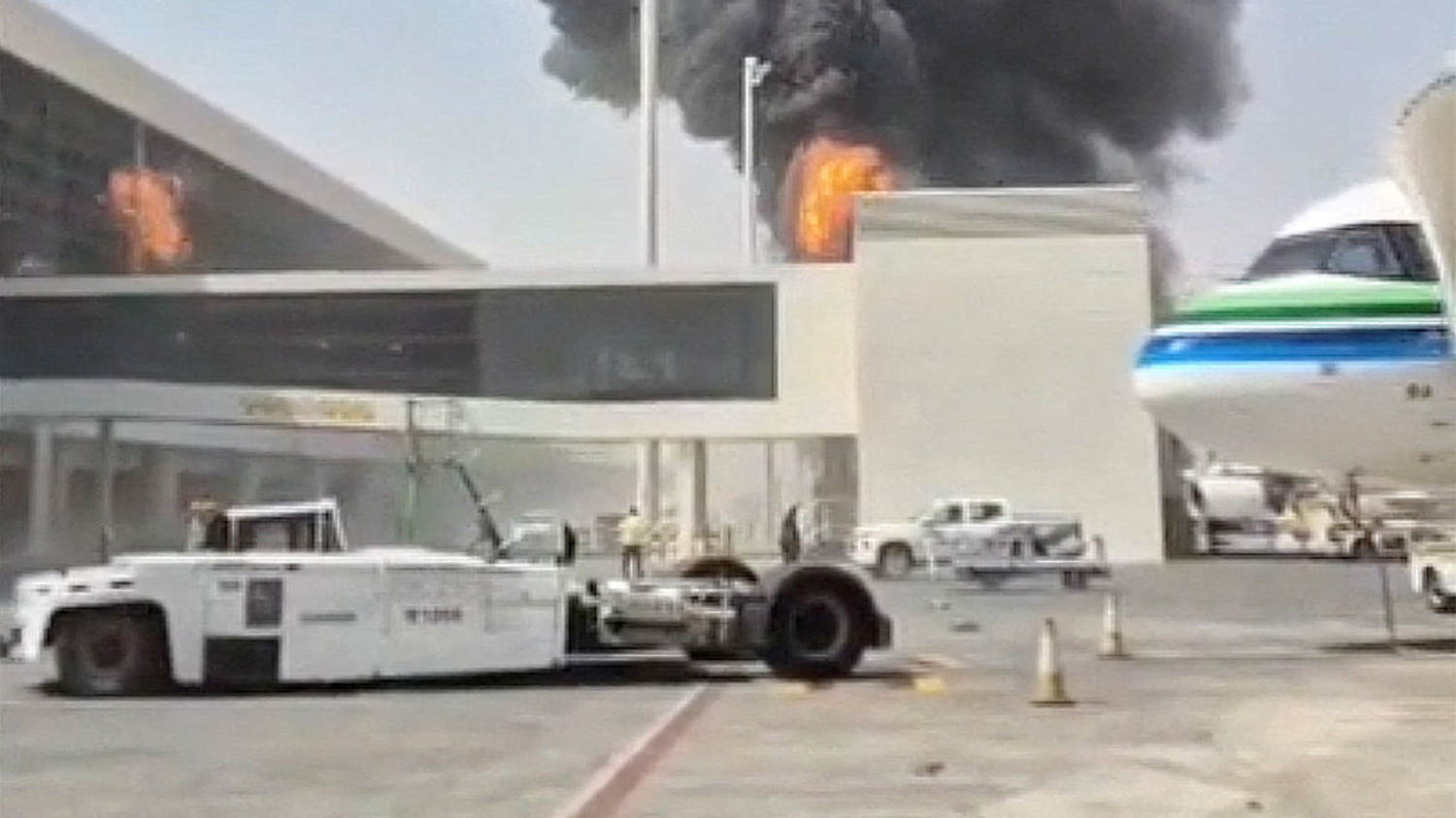
Dawn does not break in the mountains of Yemen; it detonates. First comes the grey smear over the jagged limestone ridges, bleeding into a bruised purple, and then the sound. Not birds. Not wind. The dull, rhythmic thud of ordnance dropping miles away, shaking the loose slate off stone roofs where families huddle under greasy blankets.
Imagine waking up to that for nine consecutive years. No, scratch that. Do not imagine a world. Just look at the kitchen table in Sanaa where a man named Tariq pours the last drops of brackish water from a plastic jerrycan into a tin kettle. He has forgotten what peacetime smells like. He remembers the scent of damp earth after a monsoon shower from his childhood, but that memory is rapidly being overwritten by the acrid sting of sulfur and burning plastic.
Yet, across the Red Sea, in the air-conditioned glass towers of Riyadh, men in crisp white thobes stare at glowing monitors tracking missile trajectories with the detached interest of stockbrokers watching a volatile ticker.
History is rarely made by grand treaties signed under crystal chandeliers with cheering crowds. More often, it is forged in the exhausted silence of midnight telephone calls between men who have looked into the abyss and realized they can no longer afford to jump.
Rumors have a way of drifting through the desert air before official communiqués ever touch a printing press. For months, diplomatic backchannels have hummed with a quiet urgency. Tehran—the capital that has long pulled the strings of the Houthi movement in Yemen through a complex web of ideological alignment and tactical armaments—has begun sending different signals. Not of defiance. Of dialogue.
Saudi Arabia, nursing the multi-billion-dollar wounds of a protracted proxy war that drained its treasury and exposed its oil infrastructure to terrifying vulnerabilities, is listening.
To understand why this matters, you have to look past the sanitized language of geopolitical analysts who speak of "regional stability" and "deterrence frameworks." Talk to the mothers on both sides of the Gulf.
Consider a hypothetical mother in Riyadh whose nineteen-year-old son was deployed to the southern border. Every time her phone rings, her breath catches in her throat. She does not care about regional hegemony. She cares about a heartbeat. Now consider a mother in Saada whose twelve-year-old daughter lost both legs to a cluster munition. She does not care about theological supremacy. She cares about clean bandages.
When nations talk about resolving conflict, they are usually talking about saving face. But when Iran signals readiness to engage in serious diplomatic outreach with Riyadh and the Houthis, something deeper is shifting beneath the geopolitical tectonic plates.
Sanctions bite. Isolation hurts. Economies do not care about revolutionary slogans when inflation is eating the family meal ticket. Iran faces domestic pressures that dwarf the luxury of foreign adventures. The Rial has cratered. Young Iranians have filled the streets demanding a future rather than martyrdom. Keeping the fires burning in Yemen, Syria, and Lebanon requires cash, oil smuggling, and immense political capital—commodities that are becoming dangerously scarce in Tehran.
Simultaneously, Crown Prince Mohammed bin Salman has staked his entire domestic legacy on Vision 2030, an ambitious blueprint to transform Saudi Arabia into a futuristic hub of tourism, technology, and global commerce. Neon-lit futuristic cities cannot rise from the desert sands if cruise missiles are raining down on oil refineries. Peace is no longer a humanitarian charity case for Riyadh; it is a strict business requirement.
Diplomacy is selfish. That is its greatest strength. Wars stop not when leaders suddenly discover morality, but when the cost of fighting drastically exceeds the value of winning.
The mechanics of this potential breakthrough are fragile, almost impossibly delicate. A ceasefire in Yemen is not a light switch. It is a mosaic of a thousand local truces, tribal grievances, border demarcations, and salary disbursements for civil servants who have gone years without a paycheck.
When the Houthis sit down—even indirectly—with Saudi interlocutors, they are stepping out of the shadows of absolute militancy and into the messy, compromise-laden arena of statecraft. They want recognition. They want control over ports. They want legitimacy. Tehran, for its part, wants to project the image of a statesmanlike regional power capable of brokering deals rather than just exporting chaos.
Yet, trust is the rarest commodity in the Middle East. It is a currency spent down to zero decades ago.
Every time a drone buzzes over the Red Sea, or a Houthi spokesman issues a fiery anti-Western diatribe for domestic consumption, the fragile bridge of talks trembles. Skeptics point out that Iran has a long history of talking while simultaneously rearming its proxies. They argue that dialogue is simply a tactical pause, a way to catch its breath before the next round of violence.
They might be right. But peace has to start somewhere, and it almost always begins with the bitter pill of talking to enemies you despise.
History offers strange mirrors. Think of the backchannel talks that ended the Troubles in Northern Ireland, or the secret negotiations that eventually brought an end to the Vietnam War. They were messy, plagued by betrayal, interrupted by atrocities, and universally denounced by hardliners on both sides as treason.
Yet, they worked. Not because the enemies suddenly became friends, but because they simply grew too tired to keep burying their children.
Back in Sanaa, the kettle finally whistles. Tariq pours the brownish water into a chipped ceramic mug. He walks out onto his balcony, looking out over a city of ancient mud-brick towers that have stood for a thousand years, weathering sieges, empires, and modern high-explosive ordnance.
The horizon is quiet this morning. Just a thin ribbon of blue smoke rising from a distant bakery, and the faint, pale smear of a moon fading into the daylight.
It is not peace yet. It is only an echo of a possibility. But in a place where hope is a dangerous luxury, an echo is enough to keep a man standing until tomorrow.