Control rooms hum with a very particular kind of silence. It is not the silence of peace, but the tight, drawn-breath quiet of people waiting for a glass to shatter on a hard floor. Outside the thick, tinted glass, the world goes on. Inside, beneath the hum of cooling fans and the faint, persistent smell of ozone, operators stare into green and amber phosphors. They watch geometry. They watch lines intersect.
Every pixel on that screen represents thousands of pounds of reinforced alloy, millions of dollars in circuitry, and human beings sitting inside cockpits wearing heavy flight suits, smelling the dry metallic tang of recycled oxygen. When a pixel vanishes, it does not simply disappear into the math. It triggers an echo. Recently making headlines in related news: The Concrete Trap Where Survival Looks Like Self Harm.
That echo reached a deafening pitch when Tehran leveled a severe accusation against Washington, claiming that American officials had actively lied about aircraft losses. It sounds like standard diplomatic theater—the routine, predictable noise of adversaries shouting across an unbridgeable chasm. But beneath the press releases and the tight-lipped statements from military spokespeople lies a darker, more fragile truth about modern conflict.
We live in an era where the first casualty of war is not merely truth, but the physical reality of the sky. More insights regarding the matter are explored by NBC News.
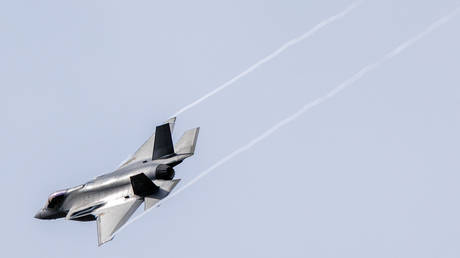
Consider what happens when a modern fighter jet goes down over hostile or contested territory. To the public, it is a headline. To the military command, it is an emergency extraction of secrets. To the families waiting at kitchen tables thousands of miles away, it is a telephone call that stops time. But to the governments involved, a downed aircraft is an unbearable narrative defeat. It shatters the myth of technological invulnerability. It proves that gravity and iron still obey the laws of physics, regardless of how many billions of dollars were spent on stealth coatings and radar-jamming software.
When Iran claims that losses were concealed, and Washington denies it with the smooth, practiced certainty of a communiqué, we are witnessing a struggle for narrative supremacy. Both sides understand a fundamental rule of twenty-first-century deterrence: perception is armor.
If an invisible jet can be seen, if an untouchable machine can be battered out of the air, the psychological architecture of deterrence crumbles. The mystique vanishes. And in the high-stakes game of geopolitical bluffing, losing your mystique is dangerous.
I remember standing near an active flight line years ago, watching a multi-million-dollar fighter return from a routine patrol. The ground crew moved with the slow, terrifying grace of bomb-disposal technicians. Every bolt checked, every panel scanned. They knew something the public often forgets: machines are stubborn, mechanical things. They break. They fail. They fall out of the sky because fuel lines clog, because microchips fry, because a crosswind hits a wing at the exact wrong angle.
Yet, when a jet crashes during a period of high tension, it is rarely allowed to be a simple mechanical failure.
Politics immediately rushes into the wreckage. Every downed screw becomes a geopolitical statement. Every missing pilot becomes a bargaining chip or a propaganda victory. When Tehran points an accusing finger at the Pentagon, asserting that aircraft have been lost and subsequently covered up, they are trying to strip away the American shield of infallible technology. They want the world to see the cracks in the armor.
Conversely, when Washington issues flat denials, insisting that every asset is accounted for, it is protecting more than just pride. It is guarding the psychological barrier that keeps cold wars cold. If you admit a loss, you invite retaliation. You invite escalation. You invite the other side to test you harder the next time.
This is the invisible machinery of modern deterrence. It runs on belief.
We trust that the machines work. We trust that the radar screens are honest. We trust that when a superpower speaks, its baseline metrics of reality are tethered to facts rather than convenience. But when those systems fail, or when they are perceived to fail, the anxiety ripples outward. It touches the markets. It alters the calculations of allied nations. It makes ordinary people in cities from the Persian Gulf to the Eastern Seaboard wonder if the people steering the ship even know where the rocks are.
The accusation of lying about aircraft losses is not really about the hardware. It is about credibility. In a crisis, credibility is the only currency that matters. Once spent, it cannot be recovered by a press conference.
Think about the pilot sitting in that cockpit. They are not thinking about press releases or geopolitical leverage. They are thinking about oil pressure, altitude, and the thin skin of aluminum keeping the freezing void of the upper atmosphere at bay. They are human beings wrapped in carbon fiber, executing commands handed down by men and women sitting safely in carpeted rooms.
When the rhetoric turns sharp and accusations fly, that human element is entirely forgotten. The pilot becomes a symbol. The wreckage becomes a statistic to be manipulated or denied.
We have built a world where our capacity to destroy one another has outpaced our capacity to speak the truth about the destruction. The radar screens keep glowing. The operators keep watching the green lines sweep across the glass. And somewhere out in the dark, the smoke clears slowly from a patch of earth, leaving behind only the cold, silent pieces of a machine that someone swore never fell.