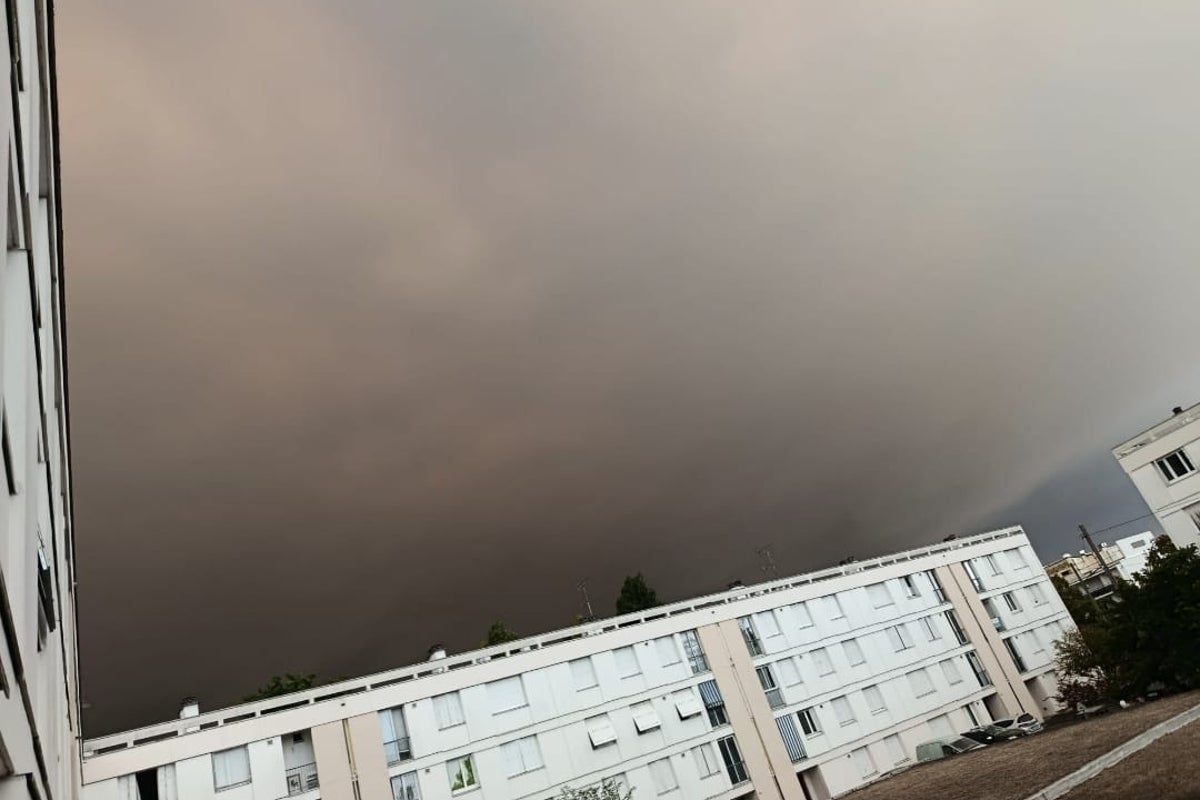
The sirens in Pattaya never really sound like an emergency at first. They blend too easily into the background static of the city—the thrum of motorbike engines, the bass lines bleeding out of open-air bars, the overlapping chatter of a thousand vacationers chasing the perfect tropical night. For a tourist looking out from a high-rise balcony, the flashing red lights down on the asphalt just look like more neon.
Until the air changes.
Fire in a seaside resort town is a particular kind of nightmare. It fractures the illusion of safety we buy into the moment we check into a hotel, unpack our swimsuits, and slide our passports into the room safe. We assume the concrete walls are impenetrable. We trust the sprinkler heads staring down from the ceiling like tiny, metallic eyes. But when a blaze rips through a holiday hotspot, the distance between absolute luxury and raw survival shrinks to the width of a smoke-logged hallway.
Panic has a smell. It is a mix of burning synthetic carpet, acrid plastic, and the sharp, metallic tang of adrenaline.
The False Security of the High-Rise
Consider the anatomy of a vacation. You arrive exhausted from a long-haul flight, the humidity of Thailand hitting you like a warm wave the moment you step off the bus. The hotel lobby is an oasis of cool air and polished stone. The staff smiles. The key card clicks. You are on the tenth floor, looking out at a postcard view of the Gulf of Thailand.
You feel invincible.
But every high-rise is a vertical labyrinth. When thick, black smoke begins to pump into the corridors, that beautiful view becomes a cage. The elevator doors remain shut—standard emergency protocol, but terrifying nonetheless. The stairwells, designed to be escape routes, suddenly transform into chimneys, drawing the heat and toxic fumes upward with frightening speed.
This is not a hypothetical vulnerability. It is the precise reality faced by dozens of travelers when flames tore through a prominent hotel property in the heart of Pattaya.
The emergency began without warning, a sudden eruption of heat and light that quickly choked the upper levels with unbreathable air. Within minutes, the vacation paradise transformed into a chaotic grid of trapped guests, desperate emergency workers, and a race against a ticking clock that nobody could see.
When the Hallways Disappear
Imagine waking up to the sound of shouting. Not the celebratory shouting of late-night partygoers, but the ragged, desperate screams of people running.
You open your hotel room door. The corridor is gone. In its place is a solid wall of gray-black smoke so dense it swallows the beam of your smartphone flashlight. The heat hits your face like an open oven. Your eyes sting instantly. Your throat constricts.
In that moment, your brain scrambles for answers to questions you never thought you would have to ask. Do I stay in the room and wet towels to stuff under the door? Do I run for the stairs and risk suffocating in the dark? Is anyone coming for me?
Outside, on the crowded streets of Pattaya, the scene was one of escalating dread. Local rescue teams and firefighters arrived to find a building breathing smoke. On the balconies above, silhouettes appeared against the glass. People were trapped. Some waved white sheets; others used the glowing screens of their phones to signal the rescue crews scrambling on the asphalt below.
The immediate challenge for the first responders was not just extinguishing the fire, but locating the human beings scattered throughout the smoke-blinded structure. In a holiday destination like Pattaya, language barriers complicate every second of a rescue operation. A firefighter yelling instructions in Thai might meet a wall of incomprehension from a panicked European tourist, a Chinese family, or an Australian backpacker. Communication breaks down exactly when it needs to be flawless.
The Invisible Infrastructure of Survival
We rarely think about the logistics of a rescue until we are the ones waiting to be rescued.
In Thailand’s rapidly developing tourism hubs, emergency infrastructure is constantly playing catch-up with the sheer volume of high-rise construction. It requires an immense amount of coordination to manage a major fire in a crowded urban center. Ladders must be extended through a web of overhead power lines. Water pressure must be maintained in aging municipal pipes. Ambulances must navigate streets choked with tourist traffic and curious onlookers.
During the Pattaya hotel fire, rescuers had to rely on sheer physical endurance. Teams wrapped in heavy gear, carrying oxygen tanks, forced their way up the dark stairwells against the downward rush of fleeing guests. They knocked on doors, cleared rooms one by one, and guided terrified, coughing people down through the suffocating gloom.
The statistics of the event—the number of fire trucks deployed, the hours spent fighting the flames, the financial damage to the property—tell only a fraction of the story. The true measure of the night lay in the quiet, desperate interactions in the dark: a rescue worker grabbing the hand of an elderly guest who could no longer walk; a parent holding a damp cloth over their child’s face as they stumbled past blackened walls; the collective exhale of a crowd on the street as another group of survivors emerged into the night air, streaked with soot but breathing.
The Reality of the Hotspot
Pattaya occupies a strange space in the global imagination. It is a place built entirely on the promise of escapism. People come here to forget the rigid structures of their everyday lives, to lose track of time, to indulge in the sun and the nightlife.
But escapism can breed a dangerous complacency.
When we travel, we frequently suspend the basic survival instincts we rely on at home. We don't check where the fire exits are when we walk into a restaurant. We don't read the evacuation map on the back of the hotel room door. We assume that because we paid for a ticket and a room, someone else is entirely responsible for our safety.
The fire at the Pattaya hotel shattered that complacency for everyone who witnessed it. It served as a stark, uncompromising reminder that the laws of physics and human vulnerability do not take a vacation. Smoke inhalation kills just as quickly in a tropical paradise as it does in a freezing metropolis.
As the morning sun broke over the coast, the true scale of the incident became visible. The building stood, but it was scarred—charred streaks tracking upward from the windows, shattered glass littering the pavement below. The tourists gathered on the sidewalk, wrapped in hotel blankets, looking up at the rooms they had occupied just hours before. They had lost their luggage, their passports, their carefully planned itineraries.
Yet, looking around at each other, they realized those losses were entirely meaningless.
The neon lights of Pattaya eventually flickered back to life, casting their familiar pink and blue glow over the wet asphalt. The bars opened their doors. The music started up again. But for those who spent that night trapped above the streets, watching the smoke rise, the city would never look quite the same. The thin veneer of the holiday paradise had peeled back, revealing just how fragile our illusions of safety truly are, and how much we owe to the strangers who run into the smoke when everyone else is running out.