The coffee at the diner on 4th Street costs four dollars and twenty-five cents now.
Two years ago, it was three. Five years ago, you could drop two greasy ones on the laminate counter, wave away the nickel change, and walk out into the morning chill with a warm cardboard cup and a clear conscience. Nothing physically changed about the coffee. The beans still travel the same equator. The water still boils at two hundred and twelve degrees. The stainless-steel urn still hums with the same dull vibration.
Only the math changed. And the math is stealing from us.
Across town, inside a limestone fortress on Constitution Avenue, men and women in tailored suits stare at glowing Bloomberg terminals. They talk in a language of basis points, labor force participation rates, and core PCE deflators. They speak as though the economy is a delicate clockwork mechanism, something that can be nudged with tweezers and adjusted with a turn of a golden screw.
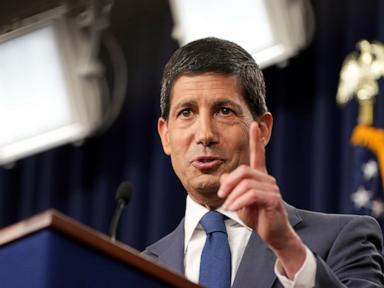
We call the person at the top of that hierarchy the Fed Chair. Right now, his name is Jerome Powell, though names matter very little when you are staring down a freight train. Recently, standing before a bank of microphones with the heavy lights of the press corps baking his skin, he stated a blunt, unvarnished truth: delivering stable prices is the central bank’s job as inflation persists.
Stable prices.
It sounds sterile. It sounds like an entry in an economics textbook. But to the retired machinist living on a fixed pension, stable prices mean the difference between buying fresh vegetables and rationing canned soup. To the young couple staring at Zillow listings with a rising panic, stable prices mean the doorway to a home instead of a lifetime of paying a landlord's mortgage.
Inflation is not a line on a graph. Inflation is a thief in a ghost suit. It works in the dark, shaving a fraction of a percent off your purchasing power every single night, until you wake up one Tuesday and realize your paycheck can only buy eighty percent of the life it bought you a few short years ago.
The Weight of the Lever
Imagine an old man standing in a drafty railway switchyard in the dead of winter. His knuckles are swollen with arthritis. His breath pluffs into the freezing air like small puffs of smoke. In his gloved hands, he holds the iron handle of a massive track switch. Down the line, two miles away, a runaway freight car loaded with heavy steel pipe is barreling down an incline.
That switchman is the Federal Reserve.
The freight car is the post-pandemic economy, fueled by trillions in emergency stimulus, shattered global supply chains, and a sudden, violent resurgence of human demand after months of lockdown. When that train started picking up speed in late 2021 and 2022, ordinary people felt it in their bones. Gas prices spiked. Grocery bills doubled. Used cars cost as much as new ones used to.
The Fed’s only tool to stop that train is a sledgehammer disguised as a dial: the federal funds rate.
By hiking interest rates, the central bank makes borrowing expensive. They throw sand in the gears of commerce. They want businesses to stop expanding so aggressively. They want developers to pause new apartment complexes. They want you, the consumer, to think twice before financing a new boat or even a kitchen remodel.
It is a blunt, brutal instrument. To stop inflation, the Fed has to slow down the entire American engine. They have to intentionally induce a chill in the labor market. They have to make employers slightly less desperate to hire, so workers stop asking for the raises they desperately need just to keep up with the cost of milk and rent.
It feels backward. It feels cruel. To save the patient from the fever, the doctor prescribes ice water.
Inside the Boardroom Silence
When Powell steps up to the podium, he carries the exhaustion of a man who knows he cannot win.
Lower rates too quickly, and the inflation monster rears its ugly head again, burning through the savings of the working class like dry brush in a drought. Keep rates too high for too long, and you snap the backbone of the housing market, trigger a wave of corporate layoffs, and push the country into a recession that leaves millions jobless.
There is no middle ground. There is only the tightrope.
During his recent remarks, the underlying tension was palpable. The media wants a simple narrative. They want to know when the cuts are coming. They want a date, a percentage, a sign that the pain is over. But Powell refuses to offer the easy comfort of a lie. He repeats the mantra of data dependence. He reminds the room that inflation is stubborn. It clings to the walls like smoke after a chimney fire.
We want to believe that someone is in control. We want to look up at the gods of monetary policy and trust that they have drawn a map to safe harbor. But listen closely to the cadence of his voice. Beneath the measured diction and the careful, bureaucratic phrasing, there is a quiet admission of limits. The central bank can adjust the cost of money, but they cannot fix a broken world. They cannot manufacture semiconductor chips. They cannot reopen grain ports choked by war. They cannot force corporate boardrooms to accept smaller profit margins instead of passing every penny of increased cost down to the consumer.
They can only turn the dial. And hope the machinery holds together under the strain.
The Cost of Standing Still
Consider what happens next in the quiet suburbs and crowded urban apartments across the nation.
A thirty-year-old graphic designer named Marcus sits at his kitchen table, clicking through his bank statements. He makes seventy-five thousand dollars a year—a respectable sum a decade ago. Today, after student loan payments, sky-high health insurance premiums, and rent that jumps eight percent every time the lease renews, he has forty-two dollars left over before his next payday.
He isn't buying luxury yachts. He isn't speculating in cryptocurrency. He is just trying to buy groceries without flinch-checking his total at the register.
When central bankers talk about "anchoring inflation expectations," they are talking about Marcus. They are terrified that Marcus will stop believing in the future value of his own labor. Because once people expect prices to rise forever, they start demanding massive wage hikes immediately, businesses raise prices to compensate, and the snake swallows its own tail. A wage-price spiral takes root, and suddenly you are counting your money in wheelbarrows, Weimar style.
That is the abyss the Federal Reserve is staring into. Not a minor market correction. Not a polite dip in quarterly GDP growth. The complete erosion of trust in the unit of account itself. If a dollar cannot reliably measure value tomorrow, the entire game falls apart.
The Final Chord
Back at the diner, the waitress wipes down the counter with a yellow rag that has seen better days. She drops the check next to the empty mug.
Four dollars and twenty-five cents.
Outside, the traffic moves in a steady, relentless hum, indifferent to the men in Washington, indifferent to the cost of debt, indifferent to the quiet erosion of a working-class life. Powell will return to his desk. The terminal screens will continue their silent, digital dance of red and green numbers. The dial will stay where it is, holding the line against a tide that never truly sleeps.
The coffee grows cold. The bill remains.