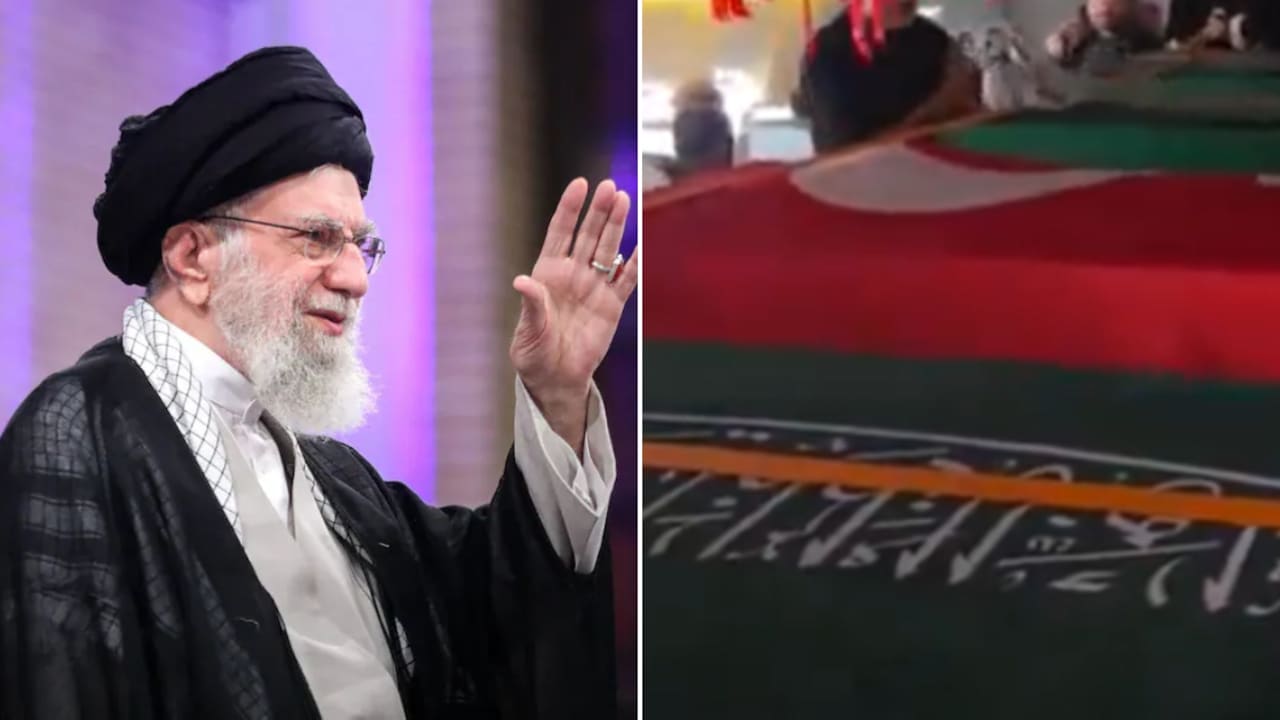
The iron-gray Sukhoi fighter jets cut through the low morning clouds, their twin engines shaking the dust from the brickwork of old Tehran. Below them, a metal casket moved down the long asphalt corridor of the capital. It was a perfectly choreographed piece of political theater, loud enough to drown out the whispers of eighty million people.
When a ruler who has held absolute power for over three decades finally leaves the stage, the vacuum he leaves behind is not silent. It is filled with the roar of military hardware. The state machinery demands a display of unshakeable strength at the exact moment its vulnerability is most exposed. For the inner circle, the fighter jet escort was not just an honor guard. It was an eviction notice to instability.
To understand the weight of that procession, you have to look past the official cameras panning across organized crowds of mourners. You have to look at the sky, where the state was trying to write its own version of history in lines of white vapor.
The Architecture of Absolute Certainty
Every authoritarian regime fears the gap between the last breath of an old ruler and the first oath of a new one. History shows us that this brief window is where empires fracture. To prevent that fracture, the state must project total control. The funeral procession becomes an exercise in logistics meant to signal that the apparatus of power remains entirely intact.
Imagine an engineer sitting in a windowless room in the Ministry of Interior, charting the exact flight path of those escort planes. For months, perhaps years, every detail had been anticipated. The fuel consumption, the altitude, the precise second the fighter wings would dip in salute over the capital. This planning is not born out of grief. It is born out of a calculated necessity to project continuity.
The casket itself, draped in the symbols of the Islamic Republic, traveled a route designed to hit every emotional chord of the regime’s founding mythos. But the real message was directed outward and upward. The jets flying overhead were a warning to domestic dissidents and foreign adversaries alike: the guard has changed, but the weapons are still loaded.
The View from the Sidewalk
On the ground, away from the cordoned-off VIP platforms, the atmosphere carries a different kind of tension. An old man stands near a juice stall in Valiasr Square, watching the silver shapes streak across the sky. He remembers the chaotic, raw emotion of 1989, when the first Supreme Leader passed away and millions tore at the shroud in a frenzy of uncontrolled devotion.
This time is different. The grief is institutionalized, managed, and metered out by state television crews directing the angles of the cameras. The crowd moves because it is told to move. The tears are real for some, but for many others, the day is simply a historical marker, a moment to hold one's breath and wait for the economic dust to settle.
Consider what happens when the television cameras turn off. The bread prices are still high. The currency is still weak. The youth still look at the rigid structures of their government with a mixture of fatigue and quiet defiance. A coffin in the sky does not change the reality of the water shortages in the south or the silent factories in the industrial zones. It simply pauses the conversation for forty-eight hours of mandatory mourning.
The Cold Metal of Succession
Behind the high walls of the Assembly of Experts, the mood is far removed from the public display of sorrow. Power in this system does not belong to the streets; it belongs to the committees, the clerics, and the commanders of the Revolutionary Guard. While the fighter jets escorted the body toward its final resting place, the real transition had already occurred in whispered agreements days prior.
The system is designed to outlive the men who build it. By wrapping the funeral in the maximum amount of military pomp, the ruling elite sought to convince the world that the transition was seamless. But true stability cannot be manufactured by an air force escort. It requires the consent of the governed, a commodity that has grown increasingly scarce in recent years.
The choice of military aircraft as the primary visual symbol of the final journey tells the true story of the modern state. It is a system that relies increasingly on hard power, on the threat of force, and on the memory of past struggles rather than the promise of future prosperity. The planes were loud because the silence of the populace was terrifying.
What Remains in the Dust
As the sun began to dip behind the Alborz mountains, the roar of the Sukhois finally faded. The casket was lowered into the earth, sealed away beneath layers of marble and security glass. The state media declared the event a triumph of national unity, a historic outpouring of love for a fallen leader.
But when the streets are swept and the barricades are packed into the backs of municipal trucks, the underlying fractures remain. A nation cannot live indefinitely on the fumes of its founding revolution. The jets have landed. The fuel has been spent. The new leader sits in the palace, listening to the quiet that always follows the storm of state-sponsored grief.
The true test of the regime does not lie in how well it can bury its dead. It lies in how it chooses to govern the living, who are left staring at an empty sky, wondering if the next sound they hear will be the start of a new era or simply more of the same.



