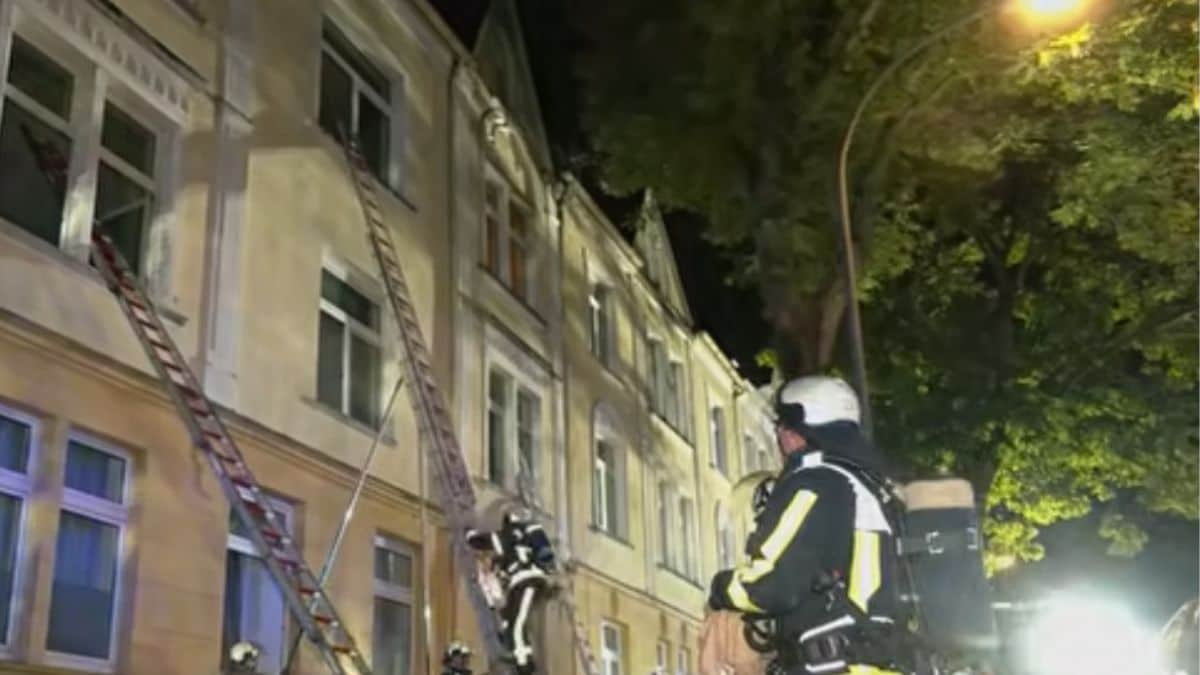
Glass. That is the first thing people remember after a strike in a modern city. Not the roar of a drone engine or the thud of an interceptor high above the clouds, though those come first. It is the sound of tempered glass whispering across tile floors, the sudden draft carrying desert heat into an air-conditioned room, the realization that a wall you trusted to keep the outside world at bay has turned translucent and sharp.
For years, headlines about Houthi threats against Saudi airports and oil infrastructure have arrived on screens like weather reports from another planet. A statement from Sanaa. A warning aimed at commercial terminals. A strike near or on Saudi Aramco facilities, including headquarters infrastructure in Dhahran, followed by vows of escalation. To someone sitting thousands of miles away with a cup of coffee, those words feel abstract—geopolitical chess moves traded between capitals.
They are not abstract. They are lived.
I have stood on tarmac edges at dusk in the Gulf when the air smells faintly of jet fuel and hot asphalt, watching wide-body jets line up for departure while families carry duty-free bags toward gates that suddenly feel less like thresholds to holiday and more like chokepoints. You don't need a military briefing to feel the tension in a terminal when rumors of incoming projectiles ripple through a crowd. You see it in the way a father pulls his child half a step closer to a concrete pillar. You see it in the flight attendant's practiced calm, which works harder than usual.
Consider what happens next when a threat shifts from distant pipelines in empty sand to commercial airports and corporate headquarters. A pipeline in the desert is a wound in the earth; a terminal is a nerve center of human movement. An oil facility powers the engines of the global economy; a headquarters is where thousands of engineers, analysts, and administrators sit at desks beneath fluorescent lights, trying to keep ordinary life running while sirens or alerts echo in the background.
To make sense of why this matters beyond the evening news, let's build a hypothetical scenario—explicitly a composite illustration rather than a report of a single real incident—to trace how a headline ripples outward. Suppose an engineer named Tariq works in Dhahran near Aramco's administrative heart, while his sister Nadia manages logistics near a regional Saudi airport. Neither of them wears a uniform. Neither signed up to live inside a front line. Yet when Houthi spokespeople vow further strikes on oil sites and airports after an attack touching Aramco headquarters, Tariq's morning commute changes. Traffic slows at checkpoints. Phone batteries stay above fifty percent because group chats buzz with unverified alerts. Nadia checks flight boards not for vacation deals, but to see whether air corridors are holding steady or closing without warning.
Tariq and Nadia are invented characters, standing in for millions of real people across the Arabian Peninsula whose daily routines carry quiet weight. When we reduce this conflict to a scorecard of launches, interceptions, and diplomatic condemnations, we erase the people standing inside the blast radius of anxiety.
The Architecture of Fragility
Why do threats against Saudi oil infrastructure and airports trigger such immediate alarm far beyond the borders of Yemen and Saudi Arabia?
Think of the global energy system as a circulatory system. For decades, oil from the Persian Gulf has acted like blood flowing through major arteries to industrial economies across Asia, Europe, and beyond. Saudi Aramco sits near the heart of that flow. Even when physical damage to production or export capacity is contained or quickly repaired, the market prices in fear. Fear moves faster than tankers. A single successful hit—or even the credible vow of repeated strikes against oil facilities and headquarters buildings—forces insurers to recalculate risk, pushes shipping companies to weigh rerouting or delays, and reminds energy traders how narrow the cushion between normal supply and a spike can be.
That is a metaphor—the circulatory system—and like any metaphor, it has limits. Modern energy markets have strategic reserves, alternative routes, and diversified suppliers that didn't exist in the 1970s. Yet the underlying vulnerability remains real enough that a vow of escalated attacks cannot be brushed aside as bluster.
Airports add a different kind of fragility. Unlike an oil refinery, which is built for industrial containment and remote operation, an airport is designed to gather strangers in one place and move them quickly through narrow funnels. Security screening halls, boarding gates, fuel farms, radar systems, and runways all have to work in sync. Even a brief disruption—a temporary airspace hold, a diverted flight, a shaken ground crew—cascades across schedules worldwide. Aviation runs on precision. Threaten the nodes of that precision, and you threaten the psychological boundary between normal travel and wartime caution.
History teaches us how conflicts in this region evolve when pressure builds without a durable political off-ramp. Over the past decade, hostilities involving Yemen's Houthi movement and Saudi Arabia have cycled through phases of intense cross-border strikes, retaliatory campaigns, fragile truces, and stalled negotiations. Each cycle leaves scar tissue. Even during quieter stretches, air defense batteries remain on watch, communities near borders or strategic sites live with a low hum of vigilance, and diplomatic breakthroughs feel provisional rather than permanent.
I won't pretend this is easy to untangle. Honestly, anyone who claims to have a neat, foolproof formula for ending regional drone and missile escalation is selling certainty where none exists. The grievances are deep, the regional rivalries are entrenched, and the technology of asymmetric warfare—cheap drones, long-range projectiles, precision targeting—has lowered the barrier to causing outsized disruption. Admitting that uncertainty isn't weakness. It's the only honest starting point.
What Escalation Really Tests
When Houthi leaders vow more attacks following a strike affecting Aramco headquarters and warn of further hits on airports and oil sites, they are testing more than radar and concrete. They are testing resolve, economic stamina, and public nerve.
Look closely at the two targets named together in that vow: airports and oil facilities.
Oil is leverage. By threatening Saudi oil infrastructure, an actor aims at the financial engine of the kingdom and the nerves of global markets. Even partial disruptions can rattle investor confidence, strain budgets, and draw urgent diplomatic attention from capitals that might otherwise treat Yemen as a secondary crisis.
Airports are exposure. An attack or credible threat against aviation hits visibility and normalcy. A country can absorb a shock to an industrial site far from city centers much more easily than a shock to the places where ordinary travelers and foreign workers arrive and depart. Airports symbolize openness to the world. Making them feel unsafe is a direct challenge to that openness.
Between those two poles sits a corporate and operational hub like Aramco's headquarters. A hit there carries symbolic weight that goes beyond barrels per day. It signals reach. It says: Nothing central is untouchable.
Let's return to Tariq and Nadia for a moment—again, our hypothetical stand-ins for everyday residents navigating real tension. One evening after work, they sit on a balcony watching the sky turn the color of a bruised plum. No sirens are sounding. No smoke is rising on the horizon. Just the quiet hum of a city keeping its lights on. Nadia asks a question millions of people ask in moments like this: "How long do you live like this before you stop noticing you're bracing?"
Tariq doesn't have an answer. Nobody does. Adaptation is a strange human survival trick. People get used to checking news feeds before sleeping. They learn which routes take longer. They keep extra water in the pantry without calling it prepping. Yet adaptation has a cost, too. Living under a recurring vow of attacks wears down patience and makes compromise harder to imagine.
Beyond the Headline Cycle
It is tempting to read a vow of more attacks and assume the next blow is inevitable—or, conversely, to assume that because air defenses and security systems have blunted past threats, everything will simply hold. Both assumptions are traps.
I've watched enough crises unfold to know that the most dangerous moment is often when people stop listening to the warning signs because they've heard them before. Familiarity breeds numbness. Numbness makes surprise easier.
At the same time, escalation is not a law of nature. Every launch is a choice. Every vow leaves room for calculation—about retaliation, international backlash, humanitarian consequences inside Yemen, and the risk of a miscalculation that spirals beyond anyone's control. Yemen itself has endured years of devastating humanitarian hardship, economic strain, and shattered infrastructure; another round of escalation doesn't happen in a vacuum, even when headlines focus on strikes against Saudi targets.
What separates a serious analysis from noise is paying attention to what happens beneath the rhetoric. Watch whether diplomatic channels stay open quietly even as public statements harden. Watch how commercial operators and insurers respond—not with panic, which is contagious, but with practical risk management. Watch whether regional actors seek off-ramps or double down on deterrence.
And most of all, remember the human scale. Behind every vow of attacks on Saudi airports, oil facilities, and headquarters infrastructure are flight crews trying to keep passengers calm, refinery technicians working night shifts in the heat, families waiting for a text saying made it home safe, and civilians across the region who never voted to be pawns in a regional contest.
The next time a push alert flashes across your phone about a strike near Aramco or a warning aimed at Gulf airports, pause before scrolling past. Listen past the cold cadence of the headline.
Somewhere, someone is hearing glass settle on a floor, watching a departure board flicker, or looking up at a twilight sky and wondering what tomorrow will bring.