The rotor blades do not merely spin; they roar, vibrating through the floorboards of the cabin and straight into the marrow of your bones. From three thousand feet up, the world below looks impossibly orderly. Traffic crawls like orderly ants along concrete arteries. Rivers shimmer like ribbons of molten silver. Everything appears small, contained, manageable.
Until it isn't.
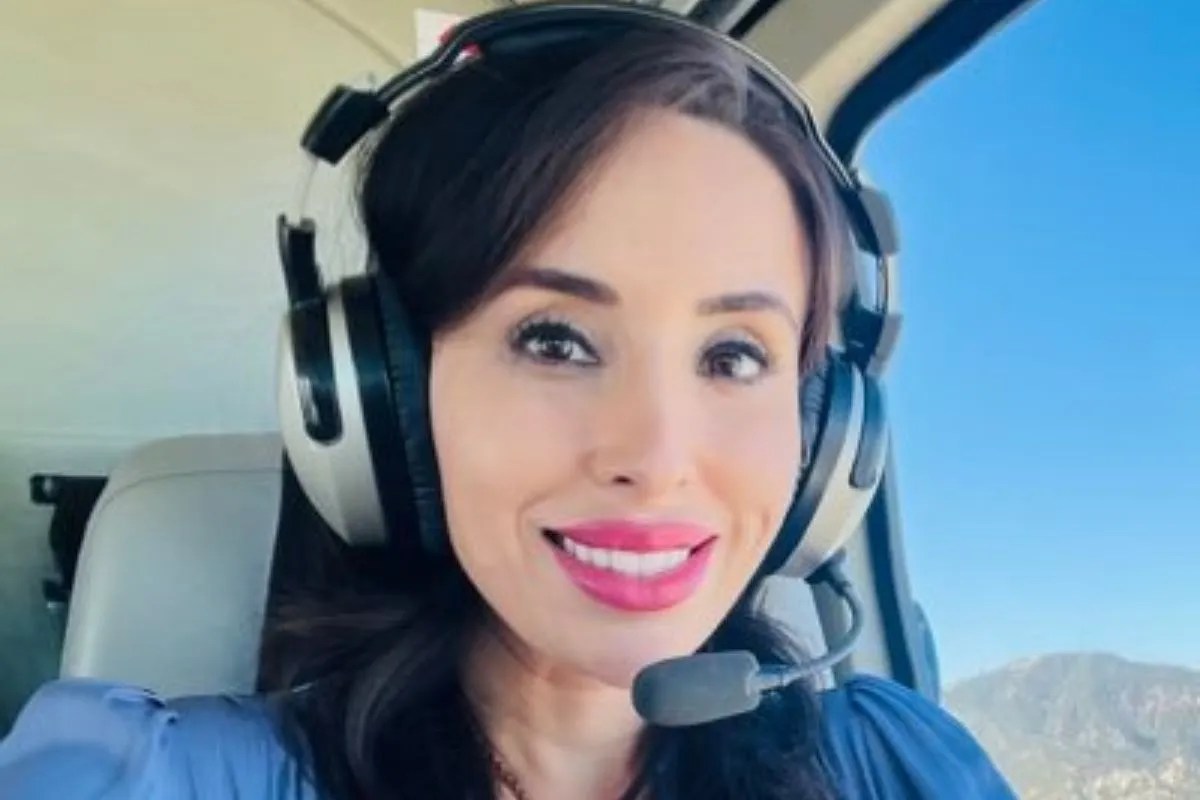
For Eliana Moreno, that high-altitude perspective was not just a vantage point. It was her office. Day after day, she strapped herself into the cramped passenger seat of a news helicopter, headset clamped tight, microphone poised, ready to translate the chaos of the earth below into calm, coherent sentences for thousands of living rooms. She was an aerial reporter—a member of an elite, precarious breed of journalists who trade the safety of solid ground for a bird’s-eye view.
Then came the day the broadcast ended mid-sentence.
The news hit the airwaves like a physical blow. A helicopter crash during live coverage. A sudden, catastrophic descent. And just like that, Eliana Moreno transitioned from the person narrating the tragedy to the tragedy itself.
To understand the weight of that loss, you have to look past the cold statistics of aviation incidents and the sanitized paragraphs of breaking news tickers. You have to step inside the cockpit.
A news helicopter is a marvel of engineering, but it is also a fragile creature at the mercy of unpredictable atmospheric forces. Gusts of wind over a crowded city can turn violent in seconds. Mechanical failures offer zero margin for error when you are suspended over asphalt and steel. Yet, reporters like Eliana chose to fly anyway. Why? Because the ground-level view is inherently limited. When disaster strikes—a massive fire, a sprawling protest, a gridlocked evacuation—the human eye on the pavement sees only fragments. The eye in the sky sees the whole picture.
Eliana understood this hunger for truth. She knew that viewers sitting miles away needed context, orientation, and reassurance. When you hear a calm, steady voice guiding you through an unfolding crisis from above, you trust that voice. You anchor yourself to it.
Her journey to that seat was paved with fierce dedication. Journalism in the skies is not glamorous. It is cramped, loud, and relentlessly demanding. It requires split-second spatial awareness, deep knowledge of local geography, and the ability to maintain absolute composure while dangling over a developing catastrophe. Eliana possessed all of these traits in abundance. Colleagues remember her not just for her professional sharpness, but for her profound empathy. She treated every story not as a ratings opportunity, but as a human experience happening in real-time.
Consider what happens in the final moments of such a flight.
The machine shudders. The pilot shouts a warning over the intercom. The horizon tilts at an unnatural angle. In that fraction of a second, the intellectual distance between observer and participant vanishes entirely. There is no time for a final broadcast, no sign-off for the audience waiting below. There is only the sudden, brutal collision of reality.
When the wreckage was secured and the initial shock settled, the media environment—and the community that welcomed her voice into their homes each morning—was left grappling with a hollow silence. Tributes poured in, filled with grief and disbelief. But words on a screen or tributes on social media often feel inadequate when measuring a life cut short in the line of duty.
Journalism is often called the first rough draft of history. But aerial journalism is history written in real-time, under pressure, often at high personal risk. We consume the news with a casual detachment, sipping coffee while watching live feeds from helicopters, rarely pausing to consider the human heartbeat inside that whirring metal shell.
Eliana Moreno's final flight serves as a sobering reminder of the invisible costs behind the screens we take for granted. Every story delivered from the clouds carries the quiet courage of someone willing to look danger in the eye to bring clarity to the rest of us.
The rotor blades have stopped turning. The sky remains vast, indifferent, and quiet. But the voice that once floated down from the heavens, making sense of a chaotic world, leaves an echo that refuses to fade.