The frost here stays in the soil long after the calendar claims spring has arrived. You can feel it through the soles of your boots, a deep, unyielding chill that reminds anyone living on this flat strip of land just how close the border is.
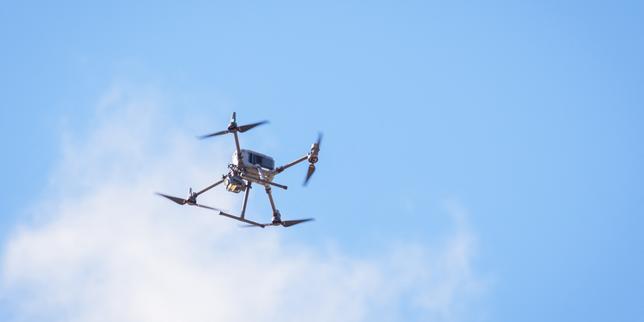
In a classroom in southern Estonia, about forty kilometers from the Russian frontier, twelve-year-old Marten is not looking at a whiteboard. His fingers are small, yet they move with a mechanical precision over the glowing plastic joysticks of a radio controller. Ten yards away, a miniature quadcopter hums with the angry buzz of a trapped hornet, lifting off the linoleum floor and hovering steadily at eye level.
Air resistance. Drift. Battery voltage. These are not abstract physics concepts written on a chalkboard for Marten; they are immediate variables. If he misjudges the wind shear outside the gymnasium doors, his eye in the sky veers off course.
This is what preparedness looks like in a country the size of Denmark, nestled between the Baltic Sea and a neighbor with a long, heavy memory.
For decades, the standard defense of a small nation relied entirely on standing armies, heavy artillery, and treaties signed in distant capitals. But the wars of the twenty-first century have rewritten the geometry of survival. When the frontline is defined by cheap optics and airborne cameras, conventional maps become obsolete. Security is no longer just about guarding trenches; it is about mastering the airspace right above your own backyard.
Consider what happens next. A generation ago, children in these latitudes learned to track stars, identify local flora, or mend fishing nets. Today, the curriculum includes soldering iron safety, frequency hopping, and first-person-view flight dynamics.
It is easy to call this dystopian. It is easy to look at youngsters wearing headsets in a school gym and wring hands over the loss of traditional childhood. But that perspective misses the reality on the ground. To the families living in these Baltic borderlands, naivety is a luxury no one can afford. When your history books are filled with occupations and abrupt borders, you learn early that independence is not a permanent fixture of geography. It is an active verb.
Marten pulls back on the throttle, bringing the drone down in a soft, controlled landing. He removes his goggles, blinking against the sudden brightness of the fluorescent lights. His forehead is damp with concentration.
"If the GPS jams," he says, his voice quiet, matter-of-fact, "you have to fly blind. You have to know the landmarks by heart."
That is the hidden core of this movement. It is not about militarizing children. It is about spatial awareness, technical literacy, and collective resilience. Estonia has long punched above its weight in digital infrastructure—pioneering e-governance, online voting, and cybersecurity. Extending that ethos into physical skies feels less like a radical pivot and more like a logical continuation of a defensive mindset born out of necessity.
When the state runs programs encouraging youth clubs and schools to embrace drone technology, the underlying calculation is stark. A professional soldier takes years to train and costs a fortune to equip. A civilian who understands how to map a terrain, relay coordinates, and maintain a fleet of inexpensive quadcopters represents an entirely different tier of defense. It is decentralized. It is resilient. It cannot be easily dismantled by striking a single military base.
Yet, walking through the quiet streets of Tartu or Tallinn, you do not sense panic. There are no sirens wailing, no frantic bunkers being dug in public parks. Instead, there is a steady, almost stubborn normalcy. Cafes fill with the scent of dark rye and cardamom buns. Bicycles lean unlocked against brick walls. People walk their dogs along the edge of the pine forests. The threat from the east is real, palpable, and acknowledged, but it has been woven into the background hum of daily life rather than dictating every waking hour.
This juxtaposition—serene daily routines paired with pragmatic, quiet readiness—defines the modern Baltic spirit.
Think of an ant colony sensing a change in barometric pressure. The workers do not panic; they simply reinforce the tunnels, adjust the chambers, and prepare for the storm. They do not hate the wind. They simply respect its power to tear down what they have built.
When Marten packs his gear into its molded plastic case and zips it shut, the room falls silent again except for the faint hum of a refrigerator in the corner. He slings the backpack over his shoulders, adjusting the straps over his jacket. He looks like any other kid heading home to do homework and play video games before dinner.
Except when he looks up at the gray afternoon sky, he isn't just seeing clouds. He is seeing vectors, signals, and open space. He is seeing the ground he walks on, and understanding, down to the marrow of his bones, what it takes to keep it.