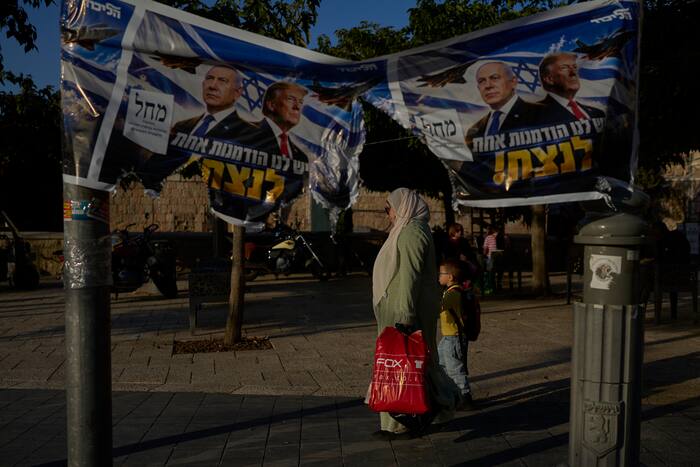
At three in the morning on Ben Yehuda Street, the plastic chairs are stacked, the shawarma spits have gone cold, and the air smells faintly of diesel and night-blooming jasmine. A few blocks away, behind blast walls and bulletproof glass, the fluorescent lights in the Knesset never seem to turn off.
Wait.
That silence in the street is deceptive, because inside those limestone corridors, a handful of men are trading pieces of a country’s soul for a single seat at the cabinet table.
I remember standing outside the Central Elections Committee during one of those endless nights—the kind where political reporters drink muddy Turkish coffee out of paper cups until their hands shake, watching the decimal points crawl across a television screen. You think an election ends when the ballot boxes are taped shut and hauled off in white vans. In Israel, the ballot is merely the opening bid at a high-stakes auction where nobody has enough cash to buy the house outright.
To understand the agonizing choices now staring down Prime Minister Benjamin Netanyahu and his chief rival, you first have to throw away everything you know about winner-take-all democracies. There is no sweeping mandate here. No party in the history of the state has ever won an outright majority of the Knesset’s 120 seats. Instead, politics operates like an intricate, unforgiving game of Jenga: you pull a wooden block from the bottom of the tower to build a precarious shelf at the top, praying the whole structure doesn't collapse before morning.
The Arithmetic of Survival
Let us make this concrete with a hypothetical scenario, though anyone who has ever sat at a Friday night dinner table in Tel Aviv or Jerusalem will recognize the faces immediately.
Meet Avi. Avi is a hypothetical forty-two-year-old software engineer living in Modi'in, halfway between the coast and the capital. He spent sixty days in reserve duty last year, misses his kids' bedtime more often than he wants to admit, and pays nearly half his paycheck in taxes. Across town lives Miriam, a hypothetical sixty-eight-year-old retired teacher in a religious neighborhood of Jerusalem, whose grandchildren study in state-funded religious schools and whose husband visits the synagogue twice a day.
Avi and Miriam rarely meet, yet their lives are tethered together by the cold math of the number sixty-one.
In a parliament of 120 seats, 61 is the magic threshold—the bare minimum required to form a governing coalition, pass a budget, and keep the lights on. When the dust settles after an election and neither Netanyahu’s right-wing religious bloc nor the opposition led by his primary rival can effortlessly claim those 61 seats, the real campaign begins. It happens out of sight, in hotel suites in Herzliya and quiet offices in Jerusalem, away from the television cameras.
For Netanyahu, the longest-serving prime minister in Israel’s history, the postelection calculus is intensely personal as much as it is ideological. Having dominated Israeli public life since the mid-1990s, he understands the levers of parliamentary power better than almost anyone alive. Yet his choices after a deadlocked vote are boxed in by two unforgiving realities: the demands of his ideological partners on the far right and the ultra-Orthodox parties, and the ticking clock of his ongoing corruption trials, charges he has consistently denied as a politically motivated witch hunt.
If he leans too hard into the demands of his most ardent allies—promising sweeping judicial overhauls, expanded settlement budgets, or blanket military draft exemptions for seminary students—he alienates the moderate center and risks fracturing the social contract that keeps people like Avi showing up for reserve duty. If he refuses those demands, his coalition evaporates before it is even sworn in.
The Rival’s Impossible Bargain
Now look across the aisle at his top rival. Whether that figure emerges from the centrist, security-establishment camp—men like Benny Gantz or Yair Lapid, who have spent years trying to construct an alternative governing architecture—the dilemma is an exact mirror image, only with sharper edges.
To unseat a political titan like Netanyahu, an opposition leader cannot simply win a plurality; they must stitch together a patchwork quilt of factions that agree on almost nothing except who they want out of the Prime Minister’s Residence on Balfour Street.
Think about what that actually looks like in practice. Imagine trying to write a single government platform signed by secular Tel Aviv liberals who want public transportation on the Sabbath, right-wing nationalist defectors who oppose any territorial concessions to the Palestinians, and Arab-Israeli lawmakers demanding equal municipal funding and an end to systemic neglect.
How do you keep a cabinet room from erupting into a shouting match before the coffee is even poured?
You don't. Not for long. Israel already watched a version of this experiment play out in 2021, when an unprecedented "change coalition" spanning eight wildly divergent parties managed to govern for barely a year before internal contradictions tore it apart from the inside out. That memory haunts every opposition strategist today. When a rival sits down after an election to decide whether to attempt another fragile unity experiment, join a rotating government with Netanyahu himself, or retreat to the opposition benches to wait for the government to implode, every path looks like a minefield.
Joining Netanyahu offers immediate access to ministries—Defense, Finance, Foreign Affairs—and a chance to moderate policy from within. Yet history has been brutal to rivals who took that handshake. Time and again, junior partners who entered a Netanyahu-led unity government found themselves outmaneuvered, stripped of leverage, and politically hollowed out by the time the next election rolled around.
Refusing to join, on the other hand, carries its own quiet terror. What if stepping back hands the keys of the state entirely to the most extreme voices in the parliament? What if, by keeping your ideological hands clean, you leave the country’s courts, economy, and diplomatic standing to be reshaped without a moderating voice in the room?
The Invisible Stakes in the Living Room
It is easy, watching from thousands of miles away, to reduce Israeli coalition negotiations to a cynical parlor game of ministerial portfolios and political survival. That is what the pundits do. They draw charts on touchscreens and count mandates like baseball cards.
They miss the blood pressure in the room.
When a prime minister or his rival trades away the Ministry of Finance, the Education portfolio, or control over the judicial selection committee during postelection horse-trading, the consequences do not stay inside the Knesset. They land directly on Avi’s kitchen table in Modi'in and Miriam’s front porch in Jerusalem.
Consider the battle over military conscription—one of the sharpest fault lines in modern Israeli life. For decades, ultra-Orthodox yeshiva students were largely exempted from mandatory military service, an arrangement born in 1948 when David Ben-Gurion agreed to shield a few hundred scholars to rebuild a Torah world decimated by the Holocaust. Today, that small group has grown into a rapidly expanding demographic making up more than thirteen percent of the population.
After years of grinding multi-front conflict and exhausted reserve battalions, the question of who carries the stretcher has ceased to be an abstract legal debate. If Netanyahu signs a coalition agreement that enshrines broad exemptions to secure the loyalty of ultra-Orthodox parties, Avi feels a cold knot in his stomach every time his duffel bag comes out of the closet. Conversely, if an opposition leader pushes aggressive sanctions and forced conscription without a realistic path to integration, Miriam feels her community’s entire way of life is being criminalized by people who neither understand nor respect it.
Neither side is acting out of pure malice. Both are trapped inside a constitutional design that rewards small, disciplined factions with outsized veto power.
Because Israel uses a pure proportional representation system with a low electoral threshold—currently 3.25 percent of the national vote—a tiny party representing a narrow slice of the electorate can hold the decisive four or five seats needed to cross the 61-seat finish line. In that final week of negotiations, the tail doesn't just wag the dog; the tail writes the budget.
The Ghosts of Elections Past
If this feels exhausting, it is because the country has lived through the vertigo of repetition. Between 2019 and 2022, Israelis went to the polls five times in less than four years.
Five times.
Think about what that does to a society’s nervous system. Campaigns stop being moments of democratic renewal and turn into a permanent state of low-grade civil fever. Neighbors stop talking about books or football and start scanning bumper stickers in supermarket parking lots. Investors hesitate before opening new research centers in Haifa. Diplomats in Washington, Cairo, and Riyadh put major regional initiatives on ice because nobody knows who will be answering the phone in Jerusalem six months from now.
I still remember the mood during the fourth election in that sequence—a strange, hollow fatigue that hung over the polling stations like fog. People voted not with hope, not even with anger, but with the grim resignation of someone shoveling snow during a blizzard that refuses to stop.
That exhaustion is the invisible third player at the negotiating table today. Both Netanyahu and his rival know that triggering yet another snap election is a gamble with public trust that neither can easily afford. Yet the structural incentives push them relentlessly toward brinkmanship.
In game theory, there is a classic trap known as the dollar auction: two bidders compete for a one-dollar bill, with the catch that both the winner and the runner-up must pay their highest bid. Once both players have bid past a dollar, nobody is playing to win anymore; they are playing simply to avoid being the one who loses everything.
Postelection Israeli politics has become the ultimate dollar auction. Nobody wants to blink first, because blinking means watching your rival claim the prize while your own coalition partners accuse you of betrayal.
What Actually Breaks the Deadlock
So how does a democracy climb out of a 61-seat trap when every exit is guarded?
History suggests the answer rarely comes from a sudden burst of goodwill among party leaders. Politicians seldom surrender leverage out of pure altruism. Instead, deadlocks break when the external pressure—economic, diplomatic, or street-level—becomes heavier than the fear of losing a cabinet seat.
Look closely at the three forces quietly shaping the choices in Jerusalem right now:
- The Bond Market and the Brain Drain. Israel’s high-tech sector generates roughly a fifth of the country’s economic output and more than half of its exports. Unlike citrus groves or mineral mines, software engineers and venture capital funds can pack up and relocate to Austin, London, or Berlin on a single commercial flight. Whenever coalition deals threaten judicial independence or balloon deficit spending to fund non-productive sectors, credit rating agencies and currency markets react within hours. No prime minister can govern a modern military power with a collapsing shekel.
- The Street as a Counterweight. Israelis possess an almost unmatched capacity for civic mobilization. Whether it is hundreds of thousands of citizens flooding Kaplan Street in Tel Aviv with flags, or grassroots reservist networks issuing quiet warnings to their commanders, the public has demonstrated repeatedly that a 61-seat majority on paper does not guarantee the ability to govern in reality if the broader public withdraws its consent.
- The Regional Clock. The Middle East does not pause for Israeli coalition talks. Fragile ceasefires, normalization prospects with Arab neighbors, nuclear deadlines in Tehran, and the future governance of Gaza all demand decisions that cannot wait for a sub-committee to finish haggling over deputy ministries. Reality has a way of kicking down the door of the negotiating room.
At some point, either Netanyahu or his rival must decide which price they are willing to pay: the wrath of their political base today, or the judgment of history tomorrow.
For Netanyahu, the boldest—and riskiest—move would be breaking free from his most hardline flank to forge a broad national consensus around core security and economic priorities, even if it costs him the unconditional shield of his current allies. For his rival, the test is whether he can offer a vision of the state compelling enough to pull moderate voters across tribal lines, rather than relying solely on the glue of opposing one man.
Dawn Over the Limestone
Morning comes quickly to Jerusalem. Around five-thirty, the first pale gold light hits the stone walls of the Old City, turning the limestone the color of warm honey. Down at the Machane Yehuda market, wooden shutters rattle open, crates of figs and tomatoes are wheeled over the cobblestones, and the arguments over politics begin all over again over small glasses of hot tea with mint.
Avi is already awake in Modi'in, packing lunches and checking the morning news on his phone before the commute to Tel Aviv. Miriam is opening her kitchen window in Jerusalem to let in the cool mountain air.
Neither of them sits in the Knesset. Neither of them gets a vote in the backroom sessions where ministries are carved up and coalition agreements are initialed at dawn. Yet everything those leaders decide in the coming days—every compromise struck, every red line crossed, every seat traded to reach sixty-one—will be written directly onto the lives of Avi, Miriam, and their children.
The lights in the parliament building finally flicker off as the sun clears the Judean hills, leaving behind a quiet question that no coalition agreement can ever quite settle: when you spend everything just to win the room, what is left of the house?

