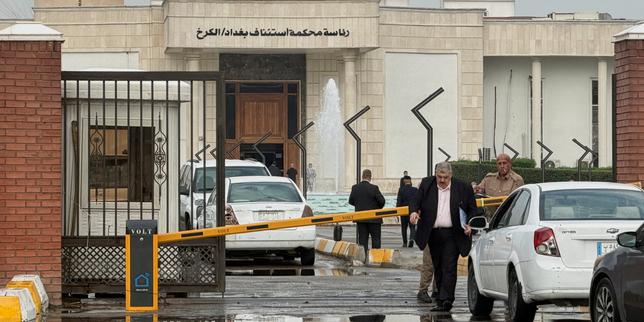
Baghdad didn't flinch. Six more French nationals just received life sentences in an Iraqi courtroom for joining the Islamic State group, and the headline name among them is Thomas Barnouin.
If you've followed European counterterrorism over the last twenty years, that name hits differently. Barnouin isn't some impressionable teenager who got radicalized on Telegram in 2015. He's a veteran of the infamous Artigat network in southwestern France, a man who moved in the exact same circles as Mohamed Merah and Fabien Clain long before ISIS ever declared a caliphate.
Now, he'll spend the rest of his life behind bars in Iraq. Under Iraqi criminal law, a life sentence isn't twenty-five years with a shot at parole. In most terrorism cases processed under Iraq's 2005 anti-terrorism law, it means twenty years to natural life depending on the specific statutory framing, though for foreign fighters handed over from Syria, it effectively closes the door on ever returning to Europe.
Paris watched it happen. Again.
Who Is Thomas Barnouin and Why Does His Verdict Matter
Most coverage treats these trials like routine court blotter updates. That's a massive mistake.
Thomas Barnouin represents the institutional memory of French jihadism. Born in 1981 in Albi, he converted to Islam in his late teens and quickly gravitated toward Olivier Corel—known locally as the "white emir" of Artigat, a tiny village in the Ariège department. That rural hamlet became the intellectual and logistical incubator for an entire generation of French extremists.
Barnouin didn't just talk theory. In 2006, Iraqi security forces arrested him alongside Sabri Essid—Mohamed Merah's stepbrother—while they were trying to join al-Qaeda in Iraq. France got him back eventually. A French court sentenced him to five years in prison in 2009. He served his time, walked out in 2014, and immediately took his wife and children straight to Syria to join ISIS.
Think about that timeline. He was already on every intelligence radar in Paris, yet he slipped through the cracks and spent years inside the caliphate's ranks before Kurdish-led Syrian Democratic Forces captured him in late 2017 near Hasakah.
When the SDF transferred him and other high-value French detainees across the border to Iraqi custody, his fate was basically sealed. Baghdad doesn't parse the finer points of rehabilitative justice. If you crossed into Iraqi territory—or worked for an organization that slaughtered tens of thousands of Iraqis—the Central Criminal Court in Baghdad treats you as an enemy combatant subject to local statutes.
How Iraq Processes Foreign ISIS Fighters
You can't understand these verdicts without looking at the legal machinery driving them.
Since the territorial defeat of ISIS between 2017 and 2019, thousands of foreign fighters ended up stuck in limbo in northeastern Syria. Kurdish authorities lacked the statehood, courts, and resources to try them properly. European governments, terrified of the domestic political backlash and evidentiary hurdles back home, dragged their feet on repatriation.
Iraq stepped into that vacuum. Under Article 4 of Iraq's Anti-Terrorism Law No. 13 of 2005, membership in a terrorist organization carries either the death penalty or life imprisonment. The evidentiary bar is radically lower than what a French investigating magistrate in Paris would demand.
In France, prosecutors have to prove specific acts, chain-of-custody records from war zones, and individual criminal intent. In Baghdad, an admission of allegiance to ISIS—or credible intelligence showing you entered Iraq under the group's banner—is enough for a conviction in a hearing that often lasts less than an hour.
Here's what separates the Baghdad trials from European judicial proceedings:
- Jurisdiction over cross-border activity. Even if a French fighter spent most of their time in Raqqa or Deir ez-Zor in Syria, Iraqi courts claim jurisdiction the moment there's evidence they operated on Iraqi soil or supported operations inside Iraq.
- No plea bargains for repatriation. Once Baghdad asserts jurisdiction and hands down a sentence, bilateral prisoner transfer agreements don't exist to bring them back to French prisons.
- Commutations from death to life. Earlier waves of French jihadists tried in Baghdad in 2019—including figures like Kevin Gonot and Léonard Lopez—initially received death sentences, which Iraqi appellate courts later commuted to life imprisonment following diplomatic pressure from Paris.
Notice the pattern. Baghdad has calibrated its approach. Instead of triggering diplomatic crises with European capitals over executions, Iraqi judges are increasingly handing down life sentences right out of the gate. It satisfies Iraq's demand for accountability while avoiding the political fallout of executing citizens from countries that abolished capital punishment decades ago.
The Silent Policy of Outsourced Justice
Let's be honest about what's happening here. France—alongside the United Kingdom, Germany, and Belgium—has quietly relied on Iraqi courts to solve a problem it didn't want to handle at home.
Publicly, the French Ministry for Europe and Foreign Affairs maintains a consistent line. Paris states that it respects Iraq's judicial sovereignty while opposing the death penalty in all circumstances and ensuring consular protection for its nationals.
Privately? French intelligence and political officials know that bringing a figure like Barnouin back to Paris creates massive headaches. First, you have to build a airtight case using battlefield evidence collected by foreign militias, which defense lawyers routinely challenge in French courts. Second, even if convicted in France, terrorism sentences have finite limits, meaning someone like Barnouin could theoretically walk free again in his sixties or seventies—just like he walked free in 2014 before heading to Syria.
By letting Baghdad try these six men, Paris avoids both the courtroom risk and the future release date.
Human rights organizations like Human Rights Watch and Amnesty International have hammered this approach for years. They point out—accurately—that trials in Baghdad's Central Criminal Court fall short of international fair-trial standards. Defendants rarely get adequate access to independent counsel, translation during proceedings can be patchy, and allegations of coerced confessions during initial interrogations persist.
Both things can be true at the same time. These men joined a genocidal organization that enslaved Yazidis and massacred Iraqi civilians, and the judicial process convicting them operates under standards no European constitutional court would ever accept.
What Happens to the Remaining French Detainees
This latest group of six won't be the last.
Hundreds of French adult nationals—men and women—have spent years in SDF-run prisons and camps like al-Hol and Roj in northeastern Syria. While France eventually conducted several targeted repatriations of women and children following rulings by the European Court of Human Rights and the UN Committee on the Rights of the Child, Paris drew a hard red line on adult male fighters.
The message to anyone tracking European counterterrorism policy is crystal clear. If you're a French citizen who joined ISIS and ended up in custody in the Levant, you aren't coming home to face a magistrate at the Palais de Justice in Paris.
If you're following these cases for legal, journalistic, or policy research, focus on three specific indicators over the coming months:
- Appellate filings in Baghdad. Watch whether Iraq's Court of Cassation upholds these six life sentences without modification, which has become the standard outcome for non-execution verdicts.
- Transfer logs from northeastern Syria. Any movement of high-profile European detainees from SDF facilities in Hasakah to Iraqi detention centers signals an upcoming batch of trials in Baghdad.
- European Court of Human Rights dockets. Families of detained French nationals continue to file challenges arguing that Paris has a positive obligation to repatriate its citizens rather than leaving them to foreign jurisdictions.
Thomas Barnouin spent twenty years testing the limits of French counterterrorism laws, walking out of prison once before and returning straight to the battlefield. In Baghdad, there won't be a second release date.