Everyone loves a David-versus-Goliath highlight reel.
A $250,000 fiberglass hull packed with explosives slams into a £150 million Russian corvette, blows a hole through its waterline, and sends the pride of the Black Sea Fleet to the bottom. The internet erupts. Defense pundits declare the death of the surface navy. Politicians boast about secret missions and asymmetric genius.
They are looking at the scoreboard while missing the game.
The mainstream press treats Ukraine’s unmanned surface vessel (USV) strikes—like the attacks that sank the Ivanovets, the Caesar Kunikov, and the Sergey Kotov—as an unmitigated strategic triumph. That is the lazy consensus. While those missions are breathtaking feats of tactical improvisation, celebrating them as a war-winning doctrine ignores the brutal economics of attrition, the temporary nature of electronic warfare gaps, and the dangerous delusion that cheap drones can replace actual sea control.
The Myth of the Asymmetric Silver Bullet
Let us define the terms precisely before the armchair admirals get carried away.
When commentators talk about Ukraine’s drone boat campaign, they usually confuse sea denial with sea control. Sea denial means preventing your enemy from using a stretch of water. Sea control means you can actually use that water yourself to move troops, project power, and secure supply lines.
Ukraine’s fleet of Magura V5 and Sea Baby drone boats has achieved brilliant sea denial in the western Black Sea. They pushed Russian surface combatants back toward Novorossiysk and opened a vital grain corridor along the coast of Romania and Bulgaria. That is real. That matters.
What those drones cannot do is hold territory, enforce a blockade against a determined air force, or escort a contested amphibious landing.
I have spent years analyzing defense procurement and watching militaries fall in love with cheap, flashy hardware that solves yesterday's tactical bottleneck while creating tomorrow's strategic blind spot. The pattern never changes. A nation finds an inexpensive way to humiliate a legacy platform, builds its entire doctrine around that single trick, and gets blindsided the moment the adversary adapts.
And make no mistake: Russia is adapting.
Why the £150 Million Price Tag Comparison Is a Trap
Every viral article about these strikes leads with the same seductive math: a quarter-million-dollar drone destroys a £150 million warship. On paper, that is a 600-to-1 return on investment.
In a real war of attrition, unit cost ratios only tell half the story. The other half is industrial replacement capacity and expenditure volume.
When Ukraine launches a "devastating fleet" of drone boats, they are rarely sending one or two vessels. Saturated attacks against a defended warship require swarms—often six, ten, or a dozen USVs per target. Half of them get chewed up by heavy machine guns, 30mm autocannons, or Ka-29 helicopters before they ever reach the hull.
Meanwhile, what is the actual strategic value of the target?
- The hulls Russia loses are mostly legacy or mid-tier assets. Sinking a Tarantul-class corvette or a Ropucha-class landing ship hurts Russian pride and degrades local logistics, but it does not touch Moscow’s strategic nuclear deterrent, its long-range submarine-launched cruise missile capacity, or its ground forces grinding forward in the Donbas.
- The Kremlin’s real war machine runs on artillery shells, glide bombs, and infantry. Losing a £150 million patrol ship in Crimea does nothing to stop a 1,500-kilogram FAB glide bomb from flattening a Ukrainian defensive line in Donetsk.
- Ukraine’s drone supply chain is fragile. Every Magura V5 relies on commercial satellite communications, imported engines, Western microelectronics, and coastal launch sites that are constantly hunted by Russian reconnaissance drones and Iskander ballistic missiles.
If you spend millions of dollars and months of specialized engineering to sink a ship that was already hiding in port, you have won a propaganda victory. You have not changed the correlation of forces on the ground.
What Everyone Gets Wrong About Naval Warfare
When readers search for news on these drone strikes, they usually ask some version of the same flawed question: Are traditional warships obsolete now?
No. Not even close.
The idea that the aircraft carrier, the destroyer, or the frigate is dead because a speedboat with a warhead sank a Russian patrol ship is pure historical amnesia. People said the exact same thing when the Whitehead torpedo appeared in the 1870s. They said it again when submarines sank battleships in World War I, and again when Exocet anti-ship missiles sank HMS Sheffield in the Falklands in 1982.
Warships did not disappear. They evolved layered defenses.
Look at why Russian ships in the Black Sea were so vulnerable in the first place:
- Doctrinal incompetence: The Russian Navy routinely operated single ships without adequate air cover, electronic warfare screening, or picket vessels.
- Sensor blindness: Legacy Soviet-era radars on ships like the Ivanovets were designed to spot high-altitude bombers and large anti-ship missiles, not a two-meter-tall fiberglass hull skimming the wave tops at 40 knots.
- Crew complacency: Night after night, Russian watchstanders failed to detect low-profile targets until they were within a few hundred meters—well inside the minimum engagement range of their primary weapon systems.
Imagine a scenario where those exact same drone boats tried to attack a modern US Navy Arleigh Burke-class destroyer operating within a carrier strike group. Between airborne E-2D Hawkeye surveillance, EA-18G Growler electronic attack aircraft jamming satellite links, infrared horizon search systems, and automated close-in weapon systems, a surface drone swarm would be spotted and dismantled miles before visual contact.
Ukraine’s drone boats did not prove that warships are obsolete. They proved that sloppy, poorly defended warships operating in a restricted body of water against an innovative enemy will get slaughtered.
The Uncomfortable Truth About "Secret Missions"
Notice how the media frames these operations: Zelensky reveals incredible secret mission.
Ask yourself why a wartime president publicly reveals the mechanics, unit names, and operational details of a "secret" capability while the war is still raging.
Because information warfare is half of Ukraine’s defense budget.
Kyiv needs Western taxpayers and lawmakers to believe that every dollar sent to Ukraine produces spectacular, asymmetric miracles. Showing high-definition infrared footage of a drone boat slamming into a Russian warship is the ultimate fundraising pitch. It projects momentum. It counters fatigue. It makes the war look winnable through cleverness rather than brute-force industrial slaughter.
There is nothing wrong with using tactical wins for strategic messaging. Every smart wartime leader does it. Winston Churchill milked the Dam Busters raid in 1943 for every ounce of morale and Allied political capital he could get, even though the actual damage to German Ruhr steel production was repaired within weeks.
The danger happens when the people writing the checks—and the generals planning the campaigns—start believing their own press releases.
The Countermeasures Are Already Catching Up
Defense innovation is a pendulum, and it swings faster in wartime than most commentators realize. Right now, the pendulum is swinging back against uncrewed surface vessels.
Russia is no longer sitting around waiting to be hit in the dark. Over the past year, Moscow has deployed a ruthless, low-tech counter-drone ecosystem across the Black Sea:
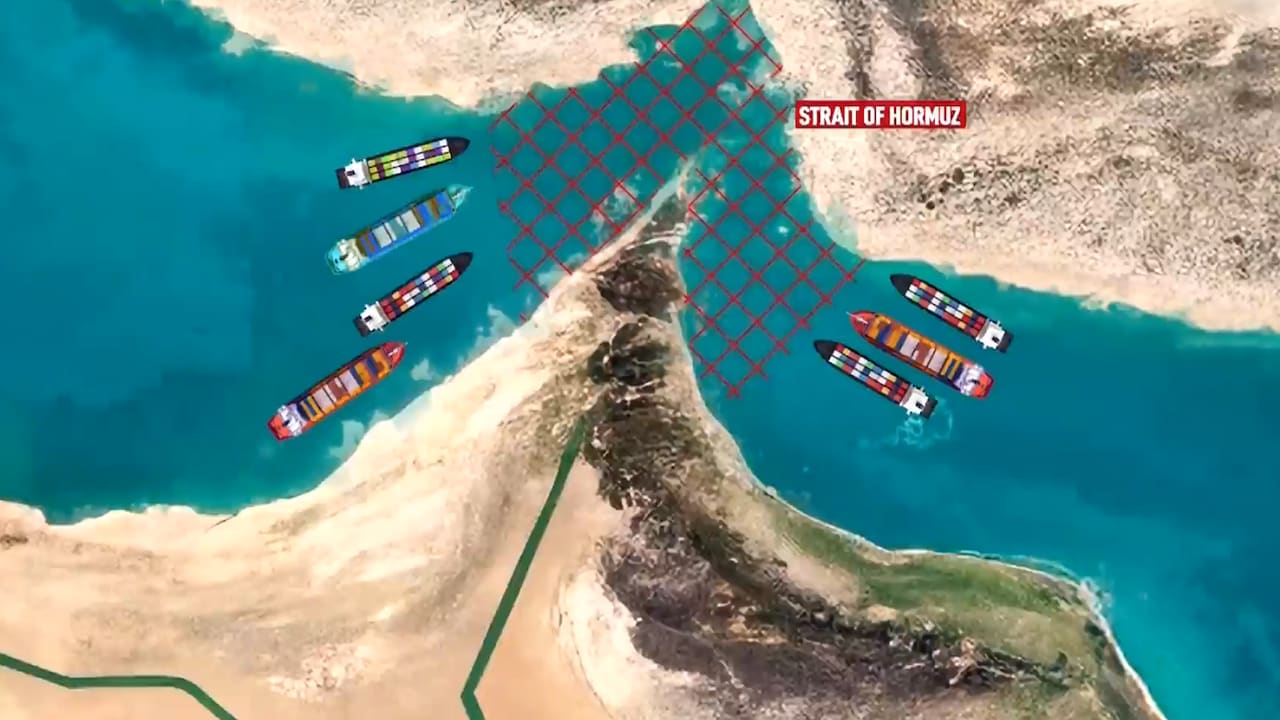
- Physical choke points: Harbor entrances at Sevastopol and Novorossiysk are now sealed behind multi-layered floating booms, sunken barges, and anti-torpedo nets.
- Aviation hunter-killer teams: Russian naval aviation has shifted Mi-8 and Ka-29 helicopters into dedicated USV-hunting roles, using thermal optics and door-mounted heavy machine guns to pick off drone boats in open water where the drones have zero cover.
- Electronic warfare saturation: Intense GPS spoofing and satellite communication jamming along the Crimean coast have forced Ukrainian operators to rely on autonomous terminal guidance, which drastically lowers hit rates against maneuvering targets.
- Mirroring the threat: Russia has accelerated its own uncrewed surface boat programs, building copies of Ukrainian designs to threaten Odesa and Ukrainian riverine logistics on the Dnipro.
The window of easy kills is closing. Every subsequent strike requires more drones, better autonomy, heavier payloads, and higher operational risk.
The Downside of the Contrarian View
Let me be completely honest about the flaw in my own argument.
If you take my skepticism too far, you end up sounding like the rigid naval traditionalists who dismissed submarines and aircraft carriers a century ago. It is undeniable that Ukraine’s drone boat campaign has permanently altered naval planning from the Taiwan Strait to the Red Sea.
Even if USVs cannot win a war on their own, they have shattered the monopoly that wealthy, industrial powers once held over maritime access. A country with zero traditional navy—no destroyers, no submarines, no naval aviation—managed to neutralize a major fleet and dictate terms in its own coastal waters. Every navy on earth, including the US Navy and China’s People’s Liberation Army Navy, is now scrambling to rewrite its littoral defense doctrine because of what Ukrainian engineers built in secret workshops.
Ignoring that shift would be malpractice.
What Serious Strategists Should Actually Do
If you are watching this conflict to understand the future of warfare—or if you are in the defense sector trying to figure out where the next decade of procurement is going—stop cheering for viral explosion videos and start focusing on the fundamentals that actually win wars.
- Stop treating autonomous systems as standalone replacements. A drone boat without overhead intelligence, electronic warfare support, and resilient communications is just an expensive firework. Invest in the network, not just the explosive hull.
- Prioritize counter-uncrewed defense before offensive swarms. Anyone can strap a warhead to a remote-controlled boat. The real competitive advantage belongs to the force that can detect, jam, and destroy low-signature targets cheaply at scale—using directed energy, automated electro-optical turrets, and acoustic sensors.
- Measure strategic impact, not tactical aesthetics. Sinking a £150 million ship makes a great headline, but disrupting an enemy's fuel, rail, and artillery logistics wins campaigns. Allocate resources to targets that break the enemy's ability to fight tomorrow, not targets that look best on television tonight.
Ukraine’s naval engineers pulled off one of the most audacious improvised campaigns in modern military history. They embarrassed a superpower with fiberglass, Starlink terminals, and sheer nerve.
Just do not confuse a brilliant ambush with a blueprint for victory.