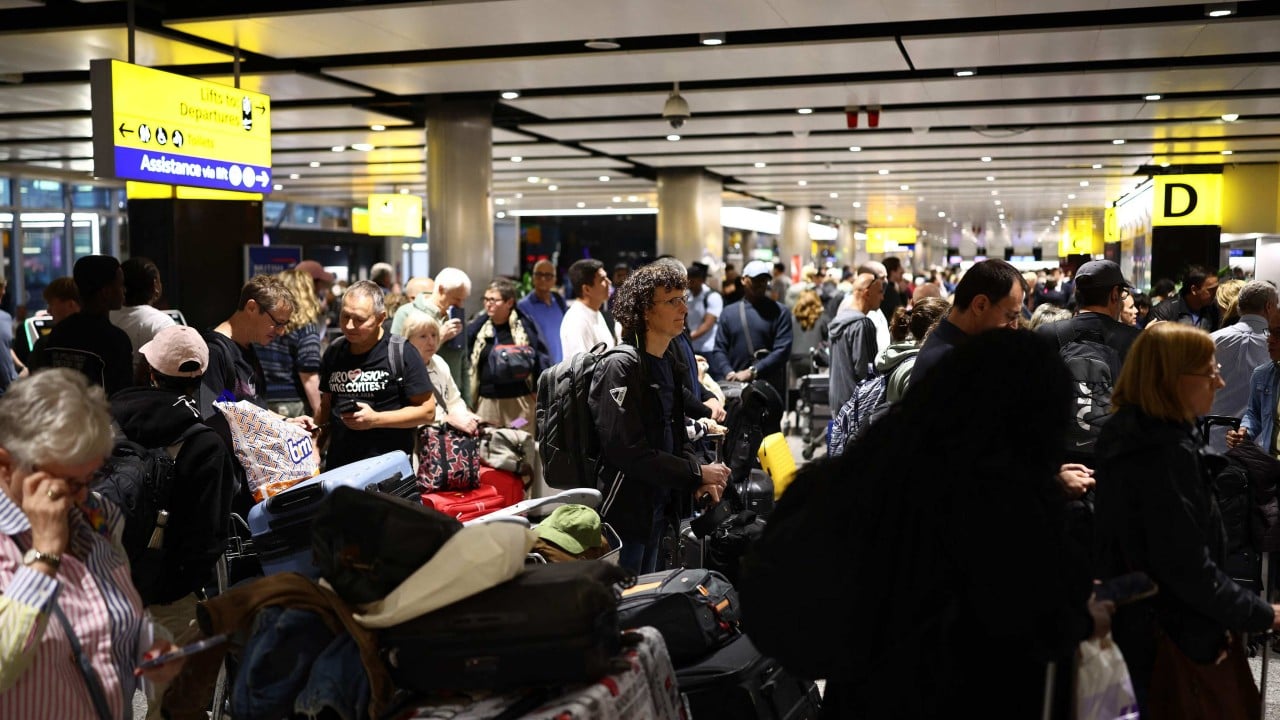
Imagine a digital infrastructure handling hundreds of thousands of lives daily, only to be brought to its knees by a miscalculation lasting one-thousandth of a second. That is precisely what happened when a tiny line of faulty logic inside Britain's air traffic control network triggered over 2,000 flight cancellations and stranded hundreds of thousands of passengers.
When National Air Traffic Services (NATS) released its preliminary investigation into the September disruption, the findings revealed a terrifying fragility in modern aviation logistics. It wasn't a sophisticated cyberattack or a massive hardware explosion. It was a microscopic software error happening in the blink of an eye. If you liked this piece, you might want to read: this related article.
What Actually Happened Inside the Code
The root of the chaos lies within the core software responsible for allocating identification codes to individual aircraft. These codes are the digital heartbeat of radar tracking, allowing controllers to monitor every plane ascending or descending through UK airspace.
On the day of the failure, the system was processing a routine manual request for an aircraft code when an incoming message of higher priority momentarily paused the operation. When the software attempted to resume its primary task a millisecond later, the code failed to re-engage properly. For another look on this story, see the latest update from TechCrunch.
This micro-interruption corrupted the outgoing output data stream. Instead of gracefully recovering or throwing an error, the system cascaded bad updates across subsequent flight data registries. Controllers suddenly lost clean visibility, forcing them to slam the brakes on airspace movements to prevent catastrophic mid-air risks. Safety protocols mandated immediate restrictions, grounding flights for roughly six hours while engineers desperately scrambled to reload and resynchronize flight databases.
Why the Recovery Took Days
A technical fix deployed within hours doesn't mean planes instantly return to the skies. That is the fundamental misunderstanding most people have about aviation logistics.
When NATS restricted movement, aircraft, flight crews, and ground equipment were instantly scattered out of position. British Airways alone scrapped nearly 550 flights, while carriers like Etihad and Emirates faced heavy international knock-on delays.
Clearing the massive backlog took more than two full days. Planes were parked at the wrong gates, pilots timed out of their legal duty hours, and terminals filled shoulder-to-shoulder with frustrated travellers. Airspace is an intricately choreographed dance; if you stop the music for six hours, it takes days to get everyone back on beat.
The Broader Vulnerability of Modern Infrastructure
This incident exposes an uncomfortable truth about the systems running our global economy. We rely on hyper-complex legacy software architectures patched together with modern frameworks. When codebases grow old and bloated, unexpected edge cases emerge. A race condition or a missed execution thread can lie dormant for years until a precise alignment of background tasks triggers the flaw.
Airlines and industry leaders didn't hold back their frustration. Executives pointed out that blaming a millisecond glitch offers little comfort to passengers missing weddings, business meetings, and vacations. Calls for modernized technological resilience and independent regulatory reviews highlight a growing consensus: our aviation networks are pushing capacity limits where single points of failure carry catastrophic human costs.
Preventing future crashes of this scale means rethinking how safety-critical software is tested. Traditional QA processes often fail to simulate the chaotic, high-concurrency environment of real-world air traffic control. Moving forward, engineering teams must build systems that prioritize fault isolation, ensuring a momentary micro-glitch in code handling aircraft codes cannot bleed into total airspace blindness.
Check your carrier's current operational alerts and build extra buffer time into tight international connections if you're flying through congested European corridors this season.
Flight chaos for hundreds of thousands was caused in 'millisecond' by software error explains the timeline and immediate reactions to the NATS software failure that disrupted UK airports.


