Singapore wants to manufacture a soul. The recently unveiled Greater Sentosa Master Plan aims to double the size of the city-state's premier island getaway over the next two decades, absorbing the 120-hectare former industrial port of Pulau Brani to create a sprawling playground. The explicit objective of the Sentosa Development Corporation is to double visitor numbers by replacing older infrastructure like the Sentosa Express monorail with high-capacity surface trams, adding new beach clubs, and expanding theme park territory. But the implicit goal is far more audacious. Singapore is attempting to build an engineered alternative to the raw, organic pull of regional heavyweights like Bali and Phuket.
It is a multi-billion-dollar gamble that confuses infrastructure with identity. While the city excelled at turning a swamp into a financial metropolis, applying the same top-down, algorithmic urban planning to the messy, emotional business of leisure exposes a fundamental misunderstanding of why people travel. In other developments, we also covered: The Geopolitical Espresso Shot Inside South Korea’s Dystopian Border Tourism Boom.
The Fallacy of the Manufactured Sanctuary
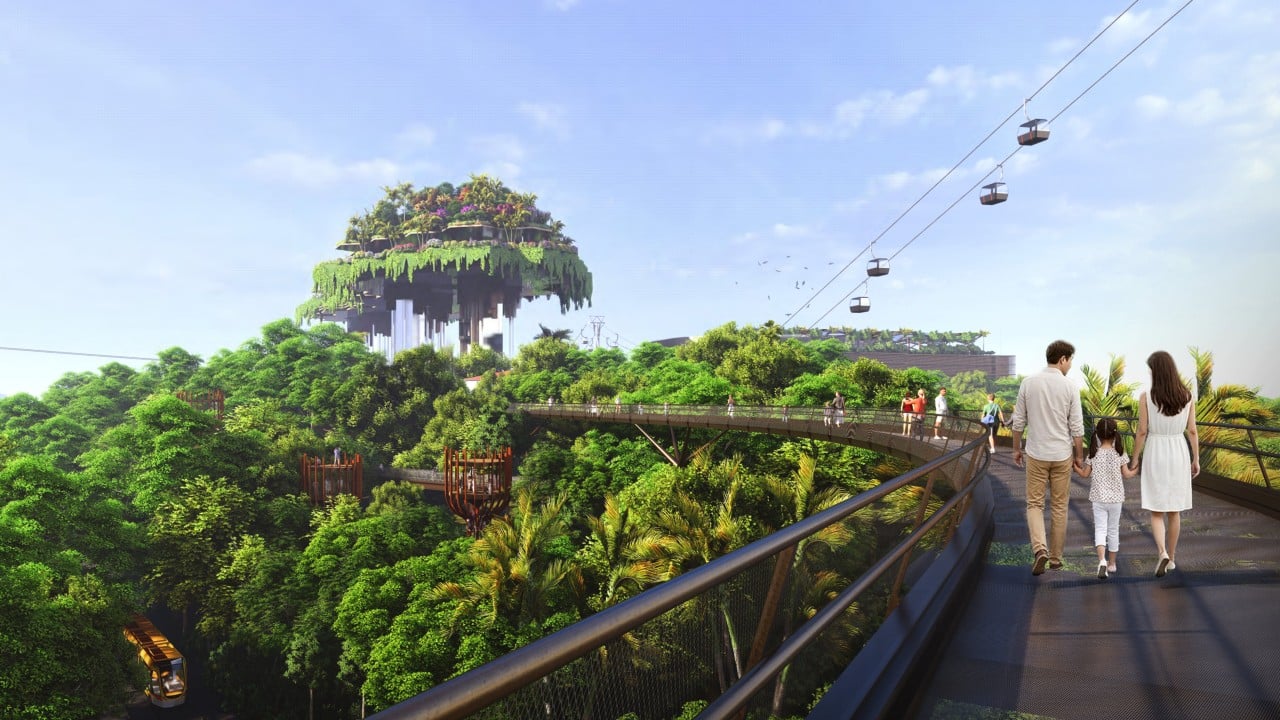
The blueprint for the Greater Sentosa Master Plan relies heavily on scale and predictability. Phase One has officially commenced, focusing on a new lifestyle and hospitality district called the Island Heart, alongside upgraded coastal defenses and elevated walkways on Mount Imbiah. The marketing literature speaks of a landscape-led destination where ecology, mobility, and public life are interconnected.
But true leisure destinations thrive on what planners cannot control. Bali captures the global imagination because of its authentic cultural texture—the ambient smell of clove cigarettes and incense, the decentralized rhythm of village life, and a distinct spirituality that cannot be codified in a government white paper. Phuket, despite its commercialization, possesses a rugged geographical drama and an anarchic culinary energy. Lonely Planet has provided coverage on this important topic in great detail.
Singapore offers a different proposition. It is a hyper-managed environment where every tree is cataloged, every beach is nourished with imported sand, and every interaction is optimized for maximum efficiency. When you visit Sentosa, you are not stepping into an escape; you are entering a highly monetized, air-conditioned simulation of an escape.
The Numbers Game vs The Experience Gap
Planners point to the projected influx of visitors as proof of concept. The integration of Pulau Brani and the upcoming Resorts World Sentosa 2.0 expansion—complete with Super Nintendo World—will undoubtedly drive foot traffic.
| Metric | Current Sentosa Baseline | Greater Sentosa Master Plan Goal |
|---|---|---|
| Land Area | 500 hectares (approx.) | ~620 hectares (including Pulau Brani) |
| Primary Visitor Mix | 80% International / 20% Domestic | Doubled total volume, heavy international focus |
| Core Transit Infrastructure | Sentosa Express Monorail | High-capacity surface tram system & water taxis |
| Environmental Target | Disconnected green pockets | Carbon neutrality by 2030, continuous green network |
This data reflects an extraordinary capability for civil engineering, but it also highlights a structural flaw. By prioritizing capacity and through-flow, Singapore is building a high-throughput transit hub that happens to have rollercoasters and artificial lagoons. A family queuing for an attraction in a controlled climate is not experiencing the restorative, slow-paced romance that draws travelers to the wider Indonesian or Thai archipelagos.
The Hidden Cost of Total Control
In its quest to eliminate friction, the master plan risks eliminating surprise. The grand design includes naturalizing former industrial zones and restoring coastal coral reefs between Sentosa and Pulau Brani. Independent consultants are conducting Environmental Impact Assessments to ensure these works are sound.
While commendable from an ESG standpoint, this corporate approach to nature underlines the paradox of the project. A restored wetland that requires a team of engineers and monitoring sensors to survive is not wilderness. It is an exhibit.
[Mainland Singapore]
       |
  (Island Heart Transit Hub)
       |
       +----> [Sentosa: Engineered Beaches & Theme Parks]
       |
       +----> [Pulau Brani: Reclaimed Eco-Tourism Zones]
When travelers seek a tropical sanctuary, they are looking for a break from modern systemic rigidity. Sentosa represents the apex of that rigidity. The island’s beaches—Siloso, Palawan, and Tanjong—are being progressively upgraded with engineered coastal protection measures to safeguard against rising sea levels. The result is a shoreline that resembles an marine defense asset rather than an inviting, untamed coast.
The Domestic Illusion
The plan also leans heavily on local demand, betting that the nearby Greater Southern Waterfront project—which will introduce roughly 100,000 new residential units—will provide a steady stream of domestic visitors.
This assumes Singaporeans want to spend their weekends in a space specifically optimized for international tourist consumption. Historically, domestic sentiment toward Sentosa has been mixed. Aside from major theme parks, locals often view the island as expensive, artificial, and sterile. Adding more managed beach clubs and elevated treetop walkways is unlikely to shift that perception deeply. It merely increases the density of an already crowded space.
The Strategy Singapore Should Have Pursued
Instead of trying to mimic the resort vibe of its neighbors, the state should have leaned into its actual strength: extreme avant-garde urbanism.
Instead of hiding the industrial heritage of Pulau Brani under a veneer of artificial rainforests, the master plan could have integrated the raw, monumental scale of the old shipping ports into a dystopian, industrial-chic arts and entertainment district. Think of the transformed docklands of London or the industrial parks of Germany, but on a massive tropical scale. That would be uniquely Singaporean.
Trying to compete on natural beauty and cultural authenticity is a losing battle. The region already has a Bali. It does not need a clean, highly regulated version of it where stepping off the designated path triggers a security alert.
The Greater Sentosa Master Plan will achieve its numerical targets because the machinery of the state is too powerful to fail. Hotels will be filled, trams will move people efficiently, and corporate revenues will rise. But as a cultural destination, it will remain an empty vessel. True hospitality is an art born of history, community, and geographical fortune. It cannot be master-planned over a twenty-year horizon.