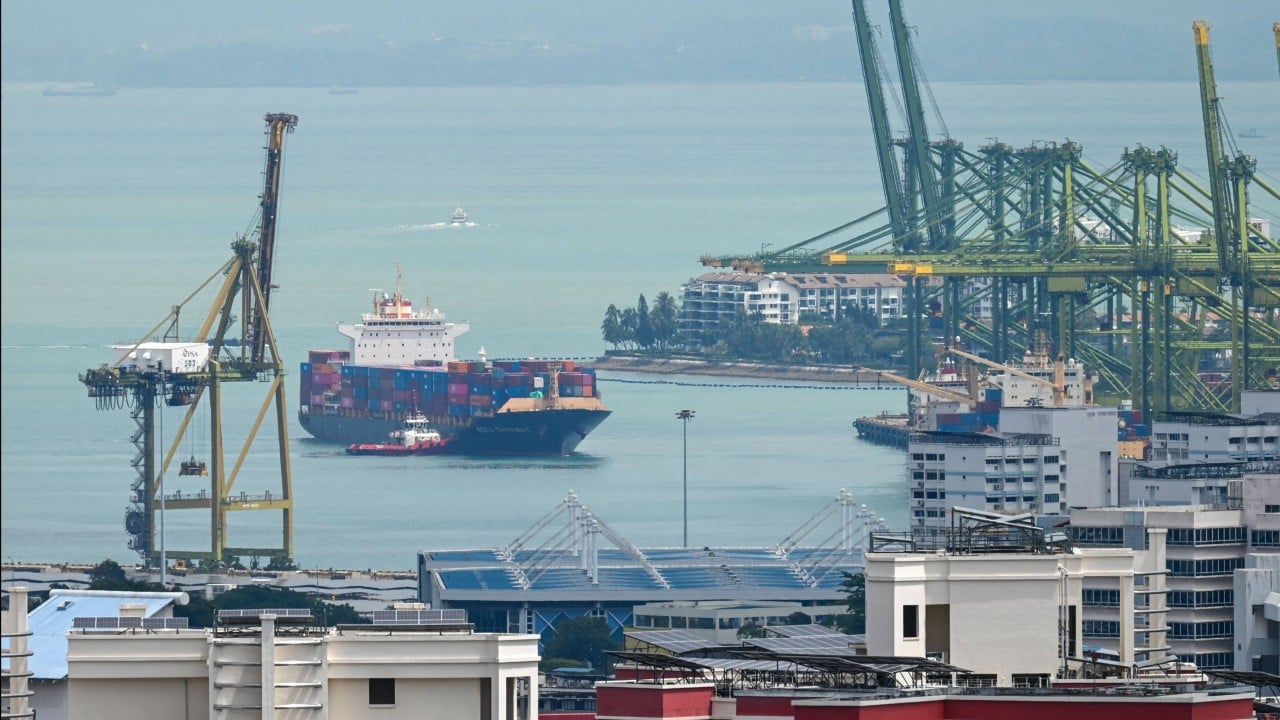
Singapore does not have the luxury of wasted space. When a sovereign nation measures its total landmass in hundreds of square kilometers rather than millions, every square meter requires an explicit economic justification. For decades, the Jurong region has served as the industrial engine of the republic, a sprawling cluster of reclaimed islands dedicated to petrochemical refining, manufacturing, and heavy logistics. Now, government planners are executing a massive land-merger initiative, fusing Jurong Island with neighboring smaller islets into a single, contiguous landmass.
Official announcements frame this as a routine infrastructure consolidation designed to optimize supply chain efficiency and attract next-generation manufacturing. Energy analysts, however, are reading between the lines. By erasing the watery boundaries separating these industrial plots, Singapore is quietly assembling the exact spatial footprint required to host a commercial nuclear power facility. Space has always been the primary bottleneck keeping atomic energy off the island nation's strategic horizon. That physical limitation is disappearing in real time. For another view, see: this related article.
The timing is not a coincidence. Singapore faces a severe decarbonization trilemma: high energy demand, acute geographical constraints, and an absolute dependence on imported energy sources. As global pressure mounts to eliminate carbon emissions from heavy industry, the traditional fallback options simply do not scale. Solar yields are capped by dense cloud cover and limited surface area. Wind resources are negligible. Importing green electricity via regional grids introduces complex geopolitical vulnerabilities that defense strategists prefer to avoid.
That leaves one elephant in the room that policymakers whisper about in closed-door briefings. The island merger project provides the physical canvas. The real question is whether the political will can match the engineering ambition. Related insight on this matter has been published by The Next Web.
The Spatial Mechanics of Urban Atomic Planning
Building a nuclear reactor requires more than just a concrete containment dome and a nuclear steam supply system. It demands safety buffer zones, spent fuel storage infrastructure, cooling water intake systems, and massive exclusion areas designed to isolate the public from potential radiological events. In a densely populated city-state of nearly six million people squeezed into roughly seven hundred square kilometers, finding a plot of land that satisfies international nuclear safety radii is nearly impossible.
Jurong Island was originally created in the nineteen nineties through the amalgamation of several smaller southern islands, including Pulau Ayer Merbau and Pulau Jurong, specifically to keep hazardous industrial operations away from the mainland population. By welding even more surrounding islets into this industrial zone, the state is effectively expanding an exclusion perimeter that sits miles offshore, separated from residential districts by deep marine channels.
- Distance: The consolidated Jurong landmass sits safely downwind and offshore from the main population centers of Singapore.
- Cooling Access: Surrounded entirely by the sea, the location offers a virtually limitless heat sink for once-through cooling or advanced desalination integration.
- Logistics: Heavy maritime transport links are already established, allowing for the specialized movement of heavy machinery, oversized components, and eventual waste handling.
Critics of the nuclear hypothesis argue that even a merged Jurong Island falls short of the vast exclusion zones historically demanded by regulatory bodies in the United States or France. This critique misses the entire technological evolution currently reshaping the nuclear sector. Modern advanced reactors, particularly high-temperature gas-cooled reactors and small modular designs, feature inherent safety characteristics that make massive acreage obsolete. These systems rely on physical principles such as passive cooling and ceramic-coated fuel particles that cannot melt down, even if all external power is lost.
If an accident is physically impossible by design, the required emergency planning zone shrinks from a twenty-mile radius to the physical fence line of the plant itself. Singapore does not need a rural province's worth of empty land to build a modern reactor. It just needs a secured industrial island far enough from the housing blocks.
The Geopolitical Trap of Energy Importation
Singapore currently generates over ninety-five percent of its electricity by burning imported natural gas, primarily delivered via pipeline from Malaysia and Indonesia, alongside liquefied natural gas shipments sourced from global spot markets. This dependency creates a permanent vulnerability. When global energy markets spike, as they did during the European energy crises, Singapore's manufacturing sector absorbs immediate, violent price shocks.
To break this cycle, the government has aggressively pursued regional power grids, signing agreements to import hydroelectricity from Laos and solar power from neighboring territories. While these cross-border transmission lines look clean on a corporate sustainability report, they introduce severe strategic risks. Subsea cables are notoriously difficult to protect in contested maritime waters. Relying on foreign utility monopolies for base-load industrial power turns an economic decision into a geopolitical hostage situation.
Energy security for an advanced manufacturing hub means domestic control over generation. Solar panels on warehouse rooftops cannot power a petrochemical cracker running twenty-four hours a day, three hundred sixty-five days a year. Wind turbines cannot provide the high-temperature heat required for advanced chemical synthesis or hydrogen production.
Nuclear energy is the only zero-carbon source capable of delivering continuous base-load electricity and high-temperature industrial heat without burning hydrocarbons. For an economy that anchors its survival on high-value manufacturing and refining, transitioning away from gas is an existential necessity. The island merger plan is the first physical step toward reclaiming that energy independence.
The Regulatory and Public Sentiment Hurdles
Engineering a safe reactor on a reclaimed industrial island is the easy part of the equation. Navigating the domestic and international politics of atomic energy in Southeast Asia represents a far steeper climb. The psychological legacy of Fukushima and Chernobyl casts a long shadow over urban populations, regardless of how advanced modern reactor designs claim to be.
Public consultation in Singapore does not operate through noisy street protests, but through a deeply ingrained anxiety about national survival. If a catastrophic failure were to occur on an island situated just twenty kilometers from downtown Singapore, the economic and demographic viability of the entire nation would evaporate instantly. There is no fallback option, no unblemished interior to retreat toward.
Furthermore, regional diplomacy complicates the blueprint. Under international maritime and environmental protocols, neighboring nations such as Malaysia and Indonesia possess legitimate grounds to express alarm if Singapore introduces radioactive materials into a shared, congested strait. Territorial waters in the region are tightly packed, and any perceived risk to shared fisheries or maritime lanes will trigger immediate diplomatic pushback.
The government has spent years quietly building internal competency. Academic institutions have ramped up nuclear engineering research programs, sending top scholars to institutions in the United States, Europe, and South Korea. Technocrats within the Energy Market Authority have studied advanced reactor designs for over a decade, quietly compiling safety dossiers and analyzing regulatory frameworks. They are not starting from zero. They are simply waiting for the physical infrastructure to catch up with their secret blueprints.
Beyond Petrochemicals
The transformation of the Jurong region signals a broader industrial pivot. The traditional petrochemical model, while profitable, faces a brutal expiration date under global net-zero mandates. Refineries cannot simply close down without collapsing the domestic economy; they must be repurposed to produce sustainable aviation fuels, low-carbon hydrogen, and advanced materials.
These green chemical processes require enormous quantities of clean electricity and high-temperature steam. Natural gas can no longer supply that heat without incurring heavy carbon tax penalties that render Singaporean exports uncompetitive on the global market.
By consolidating the islands, planners are creating a dedicated energy hub capable of hosting a modular reactor fleet that feeds direct, zero-carbon power and steam straight into chemical plants via closed-loop industrial grids. This bypasses the inefficiencies of converting electricity to hydrogen and back again. It creates a closed ecosystem where high-risk industrial operations are safely isolated from the public while powering the next fifty years of economic output.
The cranes are moving on Jurong Island right now, reshaping the coastline and welding separate landmasses into a unified slab of industrial bedrock. The official press releases talk about logistics efficiency and land optimization. Do not believe them. The concrete being poured today is thick enough to hold the weight of an atomic future.
The island merger is complete. The countdown to the first atomic license application has already begun behind closed doors, and the energy market refuses to acknowledge how close the reality actually is.