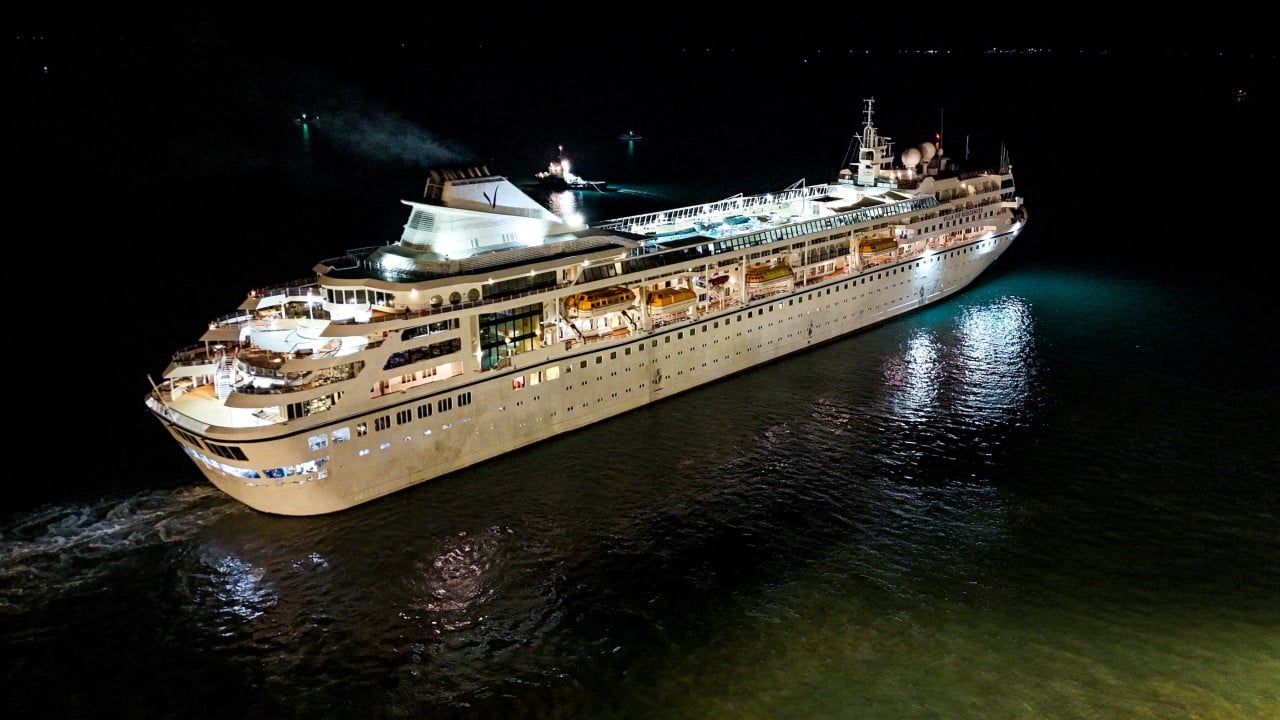
Everyone is reading the headlines about the Odyssey cruise ship arrest in Singapore as a tragic tale of bad luck and sudden insolvency. They are wrong. What happened to Villa Vie Odyssey is not an isolated operational hiccup or a victim of post-pandemic headwinds—it is the inevitable mathematical conclusion of trying to run a floating real estate Ponzi scheme disguised as a travel startup.
Mainstream travel outlets love a human-interest drama. They frame the story around stranded retirees, sympathetic crew members, and an unfortunate corporate bankruptcy. That framing misses the brutal maritime reality. When an admiralty court in Singapore slaps an arrest warrant on a vessel, it is rarely because a single vendor got impatient. It means the capital structure was dead on arrival, and maritime law finally caught up with the marketing brochure.
The Lazy Consensus Around Maritime Arrests
Most coverage treats a ship arrest like a standard corporate Chapter 11 filing. It isn't. Under international admiralty law, a vessel is treated as a legal person capable of incurring debts—known as maritime liens—that attach directly to the hull, regardless of who holds the corporate stock on land.
When bunker fuel suppliers, port agents, or crew members go unpaid, they do not waste time suing a shell company registered in a tax haven. They wait until the ship enters a strict, creditor-friendly jurisdiction like Singapore, file an in rem action with the High Court, and chain the vessel to the pier.
Singapore is the graveyard of undercapitalized shipping ventures for a reason. Its admiralty court moves with ruthless efficiency. Sheriff's officers board the vessel, serve the writ, and suddenly a 30-year-old cruise ship becomes an immovable asset frozen in the Strait of Malacca.
The lazy consensus blames "unforeseen refurbishment delays" or "sudden liquidity crunches." I have spent fifteen years watching maritime startups burn through investor cash, and I can tell you that dry-dock overruns on three-decade-old tonnage are never unforeseen. They are guaranteed. Buying a 1993-built vessel like the former Braemar and promising a multi-year global circumnavigation without nine-figure cash reserves isn't ambitious entrepreneurship. It is financial malpractice.
Why Residential Cruising Fails the Unit Economics Test
To understand why these ventures collapse, stop looking at the passenger testimonials and look at the burn rate of aging steel.
A commercial cruise giant like Carnival Corporation or Royal Caribbean Group operates on economies of scale that an independent single-ship operator cannot touch. When a megaship needs a specialized propulsion part or emergency dry-docking, corporate headquarters absorbs the shock across dozens of revenue-generating hulls.
A single-ship residential startup has zero margin for error. Consider the structural flaws built into the model:
- Front-Loaded Revenue vs. Back-Loaded Liabilities: Selling "cabins for life" or multi-year segments brings in a rush of upfront cash. Founders mistake this cash flow for profit. Meanwhile, the real costs—marine gas oil, classification society surveys, hull and machinery insurance, and port dues—compound every single day the engines turn.
- The 30-Year Hull Penalty: Ships are not vintage wines; they are floating industrial plants sitting in corrosive saltwater. Once a passenger vessel passes the 25-year mark, Special Surveys required by classification societies like DNV or Lloyd's Register become astronomically expensive. Steel wastage requires cropping and replacing entire bulkhead sections. Piping systems fail. Asbestos remediation pops up behind every renovated wall panel.
- Zero Pricing Power on Secondary Inventory: Once the early-adopter dreamers buy the initial cabins, selling the remaining inventory becomes a slog. Unlike traditional cruises that can slash last-minute fares to fill berths and make up the margin on casino gambling and $18 cocktails, residential ships have low onboard ancillary spend. Retirees living aboard permanently do not drink like seven-day vacationers.
Dismantling the Myths Buyers Still Believe
If you are considering buying into a perpetual world cruise, or investing in one, you are probably asking the wrong questions. You are asking about itinerary ports, Starlink internet speeds, and cabin square footage. You should be asking about escrow protections and corporate ring-fencing.
Myth 1: "My cabin purchase gives me real estate equity."
It does not. You are not buying a condo in Miami; you are buying a right-to-occupy license on a depreciating mobile asset subject to foreign flags of convenience. If the operating company goes bust and the ship is auctioned off by the Singapore Sheriff to satisfy senior maritime lienholders—like the bank holding the ship's mortgage or the fuel bunker supplier—your "equity" evaporates overnight. Unsecured passenger creditors sit near the very bottom of the admiralty payout waterfall.
Myth 2: "Delaying departure just means a longer wait."
In shipping, a stationary ship is a hemorrhaging wound. A cruise vessel tied up in Belfast or Singapore still burns tons of fuel every day just to keep the auxiliary generators running for air conditioning, sewage treatment, and galley refrigeration. Port berthage fees tick upward by the hour. Every week of delay doesn't just postpone revenue; it actively cannibalizes the working capital needed to pay the crew and buy the fuel for the first leg of the voyage.
Myth 3: "A strong community of passengers will keep the dream alive."
Passionate customers cannot out-fundraise marine diesel costs. When a venture relies on existing buyers to pony up additional emergency capital or "assessments" just to clear port liens, the business model has already failed. Good companies raise institutional capital from maritime lenders who understand working capital ratios. Desperate companies pass the hat to their own passengers.
The Uncomfortable Truth About The Downsides of Playing It Safe
There is a reason people keep falling for these pitches, and I will give the founders credit where it is due: the traditional cruise industry is creatively bankrupt.
Big cruise lines herd 6,000 people onto floating shopping malls, give them four hours in a sanitized port terminal, and nickel-and-dime them for bottled water. For travelers who genuinely want slow, immersive global transit without packing a suitcase every week, the mainstream options are terrible.
The contrarian truth—and the downside to my own skepticism—is that if we only rely on legacy giants like Viking or Cunard, true long-term residential sailing will remain gated behind $10 million price tags on ultra-exclusive vessels like The World. Disruptors have to try to build a middle-class alternative.
The problem isn't the vision. The problem is execution without adult supervision in the finance department.
How to Audit Any Maritime Startup Before You Wire a Dime
Imagine a scenario where a new startup announces a three-year world voyage next month, complete with glossy renderings and early-bird discounts. Before you transfer a single dollar, run the venture through a basic maritime risk filter that institutional shipbrokers use every day:
- Demand Proof of Ring-Fenced Escrow: If your deposit goes directly into the operator's general operating account to pay for dry-dock welding or marketing ads, walk away. Funds must sit in an independent third-party escrow account, released strictly against verified operational milestones—not promises.
- Check the Vessel's Equasis History: Every commercial ship has an IMO number—a permanent seven-digit identifier that never changes, even when the ship gets a shiny new name. Look up that IMO number on Equasis, the free maritime safety database. Check its Port State Control inspection record. If the ship has a history of detentions for fire safety, lifeboat deficiencies, or unpaid crew wages, the hull is a liability trap.
- Verify the P&I Club Coverage: Legitimate cruise ships carry Protection and Indemnity (P&I) insurance from one of the twelve members of the International Group of P&I Clubs. If an operator is scrambling for third-tier insurance or operating with lapses in coverage, no reputable port authority will let them dock.
- Look at the Bunker Strategy: Marine fuel is one of the largest variable expenses on a ship's balance sheet. Ask how the company hedges fuel volatility. If they look at you blankly, they are gambling your retirement savings on global oil markets.
Stop Romanticizing Floating Startups
The maritime industry is unforgiving. Water does not care about your pitch deck, your community Discord server, or how many press releases you syndicate about "redefining modern nomadism."
Steel rusts. Engines break. Port authorities demand payment in cleared funds before they drop the mooring lines.
Until residential cruise operators stop treating ancient cruise ships like software startups—launching broken products and hoping to patch the holes while already at sea—Singapore's admiralty court will never run out of business. Keep your money in dry dock until someone proves they can fund a fuel tank without selling tomorrow's cabins to pay for today's diesel.