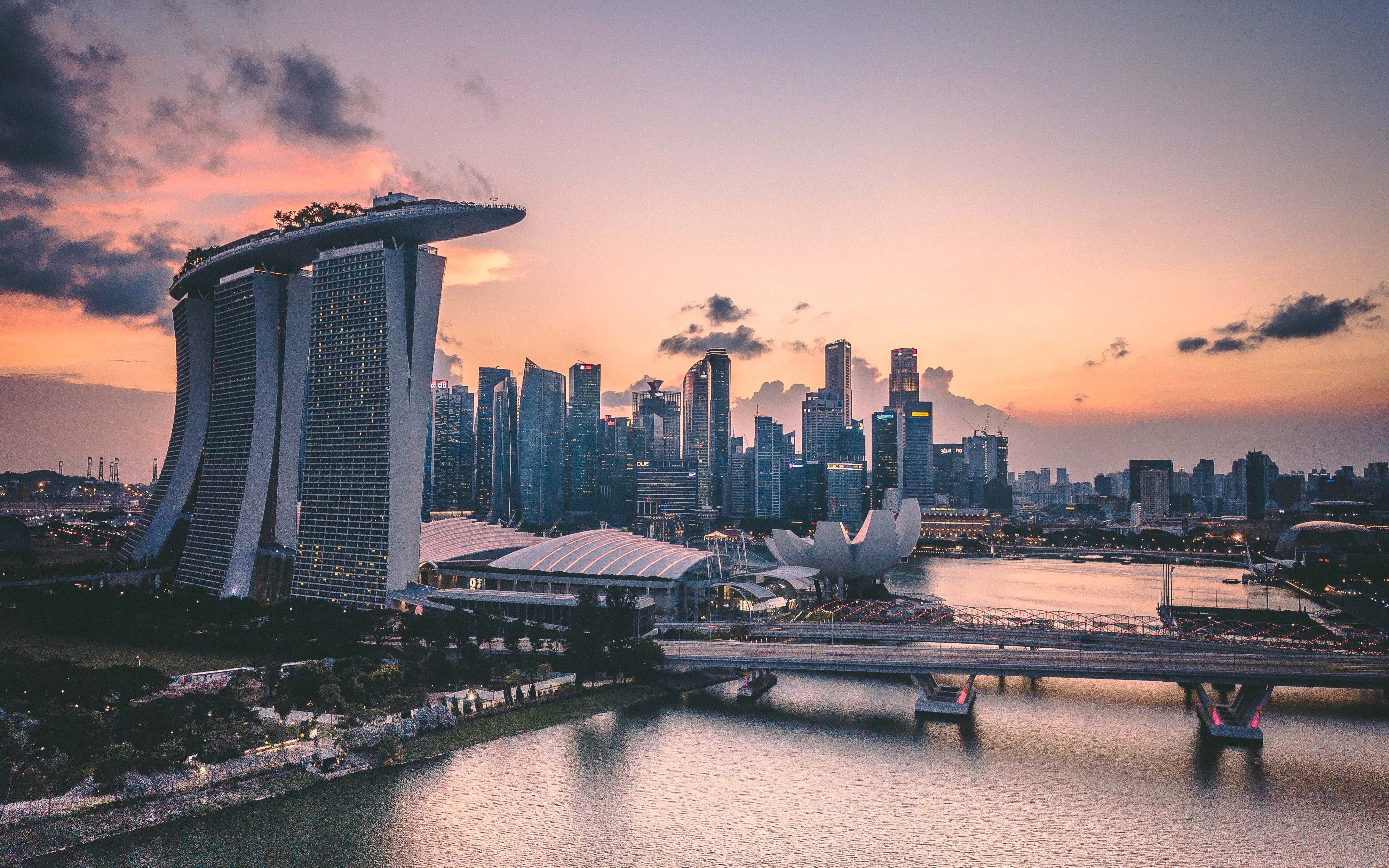
Every time the winds shift across the Malacca Strait and the air quality index in Marina Bay ticks upward, the regional press runs the exact same script.
Singapore braces. Jakarta deflects. Politicians trade barbs over sovereignty and transboundary pollution. Pundits wring their hands over Indonesian domestic politics, blaming weak enforcement in Sumatra and Kalimantan while treating the city-state as an innocent, passive victim of a neighbor's ecological negligence.
That narrative is comfortable, politically convenient, and dangerously incomplete.
If you look at the actual mechanics of Southeast Asian agribusiness, the transboundary haze is not merely an Indonesian governance failure. It is the direct environmental exhaust of a supply chain heavily financed, traded, and headquartered in the very financial hubs choking on the smoke. Pretending this is a simple case of "bad neighbors burning trees" misses the economic engine driving the fires in the first place.
The Myth of the Innocent Bystander
Let's strip away the diplomatic theater. When Indonesian officials push back against Singaporean criticism—pointing out that many of the plantation companies operating on burned peatlands have deep ties to Singaporean capital and corporate structures—they are not just engaging in political deflection. They are pointing at the ledger.
For decades, the lazy consensus in regional reporting has framed the haze as a regulatory failure by Jakarta. The argument goes like this: Indonesia lacks the political will to police rural provinces, local officials are too cozy with regional palm oil barons, and Singapore is left holding the bag with N95 masks and closed schools.
That analysis stops at the border, whereas capital never does.
Many of the largest palm oil and pulpwood conglomerates operating across Sumatra and Kalimantan maintain corporate headquarters, holding companies, or primary banking relationships in Singapore. When you trace the ownership structures of concessions flagged for hotspots during severe El Niño years, you repeatedly run into layered corporate vehicles registered in Jurong or Raffles Place.
I have spent years dissecting agricultural supply chains across Southeast Asia, and the pattern never changes. When fires break out, corporate communications teams in air-conditioned towers immediately issue statements claiming zero-burn policies. They blame "encroaching smallholders" or "rogue third-party suppliers." Meanwhile, the mills owned by those same conglomerates continue buying fresh fruit bunches from the exact regions where the smoke is rising, no questions asked, because traceability stops the moment it threatens quarterly crush margins.
Why Peatland Fires Are an Economic Feature, Not a Bug
To understand why the haze keeps returning despite decades of ASEAN agreements, you have to understand the biology and economics of tropical peatlands.
Peat is not regular soil. It is thousands of years of partially decayed organic matter, saturated with water, acting as one of the densest terrestrial carbon sinks on earth. In its natural state, a tropical peat swamp forest does not burn. You could take a flamethrower to intact peatland and struggle to start a sustained fire.
To plant oil palm or acacia on peat, companies must first dig massive drainage canals to lower the water table. Once drained, the top layer of peat dries out into a bone-dry tinderbox. At that point, fire is the cheapest land-clearing tool on the market. Clearing land mechanically with excavators costs hundreds of dollars per hectare. Dropping a match costs pennies.
Even when a major plantation company strictly obeys the law and avoids setting fires itself, draining the land creates a regional hazard. A cigarette butt tossed from a motorbike, a spark from a farmer clearing a half-acre plot for cassava, or land-grabbing speculators looking to depress land prices can ignite drained peat. Once lit, peat fires do not just burn on the surface—they burn underground, smoldering meters deep for months, completely impervious to water bombers and only extinguished when the monsoon rains finally arrive.
Singapore's 2014 Transboundary Haze Pollution Act was hailed as a breakthrough piece of extraterritorial legislation, designed to fine entities—regardless of nationality—that cause or contribute to haze in Singapore. On paper, it looked fierce. In practice, prosecuting a case requires proving a direct causal link between a specific fire on a specific concession in Indonesia and the smoke drifting over Singapore weeks later, all while navigating Indonesian laws that restrict sharing official concession maps with foreign investigators.
You cannot sue your way out of a market failure when the courts cannot even access the property boundaries.
Dismantling the Standard Questions Around the Haze
When air quality deteriorates, public discourse floods with predictable questions that fundamentally misunderstand the problem. Let's break down what people actually ask—and why the premises are broken.
Why doesn't Indonesia just enforce its own anti-burning laws?
This question assumes Jakarta operates like a centralized city-state where a decree from the presidential palace translates instantly into compliance in a remote regency in Riau or Central Kalimantan. Indonesia is an archipelago of over 17,000 islands with deeply decentralized political power. Local regents (bupati) rely on regional economic growth—and often campaign financing from local agribusiness interests—to stay in power. Furthermore, Indonesia has significantly tightened enforcement since the catastrophic 2015 fires, establishing the Peatland and Mangrove Restoration Agency (BRG) and revoking hundreds of permits. Yet enforcement hits a wall when rural livelihoods depend on cheap land clearing and provincial budgets depend on commodity taxes.
Can't consumer boycotts of palm oil solve this?
Boycotting palm oil is one of the most counterproductive ideas circulating in Western and regional sustainability circles. Oil palm is extraordinarily efficient, producing roughly four to ten times more oil per hectare than soybean, rapeseed, or sunflower crops. If global food and cosmetic manufacturers abandon palm oil, demand shifts to crops that require vastly more land to yield the same volume of vegetable oil—accelerating deforestation in the Amazon, the Cerrado, and the Congo Basin. The problem is not the crop; it is draining peatlands and expanding into primary forests instead of increasing yields on already degraded mineral soils.
Doesn't Singapore's green finance push fix the capital problem?
The Monetary Authority of Singapore (MAS) and major local banks have introduced sustainability taxonomies and "No Deforestation, No Peat, No Exploitation" (NDPE) lending criteria. That is a real step forward, and it has choked off direct Tier-1 project financing for rogue operators. However, capital is fungible. When Singaporean or European banks tighten their lending standards, mid-tier plantation operators simply pivot to regional shadow lenders, state-backed banks with looser environmental covenants, or private equity vehicles structured through offshore jurisdictions. ESG compliance at the top of the banking pyramid rarely stops cash from flowing to the bottom.
The Geopolitical Trap of Public Shaming
Every time Singaporean officials publicly lecture Jakarta—or threaten legal action under domestic statutes—they trigger an immediate nationalist reflex in Indonesian domestic politics.
In Jakarta, no politician can afford to look like they are taking orders from a wealthy, tiny neighbor. What starts as an environmental and public health crisis instantly morphs into a sovereignty dispute. Indonesian ministers push back, reminding Singapore that Indonesia absorbs the vast majority of the health damage—hundreds of thousands of respiratory infections, closed airports in Pekanbaru and Pontianak, and billions in lost local economic output—while Singaporeans complain about a few weeks of hazy skies.
They have a point. The human toll inside Sumatra and Kalimantan dwarfs anything experienced in Singapore. Treating the haze primarily as a diplomatic nuisance for Singaporean expatriates and financial markets guarantees defensive stonewalling from Jakarta.
Imagine a scenario where Singapore stopped treating the haze as a cross-border diplomatic grievance and treated it strictly as a domestic financial crime and supply-chain liability. Instead of chasing elusive satellite proof of who lit a match in a remote Indonesian province, regulators could require every commodity trader, refiner, and financial institution operating in Singapore to maintain publicly auditable, polygon-level GPS traceability down to the individual farm plot for every metric ton of palm oil and pulp passing through their books—with automatic delisting and banking freezes for non-compliance.
The Uncomfortable Trade-Offs Nobody Wants to Own
Let's be honest about the downside of aggressive supply-chain enforcement: it hurts smallholders first, and it raises consumer prices.
Roughly 40% of Indonesia's palm oil is produced by independent smallholder farmers, not massive conglomerates. Many of these farmers lack formal land titles, operate on plots bordering protected peatlands, and have zero capital to pay for mechanical land clearing or certified seedlings. When strict NDPE traceability rules kick in, major mills protect themselves by simply cutting smallholders out of their supply chains entirely.
Those excluded farmers do not magically transition into sustainable eco-entrepreneurs. They sell their fruit at a steep discount to unregulated middlemen who feed "shadow mills," or they clear more land using fire because they have no access to credit or agricultural extension services.
Pure regulatory stick without massive financial carrots creates a two-tier market: clean, certified palm oil shipped to Singapore and Europe, and dirty, uncertified oil absorbed by domestic markets, India, and China—while the peatlands keep burning anyway.
What Actually Stops the Smoke
If regional governments and corporate leaders actually want clear skies during dry El Niño cycles, they need to abandon diplomatic finger-pointing and execute three concrete shifts:
- Shift from Fire Suppression to Water-Table Restoration: Fighting peat fires once they start is a losing game. The only permanent fix is rewetting drained peatlands by blocking drainage canals and transitioning away from drainage-based agriculture on deep peat toward paludiculture—cultivating native wetland species like sago, illipe nut, and jelutong that thrive in waterlogged soil without destroying the carbon sink.
- Make Traceability a Condition of Market Access, Not a Voluntary Pledge: Corporate sustainability reports are public relations fiction until polygon mapping of every supplying plantation and smallholder plot is legally mandatory for any company raising capital, holding a banking license, or trading commodities in Singapore.
- Fund Smallholder Transition Directly: Instead of spending diplomatic capital on cross-border lawsuits that stall in jurisdictional limbo, regional sovereign wealth funds and corporate buyers must co-finance the capital expenditure required for smallholders to replant on mineral soils and clear land mechanically.
Singapore will continue to choke whenever the monsoon stalls and the wind blows northeast, not because Jakarta lacks laws, and not because Singapore lacks clean air regulations. The smoke will keep coming as long as the financial architecture in the region's richest city remains detached from the ecological reality of the plantations it underwrites.