The thin air at sixteen thousand feet does things to a man’s lungs. It turns breaths into shallow, frantic gasps. But for the soldiers stationed along the jagged, disputed ridges of the Line of Actual Control between India and China, the cold is not the enemy. The silence is.
When the wind drops, the silence is heavy, absolute, and terrifying. It means you are entirely alone on the roof of the world, staring across a valley at an adversary who is doing the exact same thing. In this high-altitude chess match, security isn’t measured in treaties or handshakes. It is measured in decibels and response times.
Suddenly, a low, rhythmic thumping vibrates through the permafrost. It is a sound that doesn’t belong to nature. It is deep. Primal. Reassuring.
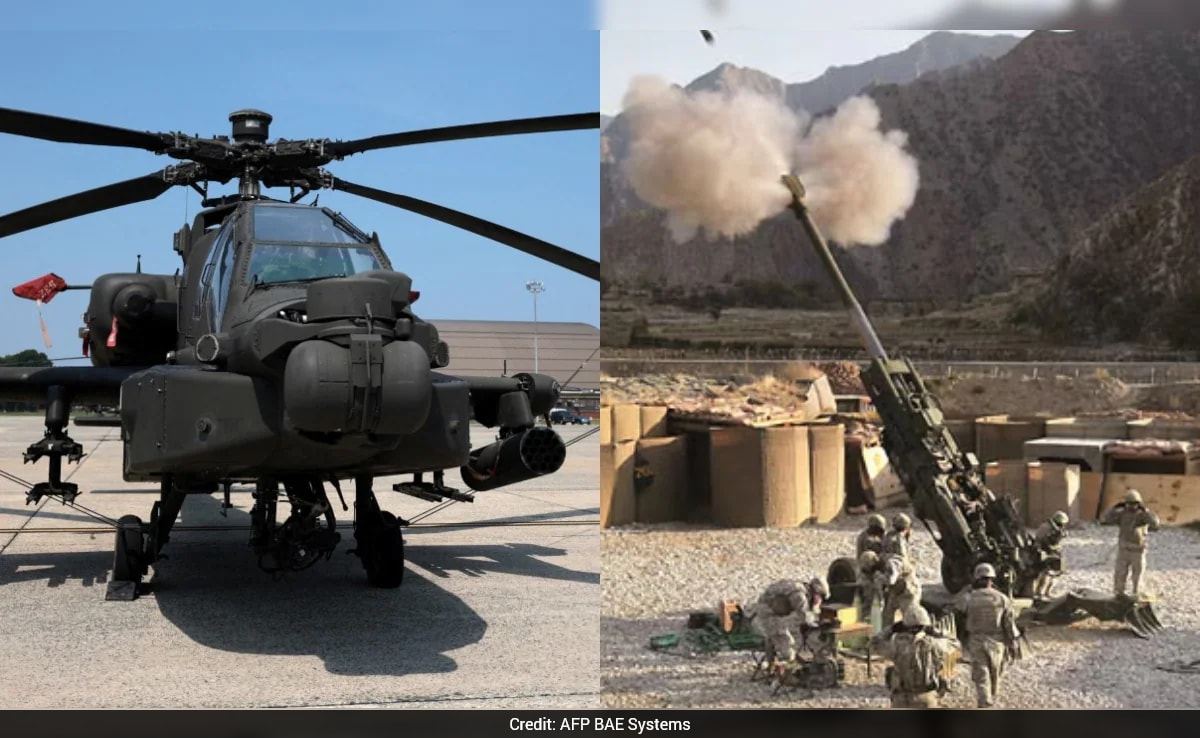
Far below, slicing through the mist of the mountain passes, the silhouette of an AH-64E Apache helicopter appears. To the soldier on the ridge, that sound is a lifeline. To the strategist in New Delhi, it is a piece of a $428 million puzzle that Washington just clicked into place.
We often read about defense deals in the stark, sterile language of bureaucracy. Headlines blurt out massive dollar signs and laundry lists of military hardware. We see "foreign military sale approval" and "logistic support packages." The eyes glaze over. It feels distant, like a spreadsheet floating in the ether of geopolitics.
But geopolitics isn't abstract. It is Made of iron, altitude, and human skin.
The Cold Math of High-Altitude Survival
To understand why the United States just cleared a massive $428 million defense sale to India, you have to look past the numbers. You have to look at the terrain.
The Indian military operates in some of the most unforgiving environments on Earth. Consider the M777 ultra-light howitzers stationed in the valleys of Arunachal Pradesh. These aren't just artillery pieces; they are engineering marvels designed to be light enough to be slung under a helicopter and dropped onto a mountain peak that has no roads.
Let us use a hypothetical scenario to understand how this works on the ground. Imagine a young captain named Vikram. He is stationed at a remote forward post. A sudden build-up of foreign mechanized infantry is detected three valleys over. There are no highways here. Landslides have choked the only dirt track. Without support, Vikram and his platoon are isolated.
In the old days of warfare, this was a death sentence.
Today, the calculus changes. An Indian Air Force Chinook helicopter lifts an M777 howitzer from a base miles away, soaring over the jagged peaks. Simultaneously, an Apache chopper provides overwatch, its thermal sensors cutting through the blinding snowstorm to map enemy positions. Within thirty minutes, Vikram has heavy artillery support and eyes in the sky. The threat is neutralized before a single enemy soldier crosses the ridge.
This $428 million deal isn't about buying new toys. India already has the Apaches and the howitzers. This sale is about keeping them alive.
The bulk of the approved package is for follow-on support, spare parts, repair materials, and training. In the brutal environment of the Himalayas, machines break. The air is too thin, the frost too biting. A helicopter without spare rotor blades is just a multi-million-dollar paperweight. This deal ensures that when Captain Vikram needs that thumping sound in the sky, the machines are ready to fly.
The Geometry of a New Alliance
There was a time when this kind of transaction would have been unthinkable.
During the Cold War, India and the United States viewed each other with deep suspicion. New Delhi leaned toward Moscow for its military hardware, filling its arsenals with Soviet-era MiGs and Sukhois. Washington, meanwhile, partnered heavily with Pakistan. The relationship was frosty, defined by missed connections and diplomatic friction.
The shift didn't happen overnight. It was forged by a shared anxiety.
As Beijing began to flex its muscles across the Indo-Pacific, constructing artificial islands in the South China Sea and aggressive outposts along the Indian border, the geopolitical tectonic plates shifted. Washington and New Delhi realized they needed each other. The old hesitations dissolved.
Consider the sheer scale of the transformation. Over the past two decades, defense trade between the US and India went from near zero to over $20 billion. This latest $428 million agreement is merely the latest heartbeat in a rapidly accelerating rhythm of cooperation.
But let us be completely honest about the friction that remains. This transition is not easy or comfortable for either side.
India still operates a massive amount of Russian equipment. Its frontline fighter jets and air defense systems are deeply intertwined with Moscow's supply chains. For Washington, selling high-end military technology to a nation that refuses to completely sever ties with Russia is a delicate, nerve-wracking gamble. For India, relying on American technology feels like putting its strategic autonomy at risk. American laws allow Congress to halt arms supplies if a purchasing nation violates certain conditions. New Delhi remembers history; it hates the idea of being dependent on anyone.
Yet, despite the mutual doubts, the deal went through. Why? Because the alternative is far more dangerous.
What Happens When the Parts Run Dry
The real story of modern warfare isn't found in the spectacular explosions seen on the evening news. It is found in the grease-stained hands of a mechanic working under a dim light bulb in a hangar at midnight.
Logistics is the invisible gravity of statecraft.
When a nation buys an advanced weapon system like the AH-64E Apache, they aren't just buying an aircraft. They are buying into an ecosystem. They need proprietary software updates. They need specialized algorithms that allow the helicopter's radar to differentiate between a civilian truck and a mobile missile launcher. They need specialized screws that can withstand the intense vibrations of high-altitude flight.
If those parts stop arriving, the entire defense posture crumbles.
We saw this play out vividly during the early days of the war in Ukraine. Entire columns of armored vehicles ground to a halt not because they were destroyed by enemy fire, but because they ran out of spare tires, fuel filters, and lubricants. A military force is only as strong as its weakest supply chain link.
The US Defense Security Cooperation Agency understood this explicitly when they delivered the certification to Congress. The language in their official release was dry, noting that the sale would "support the foreign policy and national security objectives of the United States by helping to strengthen the US-East Asia strategic relationship."
Translate that from bureaucratic dialect into plain English, and it means this: The United States needs India to stand firm. A weak India invites instability across Asia. A well-supplied Indian military acts as a massive, armored breakwater against expansionist ambitions in the region.
The Weight of the Invisible Shield
It is easy to look at a $428 million price tag and feel a sense of cynicism. It is a staggering amount of money, a fortune that could build hospitals, fund schools, or pave thousands of miles of rural roads.
When we watch these massive sums move across the global stage, we must confront the uncomfortable reality of our world. Peace is incredibly expensive. Deterrence is a luxury item.
The paradox of a strong defense is that its success is measured by what doesn't happen. Success means the guns stay silent. Success means the foreign infantry stays on their side of the valley. Success means Captain Vikram finishes his deployment, packs his gear, and returns home to see his family without ever having to fire a shot in anger.
That is what this half-billion-dollar contract is actually purchasing. It isn't buying war; it is buying a pause. It is purchasing the quiet that allows a democracy of 1.4 billion people to go to work, build businesses, and sleep soundly at night.
The sun begins to dip below the jagged white peaks of the Himalayas, casting long, purple shadows across the snowfields. The temperature drops instantly, plummeting far below zero. Up on the ridge, the lone sentry adjusts his scarf, his breath freezing instantly into crystals on his collar.
In the distance, the echo of the Apache blades finally fades entirely, leaving behind nothing but the cold mountain wind. The silence returns. But this time, it feels a little less lonely.