Two degrees Celsius.
That is the razor-thin margin between a crisp, safe carton of heavy cream and a breeding ground for Listeria monocytogenes. In the grand architecture of modern geopolitics, two degrees feels almost insultingly small, the kind of rounding error a diplomat wouldn't bother mentioning over espresso in Brussels, yet in the autumn of 2024, that exact thermal drift became the frontline of a shadow conflict stretching from the fluorescent-lit aisles of suburban France to the server farms of Tehran.
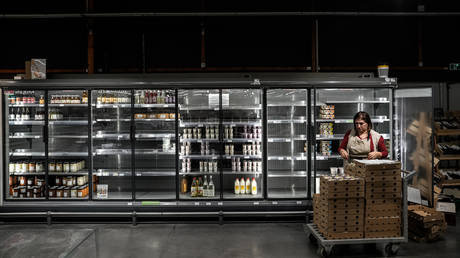
Picture a hypothetical manager—let’s call her Claire—standing in the back corridor of a mid-sized supermarket just outside Lyon at 4:30 in the morning. The air smells of cardboard, wet concrete, and faint ozone. She holds a clipboard, staring at a digital wall panel that is blinking a quiet, insistent amber. Twelve meters of refrigerated display cases holding artisanal cheeses, vacuum-sealed duck breasts, and fresh milk have been sitting at nine degrees since midnight. No alarms shrieked on her phone. No ransom note demanded Bitcoin on a blackened monitor. Instead, a remote
When French intelligence officials and cybersecurity researchers began connecting these seemingly mundane mechanical failures across retail networks, municipal water pumps, and building management systems, the headlines sounded almost absurd. Paris was pointing a finger at Iran—specifically at state-aligned hacking collectives like CyberAv3ngers—for messing with supermarket fridges.
It is easy to laugh at the headline. Warfare, in our collective imagination, arrives with the roar of supersonic jets, the flash of kinetic strikes, or at the very least, the dramatic cinematic collapse of a national power grid. Hacking a yogurt aisle sounds like a prank pulled by bored teenagers in a basement.
That instinct to laugh is precisely what makes the strategy so dangerous.
The Architecture of Invisible Vulnerability
To understand why a geopolitical adversary in the Middle East would care about the dairy section in Normandy, you have to strip away everything you think you know about how modern buildings work. Twenty years ago, a supermarket refrigerator was a dumb box with a motor, a coil, and a mechanical thermostat. To break it, someone had to walk into the store with a wrench or cut the power line outside.
Today, that refrigerator is a node on the global internet.
Driven by relentless pressure to cut energy costs, comply with European carbon mandates, and streamline maintenance, retail chains and municipal facilities spent the last decade wiring every valve, chiller, and ventilation shaft into centralized
I remember the first time I audited a commercial facility’s building management network a few years ago. I expected to see encrypted tunnels, multi-factor authentication, and fortified firewalls. Instead, using a publicly available search engine designed to index internet-connected devices, I found thousands of exposed control panels sitting wide open like unlocked screen doors on a summer night. Many were still running on factory-default passwords printed in public user manuals. Seeing those blinking green status lights on my screen—knowing a single click could shut down the HVAC system of a regional hospital or spoil tons of perishable food—leaves a cold knot in your stomach that never quite unties. You realize that civilization isn't held together by steel and concrete; it is held together by obscure, unpatched firmware written in 2014.
Tehran’s cyber operators understood this vulnerability better than almost anyone.
Following the escalation of conflicts in the Middle East in late 2023 and throughout 2024, Iranian state-sponsored groups shifted their doctrine. Unable to match Western militaries tank-for-tank or satellite-for-satellite, they perfected a form of asymmetric friction. If you cannot strike a rival’s military bases without triggering a devastating retaliation, you target the civilian baseline. You erode public trust. You create a low-grade, persistent fever of dysfunction where nothing works quite right, and nobody can prove whether it is an act of war or just bad maintenance.
Why Target the Cold Chain
Let’s look at the mechanics of what French authorities uncovered. The intrusions rarely involved sophisticated zero-day exploits—the digital equivalent of a custom-machined skeleton key. Instead, attackers hunted for specific models of controllers, notably those manufactured by Israeli firms like Unitronics, which are widely deployed across European water treatment plants, agricultural silos, and commercial refrigeration networks.
By exploiting exposed ports and default credentials, the intruders slipped into the operational networks of French businesses. Once inside, they didn't always deploy destructive ransomware that locks up files and demands cash. Often, the goal was subtler: sabotage disguised as equipment failure.
Consider what happens next when a supermarket chain loses cold storage across forty locations simultaneously.
First comes the direct financial hemorrhage. A single large grocery store holds tens of thousands of euros in temperature-sensitive inventory. Multiply that across a regional network, and millions of euros in meat, dairy, and produce must be hauled to landfills within hours. Second comes the supply chain whiplash. Logistics hubs have to reroute trucks, emergency refrigeration units must be leased at astronomical rates, and insurance adjusters spend months arguing over whether a cyberattack voided a mechanical breakdown policy.
Most insidious of all is the psychological toll on ordinary citizens. When you walk into your neighborhood market on a Tuesday evening and find the shelves stripped bare, taped off with yellow caution ribbon because the chillers failed again, a subtle anxiety takes root. One outage is an annoyance. Ten outages across the country start to feel like rot.
This is the true essence of what security strategists call the "gray zone"—a murky twilight between peace and declared war. In the gray zone, actions are calibrated to stay just below the threshold that would trigger a formal military response under international treaties. Nobody launches a missile over spoiled brie. Yet, aggregated over months, these micro-disruptions inflict real economic pain and force European governments to divert billions of euros into defending mundane civilian infrastructure.
The Myth of the Isolated Network
For years, facility managers comforted themselves with a dangerous fairy tale called "air-gapping." The theory went that the operational technology running physical machines—the pumps, the turbines, the refrigeration compressors—was completely separated from the corporate IT network where employees checked email and browsed the web.
In practice, true air gaps almost never exist anymore.
Think of a modern building's network like the plumbing in an old Parisian apartment building. Over the decades, different tenants have added pipes, spliced junctions, and bypassed valves to get hot water to a new bathroom. Eventually, nobody has an accurate blueprint of what connects to what. A vendor installs a remote monitoring modem so they don't have to drive three hours to check refrigerant pressure. An accountant asks for real-time energy consumption data to feed into a corporate spreadsheet. Slowly, invisibly, bridges are built between the public internet and the physical machinery.
When Iranian-linked hackers scanned the French internet space, they weren't picking locks on high-security vaults. They were simply walking across the bridges that vendors and contractors had left unguarded.
Once inside, the attackers demonstrated a keen understanding of how to maximize disruption while minimizing forensic footprints. Changing a temperature setpoint from two degrees to ten degrees doesn't crash a server. The computer keeps running smoothly; it just executes a catastrophic command. To an overworked store manager like our hypothetical Claire in Lyon, the initial symptom looks identical to a worn-out compressor valve or a blown fuse. Days or weeks can pass before anyone realizes the failure wasn't mechanical at all—it was remote, deliberate, and geopolitical.
Paris Draws a Line in the Frost
For a long time, European governments preferred to handle these incidents quietly behind closed doors. Publicly naming a foreign state as the culprit behind domestic infrastructure sabotage carries heavy diplomatic baggage. It demands a response, risks escalating tensions, and forces politicians to admit to voters that basic utilities are vulnerable.
By late 2024 and into 2025, however, the sheer volume of intrusions forced Paris to abandon its traditional discretion. French cybersecurity agencies, working alongside European allies, began issuing stark public advisories and attribution statements. The message was unmistakable: France knew who was behind the curtain, and the days of treating industrial sabotage as isolated technical glitches were over.
Why did France become such a prominent target? Geopolitics rarely operates in a vacuum. Paris’s diplomatic stances in the Middle East, its naval deployments in the Red Sea, and its tightening sanctions against Tehran’s drone and missile programs placed French infrastructure squarely in the crosshairs of Iranian retaliatory doctrine. When direct confrontation is too costly, proxy networks and state-backed cyber units become the preferred instruments of statecraft.
What makes this era of cyber conflict particularly unsettling is the democratization of the weapons. You no longer need an intelligence agency’s budget to cause physical disruption. The tools used to scan for vulnerable controllers and manipulate industrial protocols are widely discussed in open forums. Once a state-sponsored group proves that a specific type of valve or chiller can be hijacked from across the globe, criminal syndicates and hacktivists quickly follow the same playbook.
Rebuilding the Digital Cold Chain
If the problem feels overwhelming, it is because we spent twenty years prioritizing connectivity over resilience. We wired the physical world together without asking what happens when someone decides to pull the plugs from five thousand kilometers away.
Fixing this does not require tearing out modern technology and returning to analog dials. It requires treating digital hygiene in the physical world with the same rigor we apply to fire safety and food inspection.
First, the era of internet-facing control panels must end. Any device capable of altering temperature, pressure, or electrical flow has no business sitting directly on the public web. Technicians need remote access, certainly, but that access must pass through heavily monitored
Second, organizations must shatter the cultural wall between the people who understand computers and the people who understand machinery. For decades, IT departments managed laptops and servers while facilities teams managed boilers and refrigerators, and the two groups rarely spoke the same language. Today, a refrigeration mechanic needs to understand firmware updates, and a cybersecurity analyst needs to understand what happens physically when a compressor cycles off for six hours.
Finally, we have to build systems that fail safely. Even if an attacker breaches every digital defense, physical safeguards—simple mechanical overrides and hardwired thermal cutoffs—should prevent software commands from pushing equipment into dangerous territory. Code should never have absolute authority over physics.
The New Frontline
It is tempting to view cyber warfare as something abstract, a bloodless chess match played out in lines of green code on dark screens in windowless bunkers. That illusion vanishes the moment you stand in front of a warm meat counter on a Sunday morning, watching a store clerk haul crates of ruined food toward a dumpster.
Modern conflict has moved into the walls, the pipes, and the wiring of everyday life. It lives in the quiet hum of the transformer down the street, the automated gates of the local reservoir, and the compressor keeping the milk cold at the corner grocer. The battles of this new cold war won't always be announced with sirens or headlines. Sometimes, they arrive silently, two degrees at a time, while the rest of us are just trying to buy groceries for dinner.


