The salt air off the coast of Kochi bites the skin. Down here, at the edge of the Indian peninsula, the horizon is not a romantic line of blue; it is an interrogation. It stretches out endlessly, hiding movement, masking intent, and daring anyone to try and watch every square mile of it.
Commander Rajesh stands on the tarmac, squinting against the glare. He has spent twenty-two years chasing shadows across the Arabian Sea. He knows what it feels like to hunt a phantom. You sail a massive frigate through black water, burning thousands of gallons of fuel, scanning radar screens that turn up nothing until it is too late. The ocean is simply too vast. Human eyes get tired. Batteries die. Weather closes in, blinding the ships that are meant to protect the coast. In related updates, take a look at: Stop Freaking Out About Trump Nuclear Plans Because You Are Asking The Wrong Question.
Then came the new birds.
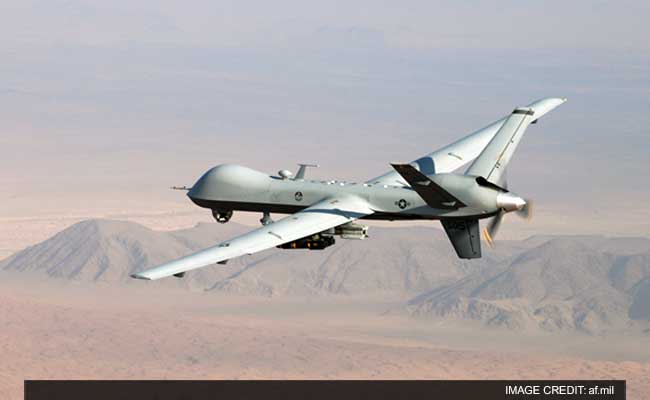
India just committed Rs 1,900 crore to lease two MQ-9B SeaGuardian drones. On paper, it sounds like another dry bureaucratic line item in a defense budget. A transaction. Numbers on a spreadsheet. But talk to the men and women who actually stand watch on the coastline, and the numbers dissolve into something much heavier: relief. The New York Times has also covered this critical topic in great detail.
Consider what happens next on a standard patrol.
Before these high-altitude, long-endurance machines entered the equation, aerial surveillance was a desperate sprint against the clock. Manned maritime patrol aircraft would launch, burn through their fuel reserves in a matter of hours, and have to turn back just as the most interesting part of the ocean hove into view. The blind spots were massive. They were terrifying. Smugglers, hostile warships, and unidentified sub-surface contacts lived in those gaps.
Now, look up.
A SeaGuardian does not blink. It does not get seasick. It does not lose focus during a grueling twelve-hour night shift. It climbs forty thousand feet into the thin, cold air, folding its wings against the jet stream, and simply stays there. For thirty-five hours at a stretch.
(Note: This endurance statistic is a matter of public manufacturer specification, verified across numerous international operational deployments.)
Imagine sitting in a ground control station miles inland. The room is dark, lit only by the soft, green-tinted glow of monitors. The air conditioning hums a low, steady bass. Outside, the world is asleep. Inside, an operator in a flight suit watches a screen that renders the pitch-black surface of the Indian Ocean as clear as a midday meadow.
Through advanced electro-optical and infrared sensors, the drone sees heat signatures. It picks up the wake of a vessel moving without its transponder. It tags a small fishing boat thirty miles off course and tracks its trajectory with a cold, mathematical precision that leaves no room for guesswork.
This is not about conquest. This is about vision.
The strategic geography of the region demands this level of persistence. India sits at the crossroads of some of the busiest shipping lanes on Earth. Billions of dollars in global commerce pass through these waters every single day. Along with that commerce comes vulnerability. Piracy, illegal trafficking, and the quiet, persistent buildup of foreign naval power just beyond the horizon line create a permanent state of low-level anxiety for defense planners in New Delhi.
For years, the approach was brute force. Send more ships. Burn more fuel. Throw more metal at the problem.
That strategy is breaking down. It is too expensive, too slow, and fundamentally mismatched to the modern character of maritime threats. You cannot chase a modern, highly digitized threat with twentieth-century blinders on. You need eyes in the stratosphere. You need persistence that outlasts human biology.
The Rs 1,900-crore lease agreement is an acknowledgment of this harsh reality. Leasing, rather than buying outright, is a calculated pivot. It bypasses the agonizingly slow procurement cycles that usually plague defense upgrades. It puts proven technology into active service right now, when the geopolitical weather is turning stormier by the month. It is a shortcut to survival.
Critics will point to the price tag. In a country where millions still rise every morning to fight poverty, every rupee spent on military hardware demands a moral defense. It is a fair question. Why spend billions on unmanned aircraft when classrooms need roofs and hospitals need medicine?
The answer is brutal in its simplicity. Peace is the foundation of prosperity. Without security, the markets close, the supply chains snap, and the vulnerable suffer first and worst. A nation cannot build schools if it cannot protect the shores that feed its economy. The SeaGuardian is not an instrument of aggression; it is an invisible shield. It ensures that the trade routes remain open, that fishermen return to their families at night, and that no hostile power mistakes India's vast maritime frontier for an open door.
Commander Rajesh remembers the year 2008. He remembers the silence that followed the Mumbai attacks, a collective national trauma born of a massive maritime blind spot. The country learned then—at an unbearable human cost—that what you cannot see can destroy you.
Every patrol since that year has been haunted by the ghost of that failure.
When the first of these leased drones completes its pre-flight checks and lifts off into the humid southern night, Rajesh will be watching the telemetry feed. He will see the altitude climb. He will see the sensor sweep lock onto the sea surface.
And for the first time in his career, he will take a deep, slow breath, knowing the dark water is finally being watched.
The horizon no longer feels quite so empty.