Cold.
That is the first thing you notice when the artillery stops. Not relief, and certainly not peace, just a sudden, ringing silence that makes the winter air feel ten degrees sharper against your cheekbones.
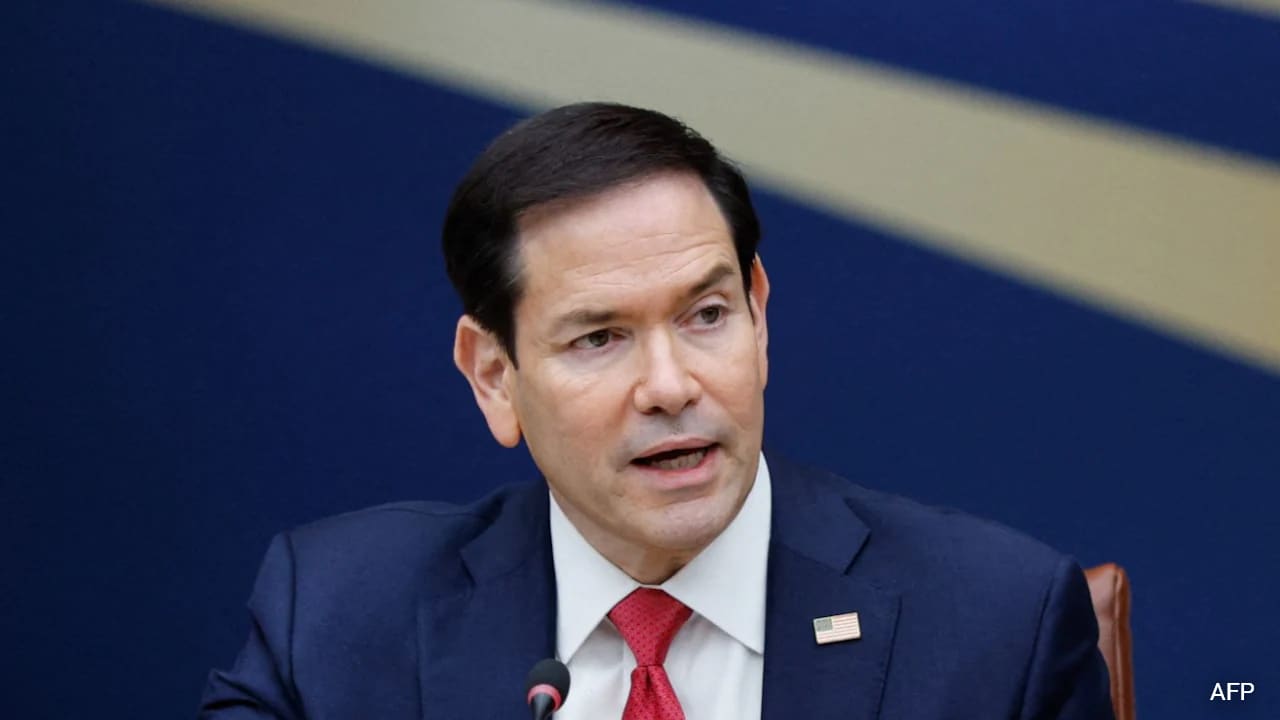
When Donald Trump stepped up to the microphones to hail a "big agreement" with Vladimir Putin following their meeting on Ukraine, the headlines exploded across digital screens in Washington, Moscow, and Brussels within seconds. Pundits dissected the phrasing. Markets twitched. Cable news anchors debated the precise geometry of diplomatic handshakes and the exact tone of the post-summit readout. From three thousand miles away, a bilateral breakthrough looks like chess played on mahogany—clean, strategic, and bloodless.
Down in the mud of the Donbas, however, diplomacy does not smell like polished wood or freshly printed press releases. It smells like wet wool, diesel exhaust, and cold iron.
To understand what a "big agreement" between the American president and the Russian leader actually means, you have to step away from the podiums and look at the invisible ink drying beneath those signatures. Because history teaches us a brutal, unyielding lesson about superpower deals struck over the heads of smaller nations: the ink is never free, and the bill is always sent to the people who weren't invited to the room.
The Architecture of a Handshake
Let us look at the verified reality of the room first. For years, the war in Ukraine has ground forward as a war of attrition, consuming hundreds of thousands of lives, flattening entire industrial cities, and draining Western arsenals at a pace not seen since the middle of the twentieth century. By the time Trump and Putin sat across from one another, the geopolitical exhaustion was palpable. Washington wanted an off-ramp from an open-ended financial and military commitment that had fractured domestic politics. Moscow, battered by sanctions and staggering battlefield casualties, wanted to lock in its territorial gains and fracture the Western alliance before its own economy buckled under the strain of total war mobilization.
Enter the dealmaker and the autocrat.
Trump has long framed international relations not as an ideological crusade between democracy and authoritarianism, but as a series of transactional balances. In his worldview, endless wars are bad business, and every conflict has a price tag where both sides eventually decide the bleeding costs too much. Putin, a former intelligence officer trained to exploit every fissure in an adversary’s resolve, understands that language intimately. When Trump emerged from their talks declaring a "big agreement" on the table, he was signaling that two men had found a transactional common ground where years of traditional statecraft had found only concrete walls.
Yet an agreement announced in a press briefing is not a peace treaty. It is a frame. And what matters is who gets cropped out of the picture.
Consider a hypothetical scenario—a composite sketch drawn from the very real lives of millions caught in the crossfire. Picture a woman named Olena, a civil engineer from Kharkiv, standing in a cramped apartment in western Ukraine. Her husband has spent nineteen months rotating in and out of trenches near Pokrovsk. When Olena reads the breaking news alert on her cracked phone screen—Trump hails 'big agreement' with Putin—she does not feel a surge of geopolitical optimism. She feels her stomach drop into an ice-cold void.
Why? Because in Olena’s world, a "big agreement" negotiated without Kyiv’s pen on the primary draft immediately raises three terrifying questions. Does this freeze the front lines where they stand, effectively handing twenty percent of her country to the army that shelled her neighborhood? Does it strip away the long-term security guarantees that prevent Russia from simply resting, rearming, and returning in four years? Or does it force Ukraine into a neutral buffer status where its sovereignty exists only on paper, subject to a veto from the Kremlin?
Diplomats call these "final status issues." Olena calls them her life.
The Illusion of the Frozen Line
I have walked along frozen conflict zones in Eastern Europe before, years after the cameras packed up and the "ceasefire" declarations were celebrated in Western capitals. If you have never stood at a checkpoint where a country was sliced in half by a pen stroke, it is easy to believe that stopping the shooting is the same thing as ending a war.
It isn't.
A frozen front line is not a scar; it is an open wound covered with a dirty bandage. You see it in the rusted skeletons of factories that used to employ entire towns, now sitting fifty yards inside a demilitarized zone where stray dogs outnumber people. You hear it in the bitter silence of families separated by concrete dragon's teeth and minefields, needing special permits just to visit a mother's grave on the other side of a river. You feel it in the low-grade, permanent dread that hangs over every school, every power plant, every bridge—the knowledge that the artillery hasn't been dismantled, merely pulled back ten miles out of sight, waiting for the political winds to shift.
Think of a ceasefire without enforceable security guarantees like putting a heavy lid on a boiling pot without turning down the burner. For a few minutes, the kitchen seems quiet. The steam stops hitting the ceiling. Everyone congratulates themselves on solving the mess. Beneath the lid, however, the pressure is climbing every second, and when the metal finally gives way, the scalding water goes everywhere.
History is littered with these lids. In 1938, British Prime Minister Neville Chamberlain returned from Munich waving a piece of paper signed by Adolf Hitler, promising "peace for our time" after carving up Czechoslovakia without Czech consent. In 2014 and 2015, the Minsk agreements were hailed as diplomatic breakthroughs that would quiet the guns in eastern Ukraine. Both times, the agreements bought time for the aggressor to digest what it had taken and prepare for the next lunge.
This is the deep, gnawing anxiety rattling through Warsaw, Tallinn, Riga, and Vilnius right now. When leaders in Eastern Europe hear about a "big agreement" between Washington and Moscow, they do not hear the sound of doves cooing. They hear the echo of 1945 at Yalta, when great powers drew lines across a map of Europe with thick grease pencils, deciding the fate of nations that weren't in the room.
What Both Sides Actually Want
To strip away the political theater and see the machinery underneath, we have to look honestly at the leverage each man brought to the table. Neither Trump nor Putin operates out of sentimentality; both operate out of cold calculation.
For Trump, the strategic logic is rooted in a fierce conviction that America has overextended itself policing the periphery of Europe while facing monumental challenges at home and across the Pacific. By positioning himself as the sole leader capable of bringing Putin to heel—or at least to the table—Trump claims a monumental political victory. He can point to the sudden halt in billions of dollars of outgoing military aid, claim credit for averting a direct nuclear confrontation between Washington and Moscow, and pivot American bandwidth toward China and domestic economic priorities. In his eyes, forcing a settlement—even an imperfect, jagged one—is infinitely superior to funding a stalemate that kills thousands every month with no clear path to total Ukrainian victory.
For Putin, the calculation is even simpler, though far more patient. Russia has absorbed economic shocks and human losses that would topple any democratic government within weeks. Yet Putin’s regime survives on one currency: the projection of imperial inevitability. If he walks away from a summit with the American president holding an agreement that recognizes Russian control over occupied Ukrainian territory, lifts crippling economic sanctions, and blocks Ukraine from ever joining NATO, Putin doesn't just survive the war. He wins it. He proves to his domestic audience—and to every watching autocrat from Beijing to Tehran—that brute force, sustained long enough, eventually exhausts the West's attention span.
Look at how those two agendas interlock. One leader wants out of a costly, unpopular entanglement; the other wants permanent validation of his territorial conquest. When those two desires meet in a closed room, a "big agreement" isn't just possible—it is practically magnetic.
And yet, there is a third chair in that room, even when it is left empty.
The Ghost at the Table
Ukraine is not a chessboard. It is a nation of nearly forty million people who have spent the last several years proving that they refuse to be erased.
You cannot simply decree peace from Washington or Moscow if the people holding the rifles in the trenches refuse to lay them down. Imagine telling a soldier who watched his unit wiped out defending a ruined brick factory in Bakhmut or Avdiivka that his sacrifice was merely a bargaining chip to help an American president deliver a campaign promise and a Russian autocrat save face. Imagine telling a Ukrainian president—whether Volodymyr Zelenskyy or any successor—to sign away sovereign territory while knowing that doing so could trigger immediate political collapse or civil unrest in Kyiv.
This is the fundamental flaw that haunts every top-down superpower bargain: legitimacy cannot be exported.
If Washington attempts to force Kyiv into a lopsided settlement by threatening to cut off intelligence sharing, air defense interceptors, and financial lifelines, the immediate result might be a temporary pause in fighting. The long-term result, however, could be catastrophic. A humiliated, fractured, and heavily armed Ukraine left without credible Western protection becomes a volatile powder keg on Europe's eastern flank. Meanwhile, European allies—who have poured massive amounts of money and political capital into supporting Kyiv—face an agonizing choice: either step into the void left by Washington to sustain Ukraine alone, or accept a new European security order dictated from the Kremlin.
Let us be candid about the confusion and dread this moment creates, even for those of us who have spent years studying international security. There are no clean exits left in this war. Anyone who tells you that total military victory—pushing every Russian soldier back across the 1991 borders—is easy is lying to you. Anyone who tells you that a quick handshake between Trump and Putin guarantees lasting peace is lying to you even harder.
We are trapped between two brutal truths. Continuing the war indefinitely risks the demographic and economic destruction of Ukraine, alongside the ever-present danger of miscalculation spiraling into a wider European conflict. Ending the war on the wrong terms rewards naked aggression, shatters the post-1945 rule that borders cannot be redrawn by force, and tells every nuclear-armed state on earth that conquest pays if you can outlast your neighbors' patience.
The Invisible Stakes in Your Own Living Room
It is tempting, when watching news clips of motorcades and flag-draped press rooms, to treat all of this as distant theater—something that happens to other people in places whose names are hard to pronounce.
That is a dangerous illusion.
The invisible stakes of a Trump-Putin agreement reach directly into the stability of the global economy, the cost of energy, the proliferation of nuclear weapons, and the basic rules that keep the modern world from sliding back into nineteenth-century jungle law.
Consider what happens next if the final terms of this "big agreement" effectively ratify Russia’s land grab in Ukraine. In capitals from Seoul to Tokyo to Taipei, leaders will quietly pull out their calculators. If a non-nuclear nation like Ukraine—which famously gave up the world’s third-largest nuclear arsenal in 1994 under the Budapest Memorandum in exchange for security assurances from the United States, the United Kingdom, and Russia—can be invaded, dismembered, and pressured into conceding territory by those very same guarantors, what lesson does every vulnerable country draw?
The lesson is unmistakable: get a bomb, and never give it up.
A bad peace in Ukraine doesn't reduce the risk of nuclear war; it accelerates a global nuclear arms race. When international treaties and superpower promises are revealed to be paper shields, every mid-sized power living next to an aggressive neighbor realizes that survival depends entirely on possessing the ultimate deterrent. Within a decade, the relatively stable non-proliferation regime that has kept the world from nuclear catastrophe for eighty years could unravel completely.
At the same time, look at the economic ripple effects. Global grain markets, fertilizer supply chains, European energy grids, and defense industrial bases have all been rewired by this conflict. A durable, enforceable peace would unlock billions in reconstruction capital, stabilize food prices across the Global South, and allow European economies to breathe again. A fragile, rigged pause, by contrast, leaves the entire region in a state of suspended animation—too dangerous for serious private investment, too unstable for millions of refugees to return home, and too bitter to allow normal trade to resume.
The Weight of the Pen
So when you hear the phrase "big agreement," resist the urge to celebrate or despair based on the headline alone. Look past the triumphant adjectives and demand to see the mechanics.
Real peace has very specific, unglamorous hallmarks. It does not rely on the personal chemistry between two strongmen, because leaders age, lose elections, and break promises. Real peace relies on ironclad verification mechanisms, demilitarized buffer zones monitored by credible international observers, automatic snap-back sanctions if a single shell crosses the line, and concrete, legally binding security commitments that make the cost of a second invasion suicide for the aggressor.
Without those teeth, a "big agreement" is just a press conference waiting to collapse.
Think back to Olena in that cramped apartment in western Ukraine, staring at the glow of her phone screen as midnight settles over the Carpathian Mountains. Outside her window, the snow is falling silently, covering the scarred roads and the dark power lines in a thick, uniform white. From a distance, the landscape looks serene, almost peaceful, as if the earth itself has decided to call a truce.
Walk ten steps out the front door, though, and your boots sink straight through the white crust into the frozen mud underneath. The war hasn't vanished beneath the snow. It is just waiting for the thaw.