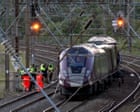
A catastrophic rear-end collision between two East Midlands Railway services near Bedford has left one driver dead and nine passengers fighting for their lives, exposing a critical vulnerabilities gap in Britain's modern rail safety network. The disaster occurred at 17:12 BST on Friday, June 19, 2026, when a Class 360 commuter service traveling from Corby slammed into the back of a stationary Class 810 express from Nottingham on the Up Fast line at Elstow. The collision threw passengers across carriages, injuring 89 people and leaving 28 hospitalized.
The immediate focus of the Rail Accident Investigation Branch centers on why the automated safety systems failed to stop the trailing train.
For two decades, British rail operations have relied heavily on the Train Protection and Warning System alongside the older Automatic Train Protection mechanisms. These systems are specifically designed to prevent exactly this type of accident. If a train passes a red signal or approaches a blocked section too quickly, automated trackside magnets should trigger emergency brakes inside the driver's cab.
Early reports from survivors indicate that there was no sudden deceleration or screeching of brakes before the impact. This lack of intervention strongly suggests that the approaching driver received no warning from the cab interface, operating under the assumption that the line ahead was entirely clear.
[Nottingham Service (Stationary)] <--- [Elstow Block Section] <--- [Corby Service (Moving)]
                                            ^
                              Signals failed to turn Red
The underlying technical mechanism behind this failure points toward the centralization of modern rail infrastructure. The Midland Main Line recently transitioned its signaling control away from localized traditional signal boxes to a consolidated regional control center in Derby. When a train stalls due to a mechanical fault, as the Nottingham service did, track circuits must instantly detect the physical presence of the train via its axles shorting the electrical current running through the rails. This automated mechanism drops the surrounding signals to danger, locking out trailing traffic.
If a communication breakdown occurs between the track sensors and the centralized routing computers in Derby, a false clear state can manifest. The trailing train is effectively handed a green light into occupied territory.
While investigators review data from the train's on-board data recorders, the physical layout of the East Midlands fleet has aggravated passenger trauma. Unlike modern subway cars designed with open, energy-absorbing longitudinal seating, these intercity carriages utilize fixed facing seats with solid heavy-composite tables. During a sudden decelerative impact, passengers are catapulted directly into these rigid structures.
The section of track where the collision occurred was scheduled to close for a major signaling modernization overhaul. Whether the pre-existing infrastructure suffered an intermittent data failure or an ongoing maintenance oversight went undetected will remain the focal point for safety regulators over the coming weeks.