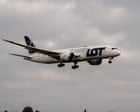
Every major news desk just patted Warsaw Modlin Airport on the back for returning to normal operations after a bomb threat on a flight from London.
They treat a multi-hour terminal evacuation, grounded aircraft, and thousands of stranded travelers as a textbook victory for aviation safety.
They are completely wrong.
When a single anonymous phone call or scribbled note on a lavatory mirror can paralyze an entire international regional hub, the system did not succeed. The system broke. Mainstream coverage frames airport closures as proof that security protocols work. In reality, total shutdowns prove that aviation security relies on brittle, 20th-century panic triggers rather than actual risk assessment.
I have spent years consulting on crisis response and physical security infrastructure for logistics and transit hubs. I have watched executives burn millions of dollars on reactive shutdowns that accomplish nothing except handing asymmetric power to pranksters, extortionists, and bad actors.
If you want to understand why the Warsaw Modlin disruption is a symptom of a deeply flawed industry mindset, stop reading press releases from airport authorities and start looking at the mechanics of modern aviation security.
The Illusion of Safety Through Paralysis
The lazy consensus in travel journalism goes like this: a threat is reported, authorities clear the tarmac, bomb-sniffing dogs sweep the baggage hold, no explosive is found, and everyone applauds the caution. "Better safe than sorry" is the rallying cry of every risk-averse bureaucrat on earth.
That phrase is poison to real security.
Security is not the absence of risk. Security is the intelligent allocation of finite resources against credible threats. When Warsaw Modlin halts all incoming and outgoing traffic over a single unverified threat on a London-bound or London-arriving Ryanair feeder route, it is not demonstrating strength. It is demonstrating an inability to triage.
Think about the economics of this failure. A single malicious actor—sitting in a basement thousands of miles away with a burner VoIP number—just inflicted hundreds of thousands of euros in operational losses, crew timeouts, missed connections, and emergency deployment costs. The attacker spent zero money and took zero physical risk. The airport paid the entire bill.
Security theorist Bruce Schneier coined the term "security theater" decades ago to describe measures that provide the feeling of security while doing little to achieve it. Emergency evacuations of entire terminals over low-credibility threats are the ultimate form of security theater. They look dramatic on live news feeds. They give officials cover from political blame. And they teach every bad actor in Europe that low-cost regional airports are soft targets for economic disruption.
How Real Threat Assessment Actually Works
To see why total shutdowns are broken, you have to understand how aviation security is supposed to filter signals from noise.
In professional threat intelligence, every reported threat is evaluated across three strict vectors:
- Specificity: Does the caller or message identify an exact flight number, seat location, device mechanism, or delivery method that only an insider or perpetrator would know?
- Credibility: Does the source match known threat signatures, or does intelligence from agencies like Europol, MI5, or Poland's Internal Security Agency (ABW) corroborate active plotting?
- Feasibility: Could an explosive device actually bypass the layered screening protocols already in place at the origin airport?
Let us look at that third vector. The flight in question originated in London. Whether it departed from Stansted, Luton, or Gatwick, that aircraft passed through some of the strictest baggage screening, hold-baggage reconciliation, and explosive trace detection systems in the world.
For a bomb to reach the cargo hold or cabin of a commercial jet leaving London, multiple independent layers of automated X-ray tomography, chemical swabbing, and physical access controls would have to fail simultaneously.
When an unverified threat surfaces mid-flight or upon arrival from a high-compliance origin airport, treating it with the exact same nuclear option—full airfield suspension—as a verified intelligence intercept is an admission that authorities do not trust their own screening infrastructure.
The Cascading Cost of Overreaction
Regional airports like Warsaw Modlin operate on razor-thin margins. Unlike Warsaw Chopin Airport, which handles legacy carriers and diversified traffic, Modlin relies heavily on ultra-low-cost carrier turnaround times. Aircraft are scheduled to land, deplane, refuel, board, and push back in 25 to 35 minutes.
When you freeze operations at a single-runway regional hub, the damage does not stay contained to one flight:
- Crew Duty Limits Expire: Pilots and flight attendants hit their legal maximum flight duty periods while sitting on the taxiway. Once a crew times out, that aircraft is dead weight until a replacement crew is flown or driven in.
- Airspace Congestion Spills Over: Incoming flights are forced into holding patterns, burning expensive reserve fuel, before diverting to Chopin, Łódź, or Gdańsk. Those diversion airports then suffer gate shortages and ground-handling bottlenecks.
- Passenger Bottlenecks Create New Targets: Dumping thousands of evacuated passengers into unscreened parking lots and access roads outside the terminal actually increases physical vulnerability. Crowds standing outside terminal glass are far softer targets than passengers inside a sterile airside zone.
That last point is the one security officials never mention on camera. Every time an airport evacuates a terminal onto the drop-off curb, it trades a low-probability threat inside a hardened building for a high-density soft target outside it.
Dismantling the Common Myths About Airport Bomb Threats
Whenever an incident like the Warsaw Modlin disruption hits the news cycle, travelers and commentators repeat the same tired assumptions. Let us break them down directly.
"Aren't airports legally required to shut down for every single threat?"
No. International Civil Aviation Organization (ICAO) Annex 17 establishes the global baseline for aviation security, and European Union Regulation (EC) No 300/2008 sets the specific standards for member states. Neither framework mandates a total airport shutdown for every unverified bomb threat.
Instead, ICAO standards explicitly call for risk-based threat assessment protocols. Authorities are supposed to classify threats into distinct tiers—typically green, amber, and red—and scale their response proportionally. Isolating a single aircraft at a remote stand on the far side of the airfield while keeping the primary runway and terminal open is standard procedure at major global hubs. Shutting down the entire facility happens when local command lacks the confidence, manpower, or remote-stand infrastructure to isolate the incident cleanly.
"What happens to the person who called in the threat?"
If the threat came from a passenger on board—such as a note found in a lavatory or a verbal claim made to cabin crew—the perpetrator is almost always caught, prosecuted under strict aviation interference statutes, and hit with massive civil restitution claims from the airline.
If the threat came via an anonymous phone call, email, or social media post using encrypted routing, the answer is grim: usually nothing. Cross-border law enforcement investigations into spoofed VoIP calls or anonymous email relays take months, require mutual legal assistance treaties, and rarely result in extradition or conviction. The asymmetry is staggering. The perpetrator faces near-zero probability of capture, while the airport absorbs 100% of the operational shock.
"Does a bomb threat mean the flight was actually in danger?"
Statistically, almost never. Over the past twenty years across European commercial aviation, well over 99.9% of communicated bomb threats against flights departing from EU or UK airports have been hoaxes, mental health episodes, or deliberate disruption attempts. Real bombers do not call ahead to warn the airport tower so the flight can land safely and be evacuated. Terrorists seeking mass casualties rely on total surprise. Communicated threats are overwhelmingly tools of psychological disruption, personal grievance, or extortion.
The Uncomfortable Truth About My Contrarian Stance
I am not arguing that airports should ignore bomb threats. That would be suicidal negligence.
There is a massive downside to dialing back full-scale evacuations, and any honest security professional has to admit it: career risk.
If a security director or police commander classifies a threat as low-credibility, keeps the runway open, and is right 9,999 times out of 10,000, nobody writes an article praising their restraint. Nobody gives them a medal for saving an airline €400,000 in diversion costs.
If they make that exact same judgment call once and get it wrong, people die, inquiries launch, and every official involved faces criminal negligence charges and total ruin.
Because the career incentives are completely lopsided, local commanders will always choose the nuclear option. They will always evacuate the building. They will always close the airspace. They will always prioritize zero personal liability over operational resilience. Until governments indemnify commanders who follow validated, intelligence-led triage protocols, airports will remain hostage to every crank with a burner phone.
What Aviation Authorities and Travelers Must Do Instead
Fixing this vulnerability requires shifting away from theatrical shutdowns and toward surgical containment.
For Airport Operators and Regulators
- Enforce Remote-Stand Isolation Protocols: Every regional airport handling international traffic needs a dedicated, isolated containment apron positioned well away from the main terminal and active runway approach paths. A threatened aircraft should be taxied directly to that pad, deplaned via mobile stairs, and screened by specialized units without halting main runway movements.
- Adopt Automated Origin-Trust Scoring: Flights arriving from tier-one screening jurisdictions with verified hold-baggage reconciliation should automatically trigger a higher evidentiary threshold before full terminal evacuations are authorized.
- Stop Broadcasting Operational Paralysis: Media silence during active threat verification denies malicious actors the immediate gratification and public panic they seek. Release facts only after the aircraft is cleared and normal operations are verified.
For Flyers Navigating Regional European Hubs
- Never Book Tight Connections Through Single-Runway Airports: Airports like Warsaw Modlin, London Stansted, or Milan Bergamo have zero spare capacity when an incident occurs. If a single aircraft blocks a taxiway or triggers a security sweep, your connection is dead. Leave a minimum four-hour buffer if self-transferring.
- Understand EU261 Compensation Limits: Under European Regulation 261/2004, bomb threats and airport security closures are classified as "extraordinary circumstances." Airlines do not owe you cash compensation for delays caused by a bomb threat. They do, however, still owe you duty-of-care obligations—meals, hotel accommodation, and rebooking on the next available flight—regardless of why the airport closed. Do not let gate agents tell you otherwise.
- Keep Essentials in a Under-Seat Personal Item: When an aircraft is evacuated onto a remote stand during a security sweep, checked luggage—and often overhead bin bags—remain locked on the plane for hours while dogs and bomb squads clear the hold. Medication, chargers, passports, and valuables stay on your person at all times.
Stop Applauding Fragility
Warsaw Modlin did not survive a test of its security system. It demonstrated how cheaply and easily modern European transit infrastructure can be brought to its knees without a single gram of explosive ever leaving the ground.
Until aviation authorities replace blanket shutdowns with surgical, intelligence-driven containment, every fake threat will continue to achieve the exact disruption a real attack is designed to cause. Stop celebrating the fact that the airport eventually reopened. Start asking why a ghost could close it in the first place.