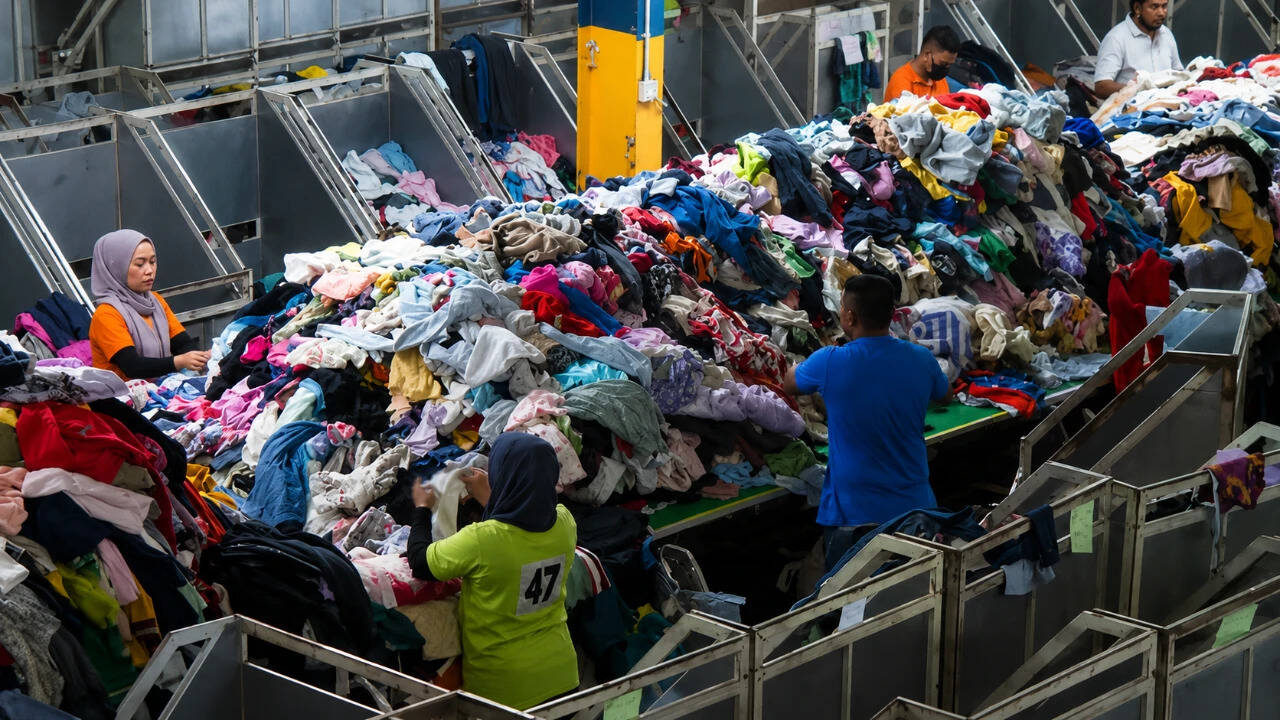
The headlines write themselves. Singapore ships seventy tonnes of unwanted garments across the border to Malaysia, and the comment sections erupt into moral panic. Environmentalists clutch their organic cotton pearls. Pious citizens wonder how a wealthy island state can export its textile sins to a neighbor.
Everyone misses the actual mechanics of the transaction because they prefer the easy high of performative outrage.
I have watched supply chains break, inventory burn, and corporate sustainability teams invent PR metrics out of thin air. When a headline tells you that cross-border textile movement is an environmental crime, look closer at the logistics. Cross-border proximity is not dumping. It is specialized sorting. Singapore lacks the industrial footprint to shred, grade, and upcycle at scale. Malaysia has the infrastructure, the sorting hubs, and the established downcycling networks.
Calling this trash export is like calling flour shipped to a bakery waste disposal.
The Myth of Local Circularity
The lazy consensus demands that every municipality process its own garbage within its own borders. It sounds nice on a city council slide deck. It falls apart the second you look at an economic map.
Singapore is tiny. You cannot drop a five-acre textile shredding plant in the middle of a high-density urban state without displacing housing or commercial tech parks. Malaysia has the regional capacity. Moving goods seventy kilometers across a land border makes industrial sense. The carbon footprint of a truck hauling bundled garments down the highway is negligible compared to the alternative: incinerating perfectly good synthetic blends or burying them in Semakau Landfill until it maxes out early.
We suffer from a profound geographic neurosis. If waste crosses an administrative line, we label it toxic colonialism. If it stays inside the invisible fence of a city-state, we ignore it. That is not environmentalism. That is border fetishism.
What Fast Fashion Actually Cost Us
Let us define the terms correctly. The problem is not the seventy tonnes crossing the Causeway. The problem is the seven thousand tonnes manufactured in the first place because consumers treat polyester shirts like disposable napkins.
I have seen corporate warehouses write off millions of units of brand-new inventory because a micro-trend shifted on social media. They shred the tags, cut the fabric, and dump it. The seventy tonnes making headlines? That is just the tail end of a bloated consumer engine. Blaming the cross-border logistics is like blaming the ambulance for the car crash.
When people ask why Malaysia accepts these textiles, they assume it is an act of charity or exploitation. It is neither. It is commerce. Sorted post-consumer textiles are a commodity. They get graded into categories: premium vintage for export to thrift capitals, wiping rags for industrial factories, and fiber fill for insulation.
"Cross-border logistics are judged by moral optics instead of mass balance equations."
The Uncomfortable Downside of My Argument
Let us be completely transparent. This system has a dark side, and pretending otherwise makes me no better than the greenwashing PR firms I despise.
By keeping secondary textile markets active through regional trade, we subsidize the fast fashion machine. If it became legally impossible for Singapore to offload its textile surplus to Malaysia, local brands would face immediate friction. Retailers would have to answer for unsold stock. The financial pain of inventory accumulation might actually force them to slow down production cycles.
By smoothing out the waste pipeline, we make fast fashion just a little bit more comfortable for everyone involved. Malaysia absorbs the friction so Singapore consumers can keep buying three-dollar tops without feeling the immediate physical weight of their own consumption in their backyards.
Stop Treating Symptoms
If you want to fix the textile crisis, stop screaming about trucks crossing bridges.
Stop buying polyester blends that cannot be composted or easily separated. Stop pretending that dropping a bag of stained polyester shirts into a donation bin is an act of charity. Most donation bins are private collection businesses that monetize your guilt by shipping low-grade rags to developing economies where local textile industries get undercut.
Singapore shipping seventy tonnes to Malaysia is a footnote. The real story is that seventy thousand tonnes were bought, worn three times, and discarded without a second thought. Fix the intake valve. Stop worrying about the drainpipe.