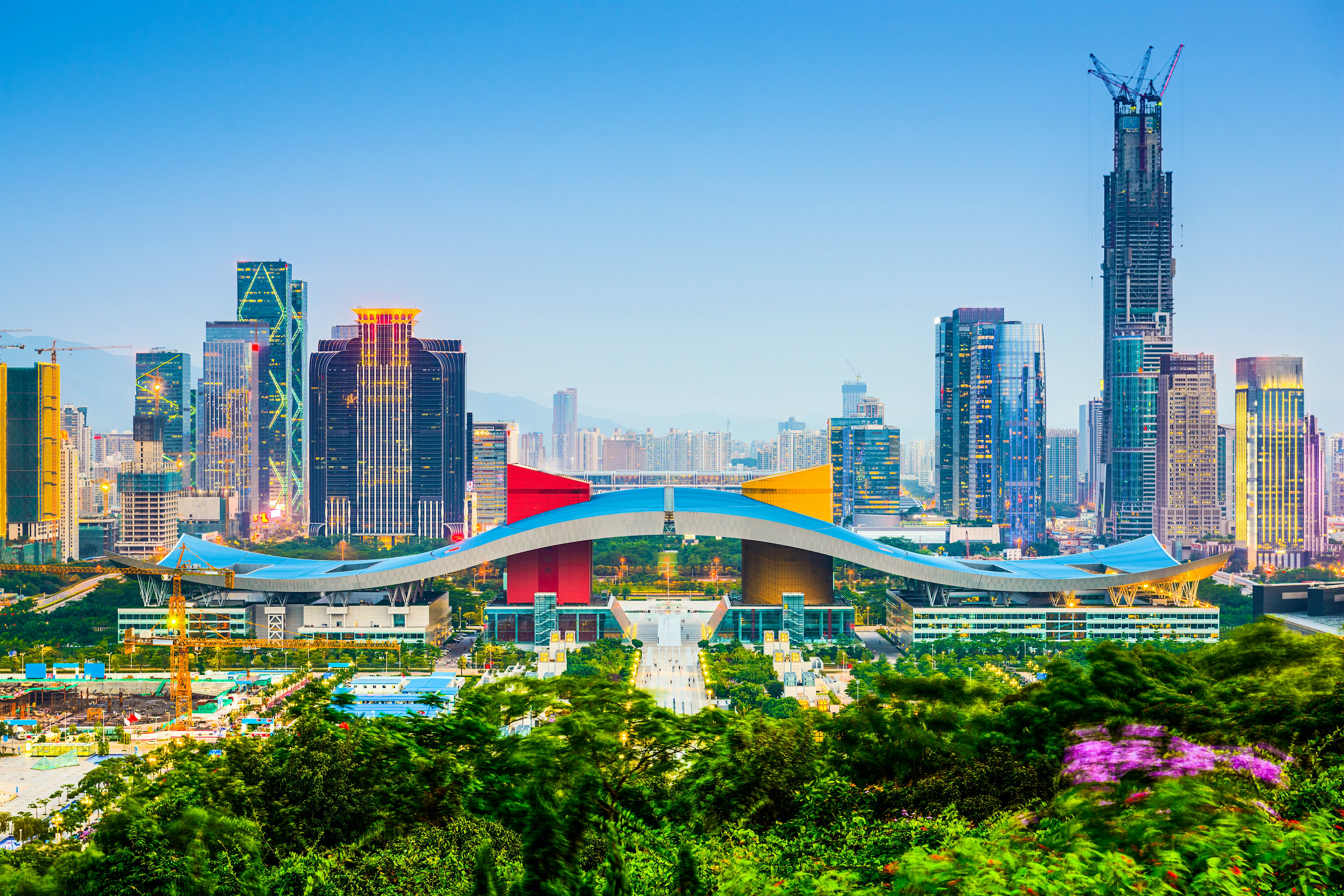
When Chinese President Xi Jinping and Russian President Vladimir Putin stood together in Shenzhen and called for a "fairer multipolar world order," standard diplomatic coverage treated the phrase as routine geopolitical boilerplate. That reading misses the location and the ledger. Shenzhen is not a ceremonial capital like Beijing or St. Petersburg; it is China's premier hub for hardware manufacturing, cross-border financial technology, and supply chain routing. By framing a multipolar world order inside China's southern industrial engine, Beijing and Moscow signaled that their campaign to bypass Western sanctions and dollar dominance has moved from diplomatic communiqués into the plumbing of global trade.
State media across both capitals routinely package bilateral summits as grand philosophical alignments against Western hegemony. Diplomatic wire reports repeat the same talking points about mutual respect, non-interference, and a multipolar future. Yet the real story sits beneath the banquet speeches. Over the past several years, the Sino-Russian relationship has undergone a structural transformation driven by survival on Moscow's side and cold commercial calculus on Beijing's. Understanding what happens next requires stripping away the diplomatic varnish and examining the trade corridors, payment rails, and asymmetric dependencies forged between the two powers.
Why Shenzhen Matters More Than Beijing
Protocol dictates that high-level state visits happen in national capitals, surrounded by military honor guards and historic monuments. Taking a summit to Shenzhen changes the subtext entirely.
Located just across the border from Hong Kong, Shenzhen grew from a fishing village in the late 1970s into the nerve center of China's private technology sector and export economy. It houses the headquarters of telecommunications giants, electric vehicle manufacturers, drone developers, and cross-border payment processors. When Russian officials meet their Chinese counterparts in Shenzhen, the conversation inevitably shifts from abstract foreign policy to logistics, component sourcing, and customs clearance.
For Moscow, cut off from Western machine tools, microelectronics, and commercial vehicles since sweeping export controls took effect in 2022, southern China represents an industrial lifeline. Russian factories need bearings, computer numerical control machinery, semiconductors, and telecom equipment to keep domestic production running. Shenzhen's dense network of trading companies, freight forwarders, and specialized manufacturers provides exactly those goods, often routed through third-party intermediaries to obscure the final destination.
Beijing gains something equally tangible from hosting in the south. China's export-oriented manufacturing belt has faced slowing demand in North America and Europe alongside rising tariff barriers. Russia offers a captive market of more than 140 million consumers and an industrial base desperate for replacements. Chinese automakers, smartphone brands, and heavy equipment suppliers have rapidly captured market share abandoned by European, American, and Japanese firms.
The Mechanics of De-Dollarization
Talk of a multipolar world order remains empty rhetoric unless countries can settle invoices without touching the U.S. dollar or clearing through New York banks. On this front, Beijing and Moscow have built a working prototype, though one riddled with friction.
Before 2022, the vast majority of bilateral trade between China and Russia was denominated in dollars or euros. Once major Russian banks were removed from the SWIFT financial messaging network and Russia's foreign currency reserves were frozen in Western jurisdictions, both capitals accelerated the shift to local currencies. Today, well over 90 percent of bilateral trade between China and Russia is settled in Chinese yuan and Russian rubles.
The transition relies on an expanding web of alternative financial infrastructure:
- China's Cross-Border Interbank Payment System (CIPS): Designed to clear international yuan transactions, CIPS has become an essential channel for Russian exporters selling crude oil, natural gas, coal, and metals to Chinese buyers.
- Russia's System for Transfer of Financial Messages (SPFS): Built by the Bank of Russia as a domestic alternative to SWIFT, SPFS links dozens of foreign entities, though its international reach remains far narrower than Beijing's network.
- Regional Correspondent Banking: Because China's largest state-owned banks fear secondary sanctions from the U.S. Treasury Department, much of the sensitive cross-border clearing has migrated to smaller regional banks along the northeastern border—such as institutions in Heilongjiang and Jilin provinces—that have minimal exposure to the American financial system.
This arrangement keeps goods moving, yet it exposes a glaring imbalance. Russian energy exporters accumulate massive amounts of yuan from oil and gas sales, which they use to buy Chinese manufactured goods. However, the yuan is not freely convertible on the capital account, and Beijing maintains strict controls over how currency moves in and out of its borders. Russia has effectively traded dependence on the dollar and euro for dependence on a currency controlled entirely by the People's Bank of China.
The Asymmetry Nobody in Moscow Admits
Publicly, Xi and Putin describe their partnership as an alliance of equals standing shoulder to shoulder. Privately, the economic data tells a story of stark asymmetry.
China's gross domestic product is roughly eight to ten times the size of Russia's economy. Before the war in Ukraine, Russia accounted for barely 2 percent of China's total foreign trade. Even after bilateral trade surged past the $240 billion mark—beating official targets ahead of schedule—Russia remains a secondary commercial partner for Beijing compared to the United States, the European Union, or the Association of Southeast Asian Nations.
For Moscow, the picture looks completely different. China has become Russia's single largest trading partner by a wide margin, accounting for roughly a third of Russia's total foreign trade. When a single buyer dominates your energy exports and a single supplier dominates your industrial imports, pricing power disappears.
Consider the energy market. Following the European Union's embargo on Russian seaborne crude and the G7 price cap mechanism, Russia redirected millions of barrels per day toward Asia, primarily China and India. Chinese state refiners and independent "teapot" refineries in Shandong province stepped in to buy Urals and ESPO blend crude, but they demanded steep discounts relative to global benchmarks like Brent. Similarly, in natural gas negotiations—most notably over the proposed Power of Siberia 2 pipeline—Beijing has stalled for years, pressing Moscow to accept prices closer to heavily subsidized Russian domestic rates while asking Russia to shoulder the bulk of the construction costs.
| Dimension | Beijing's Position | Moscow's Position |
|---|---|---|
| Trade Leverage | Diversified global export base; Russia is a useful secondary market. | Heavily reliant on Chinese imports for electronics, machinery, and vehicles. |
| Energy Pricing | Purchases discounted Russian crude and bargains hard on pipeline gas. | Forced to accept lower margins after losing lucrative European buyers. |
| Currency Control | Sets monetary policy and capital rules for the yuan. | Holds massive yuan reserves with limited external investment options. |
| Sanctions Exposure | Protects major banks from U.S. secondary sanctions to preserve Western trade. | Already under comprehensive Western sanctions; pushes for deeper financial integration. |
This dynamic explains why senior Chinese officials routinely speak of a partnership with "no limits" in public speeches while quietly enforcing strict red lines in banking and technology transfers. Beijing wants a stable, friendly neighbor on its northern border that distracts Washington and supplies cheap raw materials. It has zero interest in wrecking its own access to Western capital markets and consumer economies to rescue Russian corporations.
The Secondary Sanctions Bottleneck
If the Shenzhen summit highlighted the ambition of the Sino-Russian axis, the persistent delays in cross-border payments reveal its vulnerability.
In late 2023, Washington expanded its sanctions authority, empowering the U.S. Treasury to cut off foreign financial institutions from the U.S. dollar system if they facilitate significant transactions involving Russia's military-industrial base. The threat worked faster than any diplomatic protest. Within weeks, major Chinese state banks—including Industrial and Commercial Bank of China, Bank of China, and China Construction Bank—began tightening compliance checks, freezing accounts tied to Russian clients, and rejecting yuan transfers originating from sanctioned Russian institutions.
Even when transactions involve purely civilian goods like textiles, agricultural equipment, or consumer electronics, compliance departments inside Chinese banks treat Russian wires as toxic. Payment processing times stretched from days to months. Billions of yuan sat trapped in limbo while importers and exporters scrambled to route funds through third countries in Central Asia, the Middle East, and Southeast Asia.
These workarounds carry heavy costs. Using layers of shell companies, regional brokers, and obscure payment agents adds anywhere from 5 to 15 percent in transaction fees and currency conversion spreads. What looks like seamless bilateral commerce in headline trade statistics is, at the operational level, a clunky, expensive obstacle course.
Selling Multipolarity to the Global South
Why, then, do Xi and Putin keep hammering the phrase fairer multipolar world order at every joint appearance? Because the message is not aimed at Washington or Brussels. It is aimed at the rest of the world.
Across Latin America, Africa, the Middle East, and Southeast Asia, frustration with Western financial dominance is real and growing. When the United States and its allies froze roughly $300 billion in Russian central bank reserves in 2022, finance ministers from Jakarta to Brasília took notice. The move demonstrated that sovereign reserves held in dollars or euros are only as safe as a government's political standing in Washington.
Beijing and Moscow exploit that anxiety relentlessly. They present their bilateral model—settling trade in local currencies, expanding groupings like BRICS, and building alternative development banks—as a blueprint for economic sovereignty. Under this framing, a multipolar world means no single country can weaponize the global reserve currency or dictate trade rules through unilateral sanctions.
Yet the pitch contains a glaring contradiction that many developing nations recognize. Moving away from a dollar-centric system only to enter a yuan-centric system does not create true multipolarity; it simply swaps one dominant clearinghouse for another. Countries like India, Brazil, and Saudi Arabia are happy to use local currency arrangements when doing so lowers transaction costs or hedges against currency volatility. None of them, however, want to surrender their monetary autonomy to Beijing any more than they want to take orders from Washington.
India's experience illustrates the limit of the Beijing-Moscow vision. New Delhi bought vast quantities of discounted Russian oil following the Ukraine invasion, initially attempting to settle some trades in Indian rupees and Chinese yuan. The rupee arrangement quickly stalled because Russia accumulated billions of rupees it could not spend on Indian goods, while Indian officials balked at paying in yuan due to ongoing border tensions and strategic rivalry with China. Ultimately, traders fell back on United Arab Emirates dirhams and other intermediate currencies—proof that building a coherent non-dollar architecture is far harder than issuing joint statements in Shenzhen.
What the Shenzhen Alignment Actually Changes
Strip away the grand historical claims, and the real impact of the Xi-Putin convergence comes down to three concrete shifts in global business and geopolitics:
- Sanctions Are Losing Their Shock Value: Western export controls and financial blockades can slow down an adversary's economy and raise its import costs, but they can no longer isolate a major commodity producer when the world's largest manufacturing power refuses to enforce them. Supply chains simply reroute through overland rail corridors, border free-trade zones, and third-party hubs.
- Bifurcated Supply Chains Are Permanent: Multinational corporations operating in Asia can no longer assume a single global regulatory environment. Manufacturers in hubs like Shenzhen increasingly maintain separate compliance tracks—one geared toward Western markets subject to U.S. and European export rules, and another serving domestic and Eurasian markets insulated from Western oversight.
- Commodity Markets Have Split: Global price benchmarks for oil, gas, coal, and industrial metals no longer reflect a single unified market. A shadow fleet of tankers, non-Western maritime insurers, and bilateral yuan-ruble clearing channels now move millions of barrels of energy outside traditional Western exchanges.
History shows that coalitions built primarily on shared grievances against a dominant power rarely achieve smooth integration. During the Cold War, deep ideological and strategic fractures eventually split Beijing and Moscow apart despite years of public solidarity. Today, their alignment rests on far more pragmatic ground—shared border security, complementary resource and manufacturing profiles, and mutual resistance to American containment.
That pragmatism makes the partnership durable, even when trust is thin. Chinese engineers will keep wiring factories in Shenzhen to supply Russian buyers through layered intermediaries, and Russian tankers will keep unloading crude at Chinese ports for settlement in yuan. The world order emerging from these transactions is neither fair nor truly multipolar, but a fragmented two-tier marketplace where every shipment requires choosing which set of rules—and which currency—you are willing to live under.