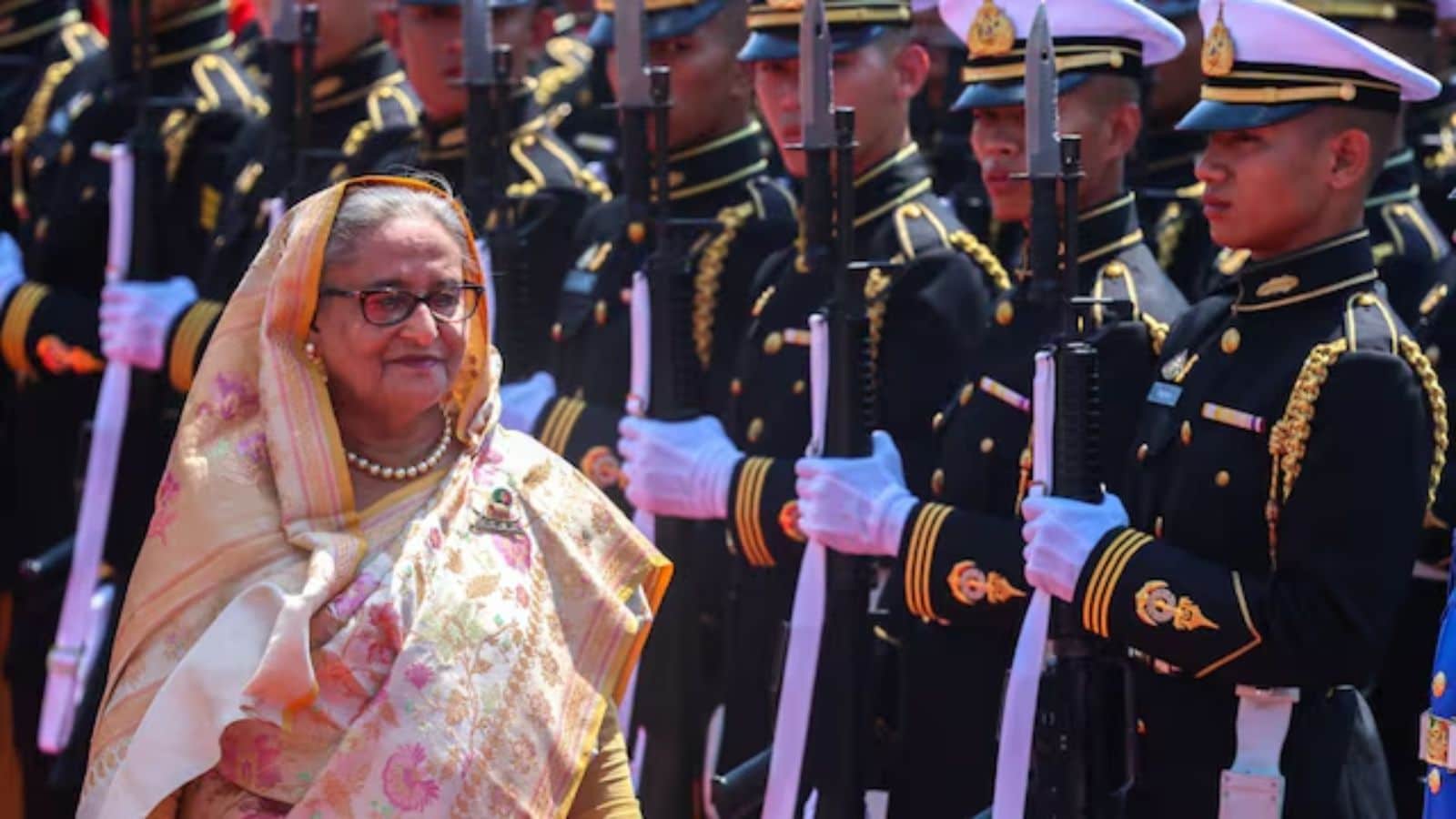
The mainstream political press is currently high on its own supply of historical nostalgia. Across South Asian desks, a narrative is congealing into a lazy consensus: Sheikh Hasina, the deposed Prime Minister of Bangladesh currently exiled in India, is reportedly eyeing a triumphant December return to Dhaka to resuscitate the Awami League. The pundits are already drawing parallels to her 1981 homecoming, spinning a cinematic tale of a phoenix rising from the ashes of the August 2024 student-led revolution.
It is a comforting script for traditionalists. It is also completely delusional.
The assumption that the Awami League can simply run back its 20th-century playbook in a fundamentally rewired 21st-century political ecosystem ignores the structural realities of modern state failure and generational shifts. Hasina returning in December would not be a masterstroke of political resilience. It would be a suicide mission that permanently incinerates whatever shattered remnants of her party remain.
The 1981 Delusion: Why History Will Not Repeat Itself
To understand why the mainstream analysis is broken, you have to look at the foundational myth the Awami League relies upon. When Sheikh Hasina returned from exile in May 1981, six years after the assassination of her father, Sheikh Mujibur Rahman, she stepped into a vacuum. The country was reeling from military coups, the institutional memory of the liberation war was fresh, and the Awami League possessed an intact, highly motivated grassroots network that viewed her as a unifying martyr-descendant.
Fast forward to the present. The political landscape is not vacant; it is fiercely defended by a radically different demographic. The Gen Z-led movement that ousted her in August 2024 did not just overthrow a government; they rejected an entire political caste.
I have spent decades analyzing regime transitions and state capture across volatile jurisdictions. When a regime collapses due to systemic economic mismanagement and heavy-handed security crackdowns, the institutional antibodies generated by the successor state are viciously hostile to the old guard.
In 1981, Hasina was the underdog fighting an oppressive military apparatus. In 2026, she is viewed by the demographic majority as the personification of the apparatus that turned internet blackouts and live ammunition against its own youth. You cannot use the optics of a victim to reclaim power when the public remembers you as the enforcer.
Dismantling the Myth of the Silent Majority
The core argument for a December return rests on a flawed premise: that there is a massive, terrified "silent majority" of Awami League loyalists waiting for their leader’s signal to take back the streets. This is a classic misreading of authoritarian patronage networks.
When the head of a patronage-based political structure is severed, the network does not lie in wait; it liquefies. The Awami League’s strength was never purely ideological; it was transactional. It was built on a vast web of business syndicates, civil service complicity, and localized law enforcement capture. The moment Hasina boarded that military helicopter to Hindon Air Force Station, those transactional bonds dissolved.
Imagine a scenario where a corporate monopoly suddenly loses its patent protections and its entire executive board flees the country. The regional sales managers do not stay loyal to the brand out of sentimentality; they scramble to cut deals with the new market leaders or rebrand themselves to survive. That is exactly what is happening across Bangladesh’s districts. The mid-level operators who kept the Awami League machinery running are currently broke, hiding, or negotiating amnesties with the interim administration led by Muhammad Yunus. They do not want a high-profile, destabilizing return that puts a target back on their backs. They want obscurity.
The Intellectual Blindspot of the Interim Government
To be fair, the current interim government is making its own set of critical errors that fuel this false hope of an Awami League revival. Pundits point to rising inflation, labor unrest in the garment sector, and the chaotic nature of institutional reforms under the current administration as proof that the public will soon suffer from buyer's remorse.
This is the wrong metric to watch.
Public frustration with an interim government's economic performance does not automatically equal a desire to return to the previous autocracy. It usually manifests as a demand for faster elections or a entirely new political entity. The standard "People Also Ask" query on this topic usually goes: Will Bangladesh hold elections soon? The assumption hidden inside that question is that a return to elections means a return to the old two-party binary between the Awami League and the Bangladesh Nationalist Party (BNP).
That binary is dead. The student leaders who drove the revolution are actively building new political platforms designed specifically to bypass both legacy parties. By focusing exclusively on the BNP as the sole challenger, traditional analysts miss the decentralized, digital-native political entities forming in the universities and tech sectors.
The India Factor: A Geopolitical Liability
Any sober assessment of a potential return must look at New Delhi. The mainstream view suggests India will eventually leverage its considerable clout to smooth the path for Hasina’s return to stabilize its eastern border.
This is an amateur reading of geopolitics.
While India undeniably prefers a stable, friendly government in Dhaka, keeping Hasina on ice in Delhi is a massive diplomatic headache for them. Her presence complicates India’s attempts to build a working relationship with the Yunus-led interim setup and whatever government follows. If Delhi were to facilitate her return prematurely, it would trigger a wave of anti-India sentiment in Bangladesh that would take decades to repair, effectively handing geopolitical leverage in the region to Beijing on a silver platter.
India’s foreign policy establishment is pragmatic, not sentimental. They will protect her safety because allowing harm to come to a former ally looks bad on the international stage, but they are not going to bankroll a counter-revolution that risks burning down their own backyard.
The Cost of the Contrarian Play
Let us look at the downside of my own position. If I am wrong, and Hasina somehow manages to land at Hazrat Shahjalal International Airport in December without being immediately arrested or swarmed by hostile crowds, it would mean the interim government has suffered a total, catastrophic collapse of security and legitimacy within a matter of months.
But even in that extreme scenario, her return triggers a civil war, not a restoration. The student factions, the newly assertive Islamist groups, and the fractured military elements would not simply stand down. The Awami League is currently entirely unequipped to win a multi-front street war. They have no narrative, no domestic financial liquidity, and no youth mandate.
If you are advising the Awami League leadership right now, the strategy isn't a dramatic winter return. The strategy is institutional hibernation. You wait out the transition, allow the interim government to take the blame for the inevitable economic pain of structural adjustment, let the BNP overplay its hand as it tries to claim the throne, and slowly re-emerge in three to five years as a reformed, center-left technocratic opposition.
Trying to force a comeback in December is an act of pure hubris driven by an inner circle that is completely insulated from the reality on the ground in Dhaka. They are reading social media echoes and mistaking their own desperation for a national movement.
The Awami League’s current trajectory is a textbook case of a legacy organization refusing to accept that its operating system has been permanently deprecated. The world has changed, the electorate has grown up, and the old tricks of historical entitlement will no longer clear the runway.