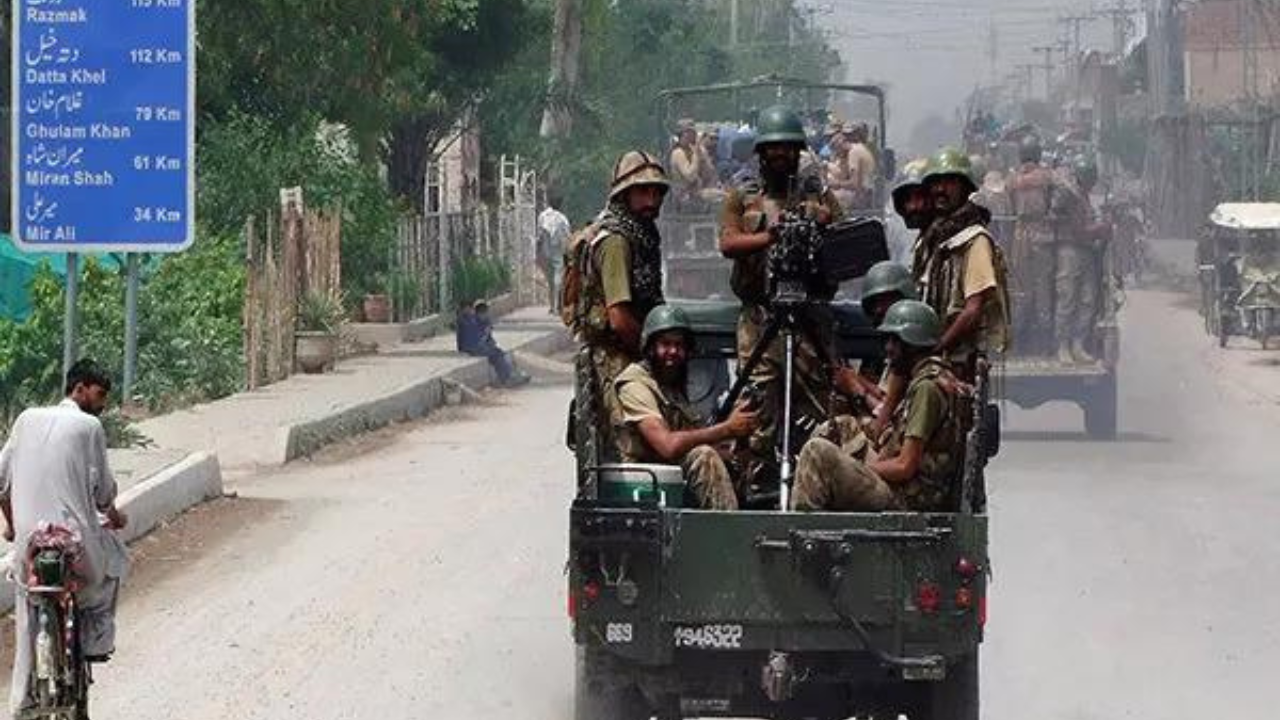
The air in the rugged passes of Khyber Pakhtunkhwa carries a specific kind of silence. It is not the peaceful quiet of an undisturbed wilderness, but the weighted, watchful stillness that settles over a landscape where danger wears a familiar face.
Dawn breaks over the jagged peaks of Pakistan's northwestern frontier, painting the stone in shades of amber and cold grey. To the untrained traveler, the winding mountain roads offer a breathtaking spectacle of raw geography. To the men and women who wear the green uniform of the local police force, every bend in that road is a question mark. Every passing motorcycle is a potential storm. Also making headlines lately: Why Global News is Failing Us Right Now.
On a routine patrol that felt like a thousand others before it, that storm arrived with the deafening crack of gunfire.
Three officers. Three lives rooted in families, routines, and quiet hopes for the future. Erased in seconds by unseen assailants riding motorcycles who melted back into the labyrinthine terrain before the echoes of the shots had even faded against the canyon walls. Additional insights regarding the matter are covered by The Washington Post.
This is not a story about statistics. Statistics are cold. They reduce human breath to a tally mark on a bureaucratic ledger. This is a story about the invisible geography of courage, and the heavy price paid by those who stand between civil society and the chaos that waits in the dark.
The Weight of the Badge in the Borderlands
To understand why three police officers were gunned down on a lonely stretch of asphalt, one must understand the unique topography of Khyber Pakhtunkhwa. Bordering Afghanistan, this province has long served as a geopolitical fault line. It is a region shaped by centuries of tribal loyalties, porous borders, and the jagged aftermath of protracted regional conflicts.
When a local constable buttons his uniform in the predawn chill, he is not just putting on work clothes. He is donning a target.
Consider the daily reality. These are not metropolitan streets patrolled by officers who expect a quiet shift of issuing parking tickets and directing traffic. In these frontier districts, police outposts are often isolated fortresses. The officers stationed there live under a constant, low-frequency hum of apprehension. They know that insurgent factions and criminal syndicates view local law enforcement as the primary obstacle to their operational freedom.
The motorcycle-borne ambush has become a signature tactic of asymmetry. It is cowardly, swift, and devastatingly effective. Two riders, a concealed weapon, a burst of high-velocity rounds, and an immediate escape route through narrow alleyways or unpaved mountain tracks. The attackers do not need to hold territory; they only need a moment of surprise.
And that is what makes the sacrifice of these three officers so profoundly tragic. They were the frontline of order in a place that perpetually flirts with disorder.
Anatomy of an Ambush
Imagine the final minutes.
The patrol vehicle moves at a steady, cautious pace. The engine hums against the steep incline. The officers inside are talking about mundane things—the upcoming weekend, a child's school fees, the bitter taste of the morning tea they drank back at the station house. Human beings, simply doing a job that others refuse to do.
Then, the sudden roar of a two-stroke engine accelerating behind them.
In high-threat environments, human perception narrows to a razor-thin slit. Muscle memory kicks in, but physics is unforgiving. Before hands can reach securely for sidearms or the vehicle can maneuver, the glass shatters. The metal yields.
It happens in the blink of an eye.
When the dust settles and the smoke clears, the road is quiet again. But the silence is different now. It is heavy with grief. Reinforcements arrive too late to catch the perpetrators, greeted only by the grim reality of empty brass casings scattered on the dust.
This is the agonizing paradox of modern counter-insurgency and local policing in border regions. The defenders must be vigilant one hundred percent of the time, while the aggressor only needs to be lucky once.
The Ripple Effect Across the Valleys
When three officers fall in a tight-knit provincial community, the shockwaves do not stop at the district boundary. They echo through the kitchens, the classrooms, and the local marketplaces.
Fear is a contagious element. It whispers through the bazaars, telling people to keep their heads down, to say nothing, to look away. But the true measure of a community's resilience is found in those who refuse to let fear dictate their actions. The very next day, another shift of officers will lace up their boots, pick up their rifles, and drive out onto those same dangerous roads.
Why do they do it?
It is easy to dismiss police service in conflict zones as merely a job chosen out of economic necessity. In reality, it runs deeper. It is an intricate blend of familial honor, regional duty, and an stubborn refusal to surrender the streets to lawlessness. They patrol because if they do not, the vacuum is filled by those who rule through terror.
Yet, bravery alone cannot stop a bullet. The recurring attacks on police personnel in Khyber Pakhtunkhwa underscore a persistent vulnerability in regional security infrastructure: the urgent need for enhanced intelligence-led operations, better mobile protection, and real-time communication systems that can neutralize asymmetric threats before they materialize.
Beyond the Headlines
When readers thousands of miles away scroll past a brief news alert about three policemen killed in Pakistan, it is easy to swipe away. It registers as foreign, distant, an abstract tragedy happening in a remote corner of the globe.
Bring it closer.
Imagine waking up to a knock on your door that alters the trajectory of your lineage forever. Imagine a folded flag, a silent procession, and the hollow ache of an empty chair at the dinner table. That is the true currency of violence in the borderlands. It is paid in human absence.
The gunmen on their motorcycles may have vanished into the rugged folds of the mountains, believing they have struck a blow for their cause. But what they leave behind is a monument to endurance. Every time a patrol rolls out from a station house in Khyber Pakhtunkhwa, defying the shadow of the ambush, they prove that order is not a gift bestowed by geography. It is an act of daily will, bought and paid for by those willing to walk straight into the wind.
The road curves ahead, shadowed by the towering stone of the pass. The patrol continues.