The air in North London during the transition from afternoon to evening carries a specific, heavy stillness. It is the sound of a neighborhood settling into its rituals. In Stamford Hill, this rhythm is dictated by the ancient cadence of the Sabbath and the daily movements of one of the world’s most vibrant Jewish communities. Men in dark coats walk with purpose. Children lag behind, their voices bright against the grey pavement.
Then, the rhythm broke.
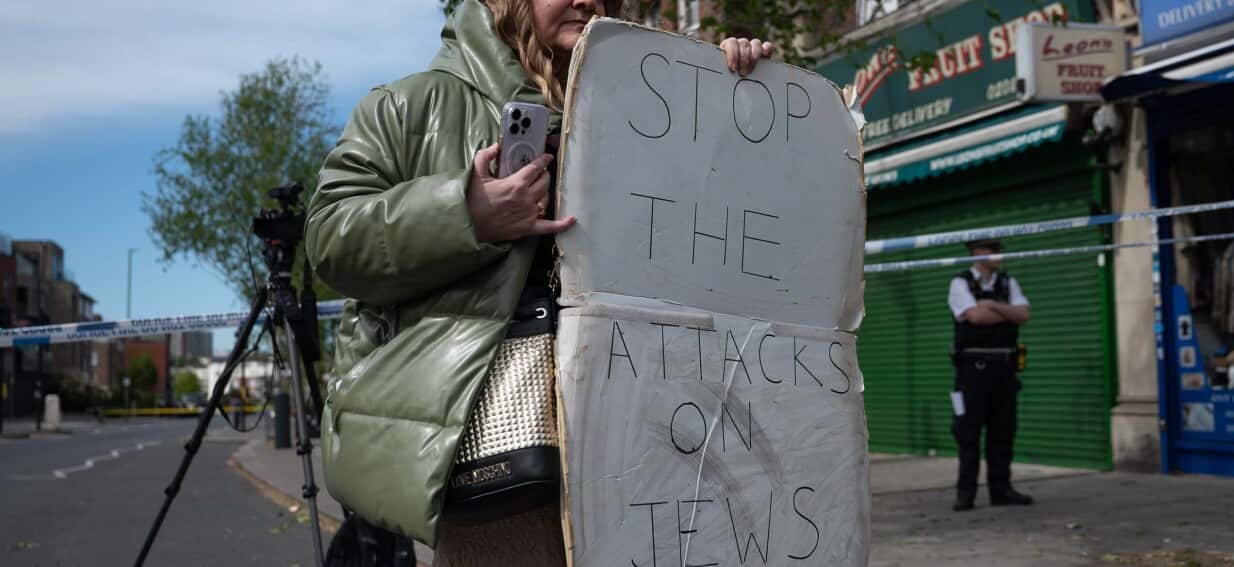
It happened near a shopfront on a Tuesday morning—a time when the mundane should be the only thing on the menu. Two men, members of the Charedi community, were simply existing. They were walking. They were being. Within seconds, the mundane evaporated, replaced by the cold flash of a blade and the sudden, sickening realization that the street was no longer a sanctuary.
Blood on the sidewalk is never just a biological reality. In a city like London, it is a message.
The Weight of the Investigation
When the Metropolitan Police’s Counter Terrorism Command takes over a case, the atmosphere changes. The yellow tape stretches a little tighter. The officers’ faces settle into a different kind of grimace. This wasn't treated as a random act of street violence or a robbery gone wrong. The stabbing of these two men, aged in their 50s and 60s, was quickly reclassified.
The state officially named it a terrorist incident.
To the families waiting in hospital corridors, the terminology matters less than the heartbeat of their loved ones. Both victims were rushed to a major trauma center. One suffered injuries to his head; the other was struck elsewhere. They survived, but "survival" is a deceptive word. It implies the event is over. For a community already looking over its shoulder, the event is just beginning its long, corrosive life in their collective memory.
Consider the hypothetical perspective of a shopkeeper a few doors down. Let’s call him Elias. Elias has seen the neighborhood change over forty years, but he has always felt the invisible shield of the community’s density. He watches the forensic teams in their white suits, meticulously picking through the debris of a shattered morning. To Elias, and thousands like him, the shield didn’t just crack. It vanished.
The Geometry of Hate
The suspect, a man in his 40s, was restrained by courageous bystanders before the police arrived. These weren't trained operatives. They were people who saw a nightmare unfolding and decided to step into it to stop it. They are the only reason the tragedy didn't scale further.
Why does the word "terrorism" carry such a specific, jagged weight? It is because terrorism is theater. It is designed to reach far beyond the immediate victims. When a stabbing is investigated under this lens, the police are acknowledging that the target wasn't just two men in their 60s. The target was the idea that a Jewish man should be able to walk down a London street without a target on his back.
The statistics provide a cold, numerical scaffolding to this fear. Anti-Semitic incidents have seen a sharp, jagged rise across the UK over the last several years. Each data point is a person. Each percentage increase is a mother telling her son to tuck his tzitzit into his trousers or a father glancing at the rearview mirror a little too often.
The Invisible Stakes
We often talk about security in terms of "robust" measures—more patrols, better CCTV, higher fences. But the real casualty of an attack like the one on Stamford Hill is the "psychological geography" of the city.
Imagine a map of London. For most, it is a grid of cafes, tube stations, and parks. For a community under threat, that map is colored in shades of risk. Certain streets become "red zones" after dark. Certain times of day feel heavier. This is the invisible cost of hate. It shrinks the world. It forces people to live smaller, quieter lives.
The police have been clear: they are not looking for anyone else in connection with this specific attack. The immediate danger is contained. The man is in custody. But "contained" is a relative term. You can arrest a person, but you cannot easily handcuff the ideology that sharpens the knife.
The Silence After the Siren
The sirens eventually fade. The news cycle moves to the next flickering outrage. But in the living rooms of Stamford Hill, the silence that follows is loud.
There is a specific kind of courage required to be a visible minority in a metropolis that is currently wrestling with its own soul. It is the courage to put on a hat, to walk to the synagogue, to open the shop, and to refuse to let the geography of fear dictate your movements.
The two men who were attacked will eventually leave the hospital. They will return to these same streets. They will pass the spot where the world tilted on its axis for a few terrifying minutes. The physical scars will fade into silver lines, but the memory of the cold air and the sudden intrusion of violence will remain.
London is a city built on layers of history, much of it violent. We like to believe we are moving toward a version of urban life that is "seamless" and safe. We aren't. We are living in a fragile peace held together by the bravery of bystanders and the vigilance of those who know that history has a habit of repeating its darkest chapters.
As the sun sets over the brickwork of North London, the community gathers. They pray. They talk. They look at each other with a new, weary understanding. The investigation continues, the legal system will grind forward, and the politicians will issue their carefully worded condemnations.
But out on the pavement, where the chalk marks of the forensic team are already being washed away by the rain, the only thing that remains is the persistence of a people who have learned, through centuries of bitter experience, how to keep walking even when the ground feels like it is falling away.