The perimeter fence of a modern military installation is rarely just metal and barbed wire. It is a nervous system. It listens through fiber-optic cables buried beneath the gravel, watches through thermal lenses that can spot a stray hare at eight hundred meters, and remembers every unauthorized footprint left in the mud.
On a quiet night in rural Suffolk, that nervous system twitched.
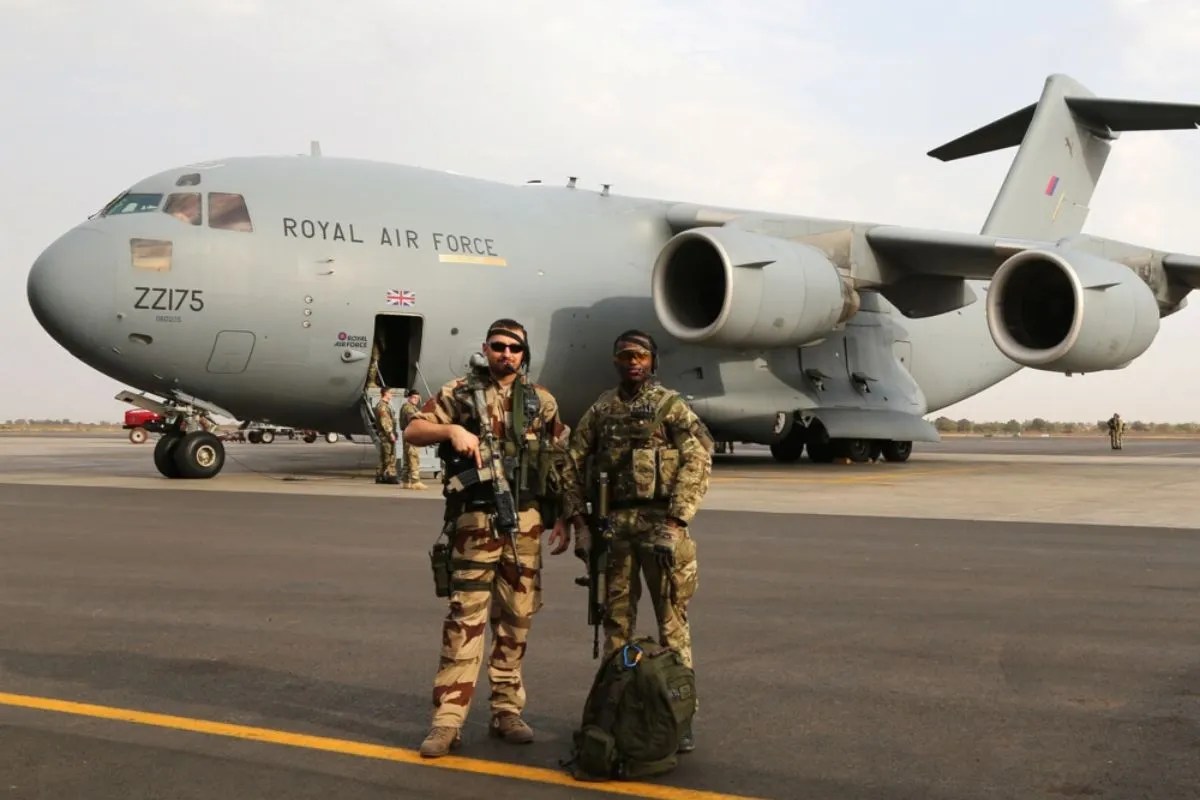
To understand what happened next, you have to picture the geography of paranoia. RAF Lakenheath sits flat against the English sky, an expanse of concrete and reinforced steel where American F-35 Lightning jets sleep under heavy concrete arches known locally as hardened aircraft shelters. For decades, these bases have occupied a strange psychological space. They are fragments of the American Midwest dropped into the rolling British countryside, surrounded by grazing sheep and narrow country lanes flanked by ancient oak trees. The locals are used to the roar of afterburners rattling their double glazing. They are not used to the blue flash of police cruisers cutting through the dark, nor the grim-faced perimeter sweeps that signal something far heavier than a routine drill.
Seven people were pulled from their lives in a coordinated series of raids.
Seven individuals, swept up by counter-terrorism units under the heavy boots of the UK Terrorism Act, stood accused of plotting an attack against a United States air base on British soil. The headlines flashed across screens with the breathless urgency of modern news cycles: terror plot foiled, foreign connections probed, the looming specter of an Iranian shadow war stretching its long, dark fingers into the heart of Europe.
Then came the silence. And then, the release.
Within days, the suspects walked free on bail. No sweeping courtroom dramas with closed-circuit television links. No immediate indictments detailing truck bombs or suicide vests. Just the quiet click of handcuffs releasing, followed by the bewildered hum of a legal system caught between the absolute urgency of national security and the cold, unyielding evidentiary standards of a courtroom.
People want clear villains. They want a neat narrative where the good guys intercept the blueprint in the nick of time and the bad guys are locked away behind triple-locked steel doors forever. Reality is rarely that clean. Reality is messy, bureaucratic, and terrifyingly gray.
When intelligence agencies track a threat, they are rarely watching a finished movie. They are looking at a static-filled, black-and-white photograph taken from a quarter-mile away through heavy rain. They see encrypted chat logs bouncing across servers in three different time zones. They see money moving through digital shadows. They see erratic travel patterns, nervous glances near a perimeter fence, and whispered conversations in languages meant to evade automated translation algorithms.
And then the clock starts ticking.
If you wait too long to intervene, you risk the unthinkable. If you move too early, you risk arresting people before a crime has crystallized into concrete evidence, blowing your surveillance network wide open and leaving prosecutors with a mountain of suspicion but not a single grain of legally admissible proof.
This is the great, invisible tension of modern counter-terrorism. It is an exercise in managing catastrophe.
Consider the geopolitical undertow that gives these arrests their gravity. The shadow of Tehran stretches far beyond the Middle East. For years, intelligence analysts have warned of asymmetric warfare—proxy operations, cyber sabotage, and localized reconnaissance designed to harass Western military assets without triggering a full-scale conventional war. An American air base in the United Kingdom is not just a collection of hangars; it is a projection of global power. Striking it, even symbolically, would be a propaganda victory of staggering proportions.
Yet, translating a hostile intent into a prosecutable conspiracy is an entirely different beast.
In a British court, suspicion is not enough. Fear is not enough. Even the knowledge that someone holds radical sympathies and has mapped out the coordinates of a runway isn't automatically enough to secure a conviction for the preparation of terrorist acts. The law demands a smoking gun, or at the very least, a bullet in the chamber.
When the magistrate granted bail, it wasn't necessarily because the threat was a phantom. It was because the system, for all its flaws, refuses to bypass due process simply because the word terrorism is written in bold letters across the charge sheet. That is the frustrating, beautiful paradox of open societies. We give our enemies the very protections that we rely on to keep ourselves safe from tyranny.
The investigation continues. Somewhere in a secure room in London, analysts are still combing through terabytes of recovered data, deciphering deleted chat histories, and cross-referencing phone numbers with international watchlists. The perimeter fence at Lakenheath still hums in the night, its sensors blind to the complex web of geopolitics, local policing, and international espionage that surrounds it.
The sirens have faded. The media vans have packed up their satellite dishes and moved on to the next screaming headline. But out there, in the damp English air, the guards are still scanning the horizon, acutely aware that the distance between a quiet country lane and a global flashpoint is shorter than we ever care to admit.