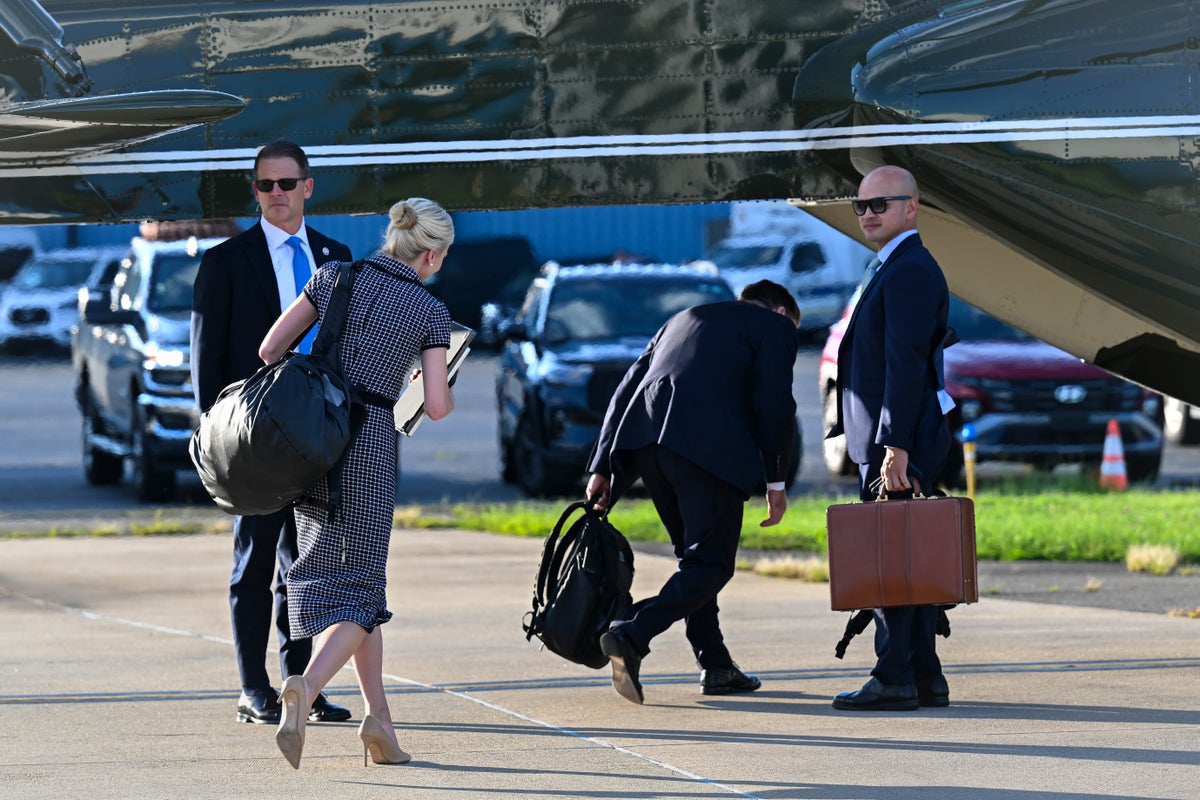
The air inside Mar-a-Lago always smells faintly of expensive parchment, saltwater, and the distinct pressure of a room where every whisper is weighed on a gold scale. Outside, the Florida sun beats down with a heavy, indifferent heat, baking the manicured lawns into a brilliant green illusion of tranquility. But inside, the atmosphere is rarely tranquil. It is a pressure cooker of ambition, loyalty, and relentless scrutiny.
By Sunday evening, the weekend noise had reached a deafening pitch. Headlines flickered across millions of glowing screens nationwide, dissecting every movement, every glance, and every shadowed corner of the estate. Yet, amid the storm of cable news segments and viral social media threads, one figure remained a constant fixture just inches from the epicenter. You might also find this similar coverage insightful: The Night the Sky Burned Over the Desert.
Natalie Harp.
To understand what it means to orbit Donald Trump during a firestorm, you have to understand the anatomy of modern political loyalty. It is not merely about carrying a briefcase or scheduling appointments. In the current era, loyalty is broadcast in real time. It is carried in the palm of a hand, glowing in high definition, streaming the life of a former president to a digital universe that never sleeps. As highlighted in latest reports by The New York Times, the results are widespread.
Harp knows this world intimately. She is not just an aide; she is the curator of the daily narrative. Armed with screens and an unyielding commitment to her principal, she moves through the gilded corridors like a shadow with a purpose. When the media scrutiny intensifies, turning every casual dinner into an international incident and every guest into a subject of investigation, the physical proximity of a trusted inner circle tightens.
Cameras outside the gates caught the steady stream of motorcades. Reporters camped near the perimeter, hunting for signs of panic or fracture within the camp. They found neither. Instead, they found a tightly sealed fortress where the outer noise is systematically muted by the internal rhythm of the operation. Harp was there through it all, a silent sentinel standing guard against a tidal wave of bad press.
Consider the psychological weight of such a post. Every public figure builds a moat of aides to protect them from the elements, but few operate under the specific, white-hot glare that defines the Trump orbit. Every step is analyzed by hostile eyes. Every facial expression is freeze-framed, zoomed in, and cross-examined by panels of experts who have never set foot in the room. To endure that environment requires a rare blend of ironclad conviction and absolute emotional detachment.
For Harp, this weekend was a test of endurance. While critics on the outside demanded accountability and analysts speculated on the fallout of the latest legal or political hurdles, the internal reality was far more mundane yet intensely demanding. Meetings had to be prepped. Statements had to be coordinated. The relentless feed of digital information had to be monitored, filtered, and answered.
The media loves a narrative of collapse. It sells subscriptions. It drives clicks. Every weekend of heightened scrutiny is framed as the beginning of the end, a cinematic climax where the walls finally cave in. But reality is rarely so dramatic. Reality is fluorescent lights humming at two in the morning. Reality is cold coffee on a mahogany desk. Reality is Natalie Harp walking the hallway with a tablet in hand, checking metrics, confirming schedules, and ensuring that the machine keeps running despite the gale-force winds blowing against its doors.
Loyalty in high-stakes politics is often viewed with deep cynicism by the outside world. Observers ask what drives someone to tie their wagon to a figure so polarizing, so frequently embattled, and so relentlessly pursued by controversy. Is it ambition? Is it ideological fervor? Is it a profound personal devotion forged in the crucible of campaigns and counter-campaigns?
Usually, it is a complex cocktail of all three.
When you stand beside someone who commands the attention of the entire globe, you cease to be an independent observer. You become part of the weather. And Harp has embraced that role fully, transitioning from a television personality and survivor of her own severe health trials into an indispensable digital warrior for the movement. Her journey into this inner sanctum was forged in adversity, making her uniquely resistant to the kind of ambient pressure that might break a lesser spirit.
As Sunday night faded into the early hours of Monday morning, the gates of Mar-a-Lago remained shut tight against the press corps. The headlines online shifted only slightly, trading one speculative theory for another, already hunting for the next scandal to break at dawn.
Inside, the lights finally dimmed. The screens went dark. But the proximity remained unbroken, a testament to an era where political survival is measured not in miles, but in inches.