Silence has a weight. In the narrow alleys of a city under siege, it is not merely the absence of sound; it is a heavy, suffocating blanket woven from dust, fear, and the waiting.
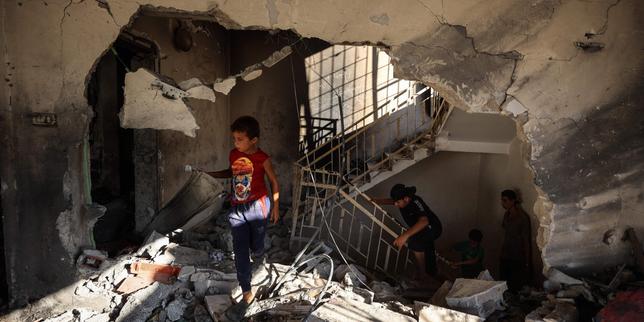
For months, the world outside has watched through rectangular screens. We mute the footage when it gets too close. We scroll past the images of collapsed concrete and small, dust-caked shoes. Distance is a comfortable anesthesia. It allows us to treat a human catastrophe like a breaking news alert, easily dismissed with the flick of a thumb. But thousands of miles away, beneath the shattered remains of homes that once held laughter, dinner tables, and ordinary Tuesday nights, a different kind of waiting takes place. Meanwhile, you can find other events here: Stop Mourning News Helicopters Because They Never Kept You Safe.
It is the wait for accountability.
When international bodies demand access for investigators to document suspected war crimes, the headlines often reduce the demand to a diplomatic chess piece. Words like mandate, jurisdiction, and protocols float through newsrooms like sterile dust. But behind those bureaucratic terms lies a desperate, frantic race against time. Evidence has a habit of disappearing. Rain washes away chemical residue. Bulldozes clear away rubble, turning potential crime scenes into anonymous piles of stone. Human memory fades, hardens, or gets buried beneath the sheer exhaustion of survival. To explore the bigger picture, we recommend the recent analysis by The New York Times.
Consider what happens when investigators are kept at arm's length.
Doors stay shut. Bureaucracy moves at the speed of a glacier while human lives fracture in real time. Without independent documentation, atrocities risk being reduced to competing narratives. One side claims necessity; the other whispers of slaughter. In the middle stands the truth, bleeding out quietly in the dark.
This is why the demand from the United Nations matters. It is not about political theater. It is about a fundamental human refusal to let the powerful write history with impunity.
Let us be honest with ourselves. It is uncomfortable to talk about war crimes because doing so forces us to confront the absolute worst of human capability. It requires us to look past geopolitical alliances and ask a simple, terrifying question: Where do we draw the line?
If hospitals become battlefields, if schools turn into shelters that cannot protect, if civilians carrying white flags are treated as targets, then the architecture of our modern global civilization is built on sand. We pretend that international law is a sturdy fortress. In reality, it is a fragile agreement holding together by the sheer willpower of those brave enough to demand it be enforced.
When investigators are barred from entry, the message sent to the victims is deafening. It says your suffering is inconvenient. It says your grief does not merit a ledger.
Imagine, for a moment, standing in the ruins of a neighborhood where every single wall tells a story of sudden, violent erasure. You are holding a faded photograph of your sister. You know what happened. You lived through the screams, the shaking earth, the acrid smell of burning plastic and flesh. But when you tell the world, you are met with skepticism. You are told it's complicated. You are told there are two sides to every story.
That is a second violence. The denial of reality is just as crushing as the bomb that brought the roof down.
This is why the push for independent investigators in Gaza is a crucible for our collective conscience. It is not just about a specific conflict in a specific strip of land. It is about whether the world still possesses the moral courage to look the truth in the eye and say: We see this. We are recording this. And there will be a reckoning.
The machinery of justice moves slowly, painfully so. It is filled with legal arguments, diplomatic stalling, and endless procedural delays. But every time an investigator is denied entry, a piece of the architecture of justice crumbles.
We cannot afford to look away. Not because it is fashionable to care, but because the alternative is a world where power dictates morality, where might makes right, and where the loudest voice in the room drowns out the quiet, persistent cry for justice.
The rubble in Gaza will eventually be cleared. New buildings will rise. People will walk those streets again, carrying groceries, laughing, living. But what remains beneath the foundation will depend entirely on what we choose to document today.
History is not written by the victors alone. It is written by those who refuse to let the darkness have the final word. The investigators must get in. The truth must be written down. Because without truth, there can be no peace, only a quiet, simmering anger waiting for the next spark.
And the dark is already too crowded.