The air at thirty thousand feet does not forgive mistakes. It is thin, biting, and indifferent to national borders. Up there, inside the cramped cockpit of a French-built Rafale, a pilot named Vikram feels the cold press against his visor even through the climate control. He checks his multi-function displays again. The glass glows with a quiet, emerald light, casting shadows across his oxygen mask.
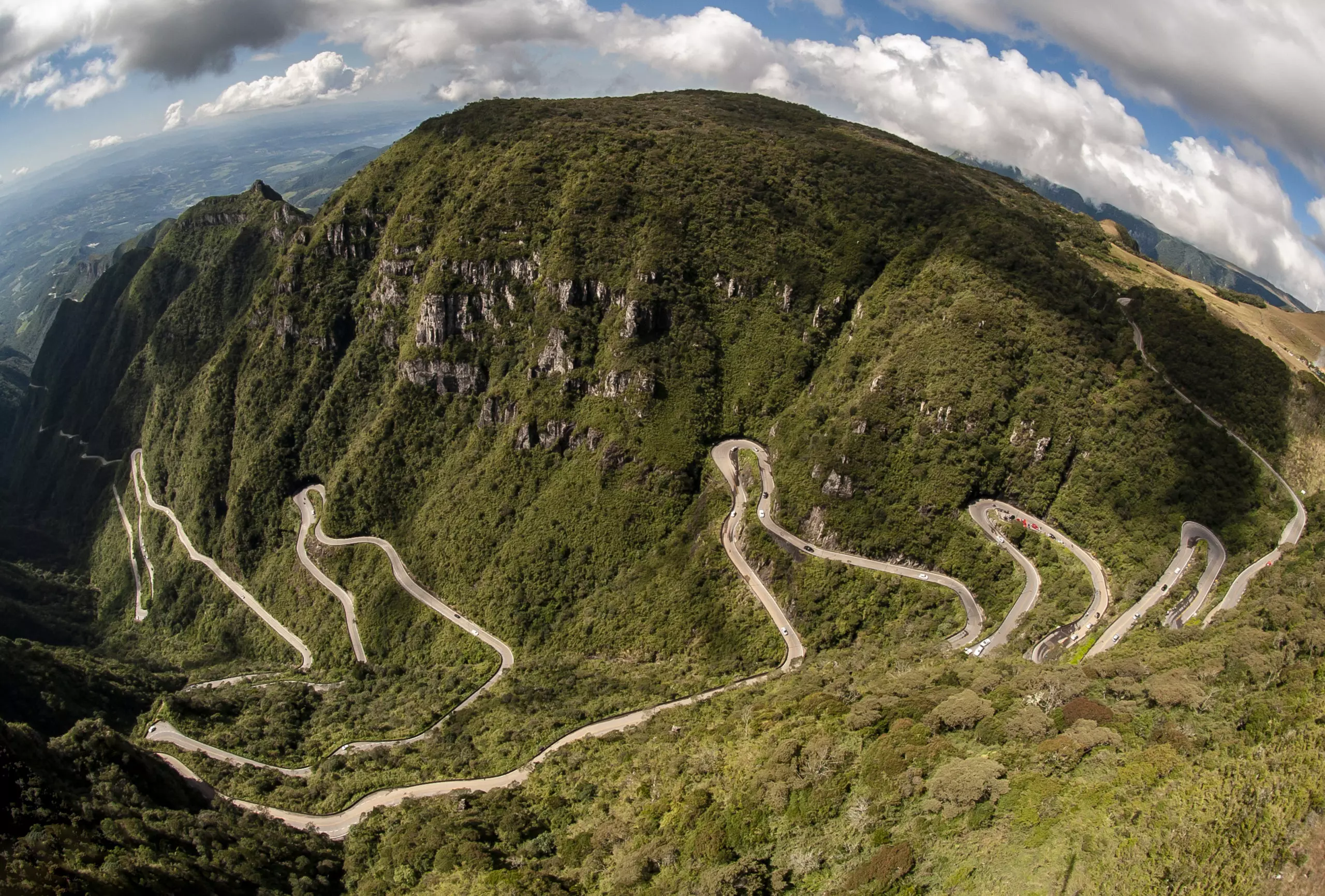
Below him, the jagged teeth of the Himalayas sprawl out like broken glass, dividing two nuclear-armed giants that have spent decades staring at each other across an impossible precipice. Also making waves in related news: Structural Mechanics of Primary Elections Analyzing the South Carolina Republican Senate Contest.
And then, they appear.
Not on the ground, but in the blue void of the stratosphere. Far across the radar horizon, shapes materialize. Heavy. Twin-tailed. Purpose-built. China has brought its J-16 fighters to the dance. More insights regarding the matter are covered by The Guardian.
For years, military analysts in New Delhi, Beijing, and Washington have debated this exact collision of metal and silicon on paper. They have run simulations in sterile rooms lit by fluorescent bulbs, moving tiny plastic icons across digital maps. They have argued over thrust-to-weight ratios, radar cross-sections, and missile ranges until their throats grew dry.
Paper is patient. Reality is violent.
Consider what happens next: a silent, electronic chess match played at Mach numbers. Neither pilot fires a shot. They are thousands of miles away from home, yet separated by only a few nautical miles of freezing air. They circle each other like apex predators testing a rival's scent. Every pulse of radar energy is a spoken word, a challenge hurled through the electromagnetic spectrum.
India is watching this closely. Why? Because these are the twin pillars of modern Asian air power locking horns for the very first time.
To understand the weight of that moment, you have to step back from the spreadsheets. You have to look at the machines themselves and the philosophies that birthed them.
The Rafale is an omni-role fighter born from French independence. It is a stubborn aircraft, designed because Paris refused to build a plane to someone else's specifications. It is light on its feet, possessing a delta-wing and canard configuration that lets it dance through tight turns when energy management matters most. Its electronic warfare suite, dubbed SPECTRA, wraps the jet in a digital invisibility cloak, feeding the pilot a continuous stream of threats, sorting them by lethality, and whispering countermeasures before a missile can even lock.
Across the aisle sits the J-16. (Note: When discussing the technical capabilities of foreign airframes, intelligence assessments rely heavily on open-source intelligence and acknowledged performance envelopes, as direct combat telemetry is fiercely guarded). The J-16 is a beast. Twin engines roar with raw, brute-force kinetic energy. It carries a heavy payload of long-range missiles, designed to stand off and obliterate targets before the enemy even knows they are hunted. It is built around a philosophy of mass, power, and overwhelming digital saturation, packing an Active Electronically Scanned Array radar that can punch through heavy jamming.
When these two philosophies collide over contested borders, it is not just a test of titanium and microchips. It is a real-time audit of military modernization.
For decades, the Indian Air Force flew older Soviet-legacy jets. They were reliable workhorses, the mechanical equivalent of a Kalashnikov. But the world moved on. Radar got smarter. Missiles got faster. The margin for error shrank from miles to inches. The acquisition of the Rafale was an attempt to buy time, to leapfrog a generation of technological stagnation and inject Western-standard avionics into a weary fleet.
Now, that investment faces its ultimate examination.
Down in the subterranean war rooms of the Western Air Command, the atmosphere is suffocating. Officers stare at wall-sized displays where green and red symbols bleed together. Every telemetry blip transmitted from Vikram's jet is parsed by analysts who have spent their entire careers anticipating this exact engagement.
They are looking for micro-advantages. Did the Rafale's radar warning receiver scream too early? Could the J-16's infrared search and track system pierce the French jet's thermal signature? How fast did the datalinks adapt when electronic jamming flooded the theater?
Every second of flight logs back to base becomes a data point that will dictate pilot training manuals for the next decade.
This is the invisible war. The shooting war makes headlines, but the electronic war decides who lives long enough to pull the trigger. Modern air combat is no longer about dogfighting with guns, looping through the clouds like World War I aces. It is an invisible war of electrons, photons, and algorithms. It is fought in the frequency domain.
Vikram breathes out slowly, his chest rising and falling against the G-suit harness. He sees the J-16s holding their position, maintaining a respectful distance, respecting the lethal envelope of his own Meteor missiles just as he respects theirs.
No shots are fired. None need to be.
The encounter ends as quietly as it began, with a banking turn that leaves white contrails slicing across the azure sky like scars. The Chinese jets peel away toward their high-altitude bases in Tibet. Vikram turns his nose south, descending through the cloud layer toward the plains below.
He lands on a sun-baked runway, climbs out of the cockpit, and hands his helmet to a ground crew member whose face is etched with sweat and dust. To the casual observer, nothing happened. Just another routine patrol over a disputed border.
Yet deep inside the headquarters, hard drives spin, digesting gigabytes of encrypted flight data that will rewrite the geopolitical calculus of South Asia before the sun sets again.
The mountains remain silent, watching and waiting for the next time the shadows meet.