The coffee in the command tent had gone cold hours ago, a dark, bitter ring left against the bottom of a chipped ceramic mug. Outside, the wind off the mountains carried the bite of an approaching winter, sweeping down the narrow valleys of Gangwon Province with a desolate whistle.
Staff Sergeant Min-jun Park checked his watch. Three-fifteen in the morning. Half a world away, decisions were being made in sunlit rooms with thick carpets and mahogany desks, but here, the reality was measured in mud, grease, and the synchronized hum of diesel engines idling in the dark.
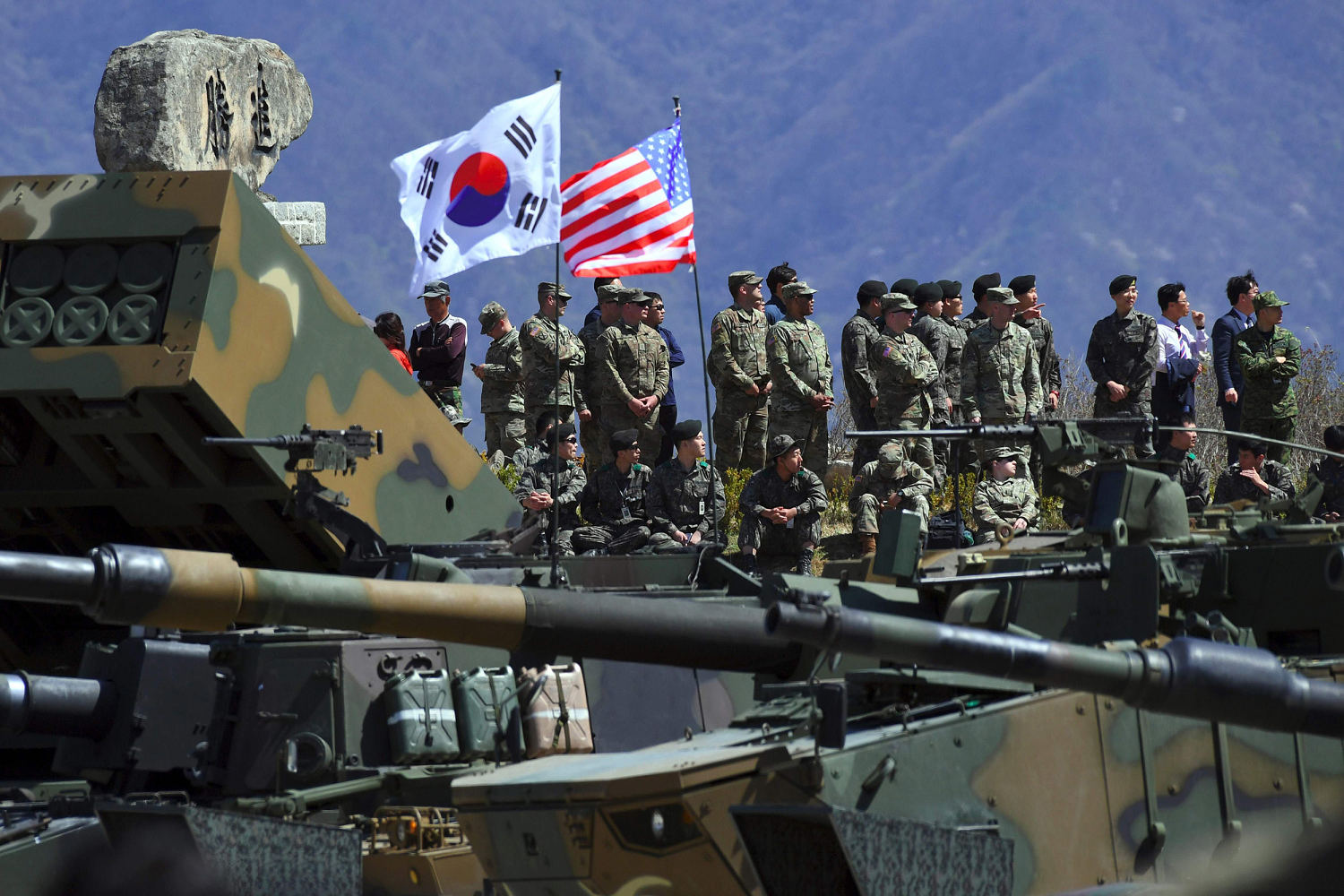
For Park, and the thousands of South Korean and American soldiers stationed along the demilitarized zone, the border was never a political abstraction. It was a physical weight. Every year, the allied forces staged massive exercises—code-named operations like Ulchi Freedom Guardian or Key Resolve—transforming quiet agricultural districts into roaring networks of logistics, communications, and firepower. These drills were meant to send a clear message of deterrence across the thirty-eighth parallel.
Then came the directive.
A quiet, sweeping order from Washington: substantially reduce the joint military exercises.
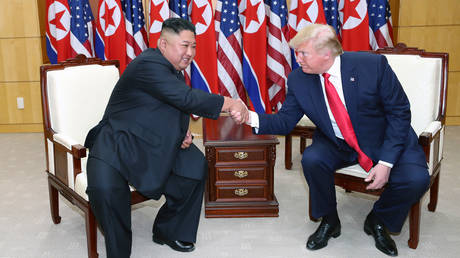
To the strategists in Washington, the move was billed as a diplomatic overture, a calculated olive branch meant to coax Pyongyang back to the negotiating table. A ledger entry. A diplomatic bargaining chip traded for vague promises of denuclearization.
To the soldiers on the ground, it felt entirely different. It felt like walking a tightrope after someone had quietly sawed through half the strands.
Military readiness is not a light switch. You cannot simply turn off a machine of coalition defense for a season and expect it to hum back to life with the same precision the moment a crisis flares. It is a living, breathing muscle that requires constant tension, friction, and repetition.
Consider what happens when two different militaries, speaking different languages, using different software systems, and operating under distinct doctrines, try to coordinate a defense. Without shared sweat, mud, and mistakes made in the safety of a simulation or a training range, confusion becomes the default state when pressure spikes.
Park remembered the previous spring. His unit had spent weeks integrating with an incoming battalion of U.S. Stryker vehicles. The radios crackled with a dizzying mix of English tactical shorthand and translated Korean commands. On the second day, a logistics hiccup threatened to stall a simulated armored advance. Supplies were backing up at a vital crossroads near Cheorwon.
In a textbook, the solution took three lines. In reality, it took a frustrated American captain and Park standing over a damp paper map, pointing flashlights through the drizzle, hashing out a workaround in broken English and hand gestures. They solved it because they had practiced solving it. They built a human bridge long before any bullets flew.
That bridge requires maintenance.
When joint exercises are scaled back, that maintenance stops. The logistics pipelines grow rusty. The communication protocols drift. The young American lieutenant fresh out of Fort Moore stops learning the nuances of the terrain, and the Korean platoon leader stops learning the quirks of American command style.
Critics of large-scale drills often point to the astronomical costs. Millions of dollars burn in fuel, ammunition, and transport every single week these exercises run. They point to the friction with North Korea, arguing that the mere presence of allied tanks rolling near the border acts as a provocation, a catalyst that pushes the regime in Pyongyang further into its nuclear bunker.
There is truth in that friction. Geopolitics is a brutal game of action and reaction. Every time a heavy brigade moves north, the state-run media in Pyongyang erupts with fiery rhetoric, threatening a sea of fire and calling the drills a rehearsal for invasion.
Yet, the alternative—a hollowed-out alliance—carries a different kind of danger. Deterrence relies entirely on credibility. If an adversary suspects that the alliance is fraying at the edges, that political fatigue in Washington or Seoul has turned the mutual defense treaty into a paper tiger, the calculus of war shifts. Aggression becomes cheaper. Miscalculation becomes catastrophic.
In military history, wars rarely start because one side abruptly decides to conquer the world on a whim. They start in the gray zones of ambiguity, when a dictator misjudges the resolve of a coalition, assuming that hesitation will paralyze their response.
Park stepped out of the tent, pulling his heavy parka tight against the chill. The night sky over the valley was unnaturally clear, studded with cold, sharp stars. Far in the distance, past the concertina wire and the watchtowers, across the invisible line that had split a family and a nation seven decades ago, lay the hills of the North. In those hills, thousands of conscripts sat in their own cold barracks, waiting.
The orders from Washington would filter down through the chains of command by morning. The schedules would be rewritten. The armored columns would stay parked in their motor pools, their tracks cold. The planners would find new ways to conduct computer-simulated wargames from air-conditioned rooms in Hawaii or Virginia, far from the smell of exhaust and wet pine needles.
Park looked down at his boots, caked in the sticky red clay of the borderlands. You cannot simulate the weight of a wet backpack in a simulation center. You cannot code the sudden surge of adrenaline when a hundred engines roar to life in unison, shaking the earth beneath your feet.
The reduction of exercises was executed with the stroke of a pen, justified by the hope of peace. But peace has never been something you can simply wish into existence by lowering your guard. It is forged in the grueling, unglamorous work of preparation—a thousand small, imperfect rehearsals that ensure, when the worst happens, the line holds.
The wind died down, leaving the valley in an oppressive, heavy silence. Somewhere out there in the dark, the border remained. And the cost of forgetting how to defend it was waiting to be paid.