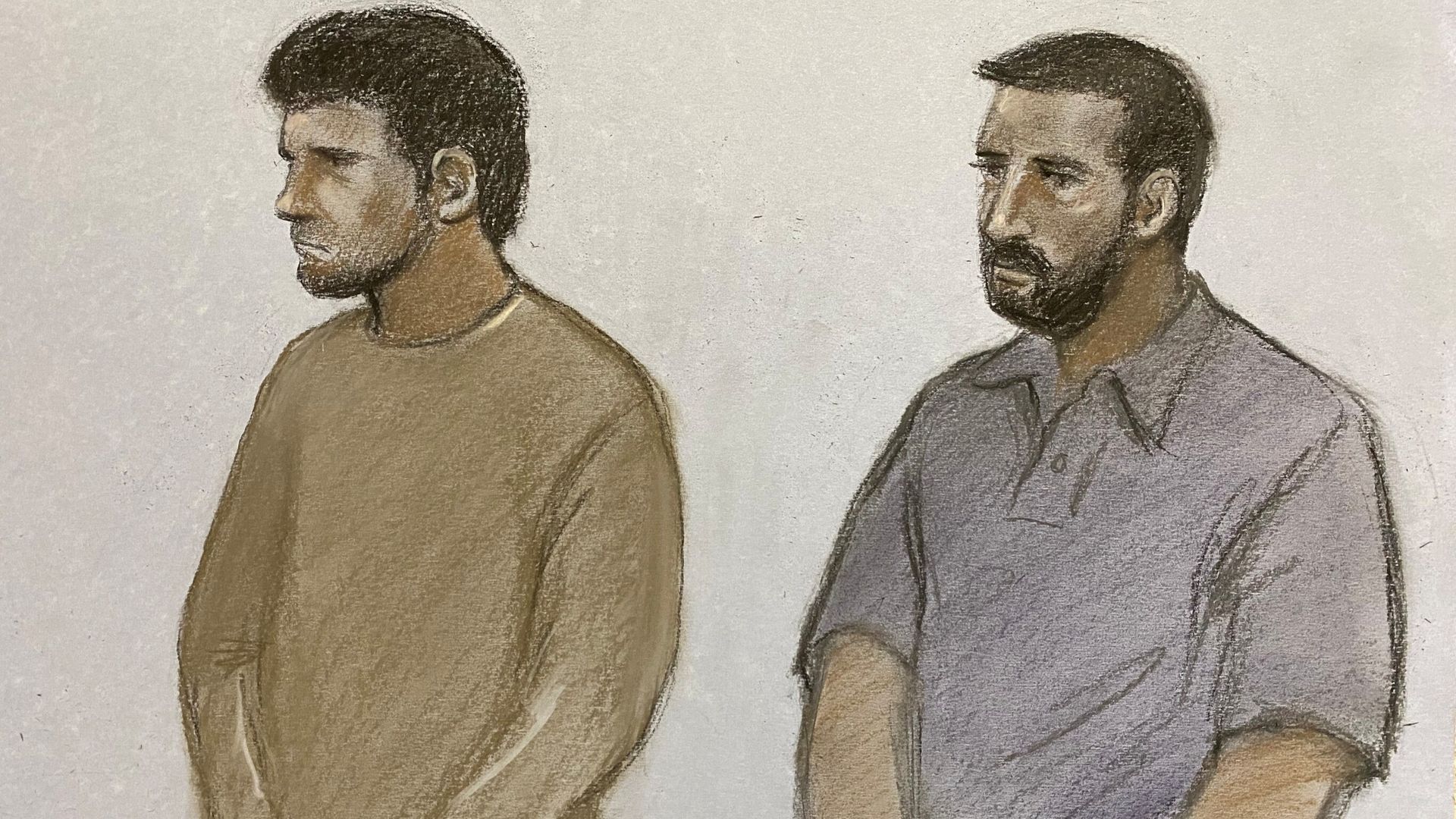
The courtroom smells of damp wool and old paper, that particular, institutional scent of rooms where lives are quietly dismantled. Outside, London is doing what London does best in the middle of a grey afternoon: turning a cold drizzle into a persistent, soaking mist that coats the grand limestone facades of the Old Bailey in a film of greasy grime. Inside, behind thick panes of ballistic glass, two men stand.
To the daily cause list, they are numbers, names, and formal allegations under the National Security Act. To the gallery, they are silhouettes framed by security guards. But beneath the dry legal architecture of an arraignment hearing lies something far heavier, something that does not fit neatly into court transcripts or charge sheets: the sudden, terrifying vertigo of ordinary men caught in the grinding gears of modern geopolitical espionage.
They stood, one after the other, to enter their pleas. Not guilty.
Two small words. In the grand acoustics of a high-security courtroom, they sounded thin, almost fragile against the heavy oak paneling. Yet those two syllables represent an entire universe of denial, a line drawn in the sand against accusations that reach thousands of miles away, tracing invisible wires back to Tehran.
We live in an era where espionage is often imagined as a cinematic sequence of flash drives handed off in crowded subway stations or encrypted servers humming softly in basement bunkers. We think of statecraft as a grand game played by remote, untouchable figures in vaulted halls. But the reality is far more mundane, and infinitely more unsettling. It is played out by people who pay rent, buy groceries, and walk down the same rain-slicked pavements as everyone else, until a morning arrives when plainclothes officers knock on their door and the world as they knew it ceases to exist.
Consider what happens when the state turns its gaze inward.
The National Security Act is a formidable instrument. Designed to counter modern, insidious forms of foreign interference, it grants sweeping powers to authorities to investigate actions that threaten the safety or interests of the nation. It deals not just with classic spying—the theft of state secrets tucked into a hollowed-out book—but with a murky spectrum of influence operations, surveillance, and assistance given to foreign intelligence services. It is broad. It is modern. And for those accused beneath its weight, it is an iron wall.
The prosecution alleges that these two men operated within that shadowy corridor, gathering information or acting as conduits for a foreign power. It is a charge that carries immense gravity, carrying with it the terrifying prospect of lengthy imprisonment and the permanent erosion of a reputation.
Yet, as they sat in the dock, listening through headphones or conferring in hushed, urgent whispers with their defense counsel, the human element pierced through the legal jargon. One of the accused adjusted his collar with fingers that betrayed a subtle, nervous tremor. It is easy to forget, when reading a headline about international relations, that every political tremor has a human epicenter.
Espionage trials are rarely clear-cut narratives with tidy resolutions. They are built on intercepts, surveillance logs, financial trails, and informant testimony—a mosaic of circumstantial evidence that prosecutors argue points to a coordinated design, while defense teams tear at every loose thread, highlighting ambiguity, cultural misunderstandings, or entirely innocent explanations for mundane actions.
Why would an ordinary person become entangled in the machinery of foreign intelligence? The recruitment methods of modern state actors rarely resemble the dramatic turning points of fiction. They often begin with flattery, with financial vulnerability, with a sense of grievance, or with emotional ties to a homeland left behind. A favor asked by an old acquaintance. A consulting gig that pays a little too well for very little work. A subtle appeal to identity or heritage. Before the individual fully realizes the precipice they are standing on, the invisible net has tightened, and the choices have narrowed to a terrifying few.
Whether the two men standing in the Old Bailey are guilty or innocent is a question for a jury to weigh once the evidence is laid bare in the months to come. A trial under the National Security Act is a grueling marathon of closed doors, classified disclosures, and fierce legal contestation. It will test the resilience of the judicial process to balance the absolute necessity of national security with the fundamental right to a fair trial and the presumption of innocence.
As the hearing drew to a close and the judge set the timetable for the upcoming proceedings, the defendants were led down the steps toward the cells beneath the court. The heavy doors thudded shut with a dull, resonant echo that seemed to put a full stop to the day's events.
In the quiet that followed, the courtroom slowly emptied. Barristers gathered their bundles of papers, tying them with pink ribbon. Reporters tapped furiously on their phones, sending brief dispatches out into the digital ether. But out on the damp streets, beneath the glow of sodium-vapor streetlights flickering on against the gathering dusk, the city rushed past unheeding. Life went on, unaware or indifferent to the quiet dramas unfolding behind iron bars, where the fate of two men hangs suspended in the balance between nations.