Cold.
It is the first thing you notice when the November fog rolls off the Bay of Fundy and settles into the gullies of Saint John, New Brunswick, creeping under coat collars and stiffening the joints of anyone forced to sleep on concrete. In the Port City, winter does not arrive with a polite knock; it breaks the lock, bringing freezing rain that turns to black ice before sunrise and wind that strips the heat from a human body in minutes. For years, the civic response to people living outside in this maritime climate followed a predictable, exhausting script of temporary warming centers, overcrowded emergency shelters, and public hand-wringing that melted away every April only to freeze solid again in October.
Seventy new doors are about to change that script.
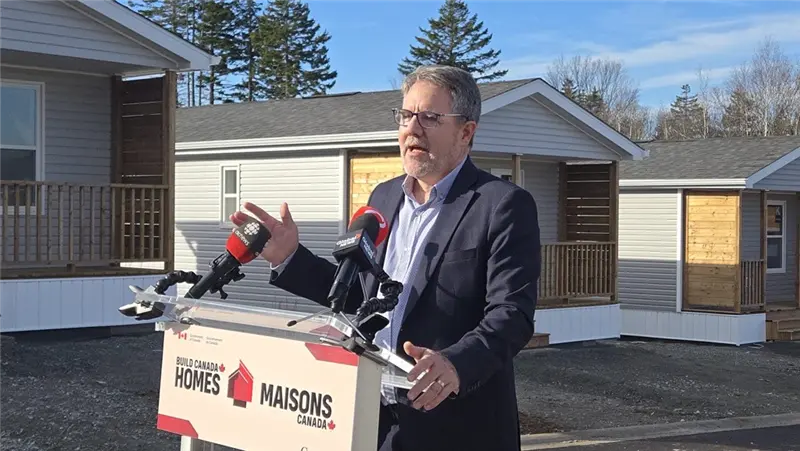
Across Saint John, a newly completed network of 70 tiny homes—part of New Brunswick’s broader Housing First initiative—stands ready to pull people off the frozen ground and behind lockable walls. On a municipal spreadsheet, the project reads like dry civic accounting: 70 modular units, transitional support staffing, provincial capital allocation, square footage metrics, and per-bed cost reductions. A standard news brief will tell you the units are ready, quote a housing minister on "meaningful progress," and move on to the next ribbon-cutting.
That version of the story misses the entire point. A tiny home in Saint John is not merely a construction milestone or a line item in a provincial budget; it is a radical psychological intervention against a crisis that thrives on chaos. To understand why 70 small, insulated boxes matter so much, you have to step away from the podiums and look at what happens to a human brain when it loses a door.
The Architecture of Survival
Consider a hypothetical resident we will call Arthur—a composite built from the documented realities of chronic homelessness in Atlantic Canada. Arthur is fifty-four, a former drywall taper whose knees gave out three winters ago, setting off a domino chain of missed paychecks, an eviction notice, and eventually a tent pitched behind a strip mall near Rothesay Avenue.
When you live in a tent or bounce between congregate shelters, your nervous system never powers down. Psychologists and trauma researchers call it hypervigilance, though anyone who has slept with one eye open in a doorway simply calls it staying alive. You sleep in ninety-minute bursts because deep sleep makes you vulnerable to theft, assault, or frostbite. You carry everything you own on your back because leaving a bag unattended means losing your birth certificate, your dry socks, and your medication.
Now ask Arthur to fill out a three-page housing application, attend a Tuesday morning intake appointment across town, and maintain sobriety while sleeping on a mat three feet away from forty other traumatized strangers.
We have spent decades building housing systems that demand stability as a prerequisite for shelter, which is a bit like demanding a drowning man learn to swim before you throw him a rope. When a person’s executive function is entirely consumed by finding a dry place to lie down before dark, long-term planning becomes neurologically impossible. You cannot budget for next month when you are trying to survive the next six hours.
I have watched this cycle play out up close—the way prolonged exposure to the street erodes not just physical health, but the very capacity to trust that help isn't a trap. I used to believe, as many well-meaning taxpayers do, that emergency shelters were the logical first step up a ladder toward permanent housing. That assumption falls apart the moment you spend a night listening to the coughing, the pacing, and the quiet terror of a congregate room where nobody has a key. A mat on a floor keeps you from freezing to death, and for that it is vital, but it does not give you back your humanity.
What Seventy Units Actually Buy
The 70 units standing ready in Saint John operate on a fundamentally different logic. Rather than treating housing as a reward for good behavior or completed treatment programs, this model—grounded in the internationally studied Housing First framework—treats a private, lockable room as the baseline medical and psychological necessity from which everything else becomes possible.
Think of a tiny home not as a scaled-down house, but as a decompression chamber.
Inside these compact spaces—typically outfitted with a bed, basic storage, heating capable of withstanding a Maritime gale, and access to shared or dedicated sanitation and communal hubs—the noise of the street stops at the threshold. For the first time in months or years, a resident can close a door, turn a deadbolt, and let their shoulders drop two inches. That single mechanical click of a lock does more to lower cortisol levels than a dozen intake interviews ever could.
skeptics frequently ask a fair, pointed question: Are tiny homes just expensive Band-Aids that create segregated pockets of poverty?
It is a legitimate fear, and pretending otherwise insults the intelligence of the community. Poorly managed transitional villages in North America have failed when municipalities treated them as dumping grounds—dropping structures onto an empty lot without wraparound support, security, or pathways to permanent housing. If you build 70 tiny homes and walk away, you haven't solved homelessness; you have simply shrunk the footprint of the encampment.
What separates the Saint John rollout from those cautionary tales is the infrastructure stitched around the buildings. The New Brunswick strategy pairs these 70 units with on-site social workers, mental health clinicians, addiction support, and life-skills coaching. The tiny home is the anchor, not the entire ship. Once a person sleeps through the night for two straight weeks without guarding their boots, their brain chemistry shifts. Suddenly, they have the cognitive bandwidth to meet with a caseworker, replace lost identification, manage chronic pain, and start looking toward permanent, independent tenancy.
The Invisible Ledger of Doing Nothing
Whenever a province announces millions of dollars for modular housing, a predictable chorus rises in local comment sections and coffee shops. People working two jobs to pay their own rising rent in Uptown Saint John or Quispamsis look at the price tag and feel a sharp, understandable sting of resentment. Why does someone else get a brand-new unit while working families struggle to afford groceries?
That frustration deserves an honest answer, not a moral lecture. The truth is that leaving people on the streets of Saint John is vastly more expensive than housing them, even if those costs stay hidden across separate government budgets.
Every winter night a person spends outside in New Brunswick generates an invisible invoice. When frostbite sets in, or an untreated infection spirals, or withdrawal triggers a medical crisis, the emergency room at the Saint John Regional Hospital becomes the default shelter. An acute-care hospital bed costs the public purse over a thousand dollars a day. Add ambulance dispatches, police wellness checks, emergency shelter staffing, and municipal encampment cleanups, and the taxpayer is already paying a fortune—only to buy misery, worsening illness, and zero long-term resolution.
Decades of longitudinal data from Canadian cities—most notably the landmark At Home/Chez Soi study conducted across five provinces—demonstrated that providing supportive housing to individuals with high needs saves significant public money on emergency health and justice services while drastically increasing housing retention. Investing in 70 tiny homes is not an act of naive charity; it is basic fiscal triage. You either pay upfront for a door and a caseworker, or you pay triple on the back end through ambulance sirens and emergency ward admissions.
Neighborhoods, Fear, and the Proximity Problem
Still, numbers on a balance sheet do not quiet the anxiety of a homeowner whose back fence borders a newly announced tiny home site. Proximity changes everything. People support compassionate housing in the abstract until a survey crew shows up at the end of their street.
Neighbors worry about discarded needles, late-night noise, property values, and safety for their kids walking home from school. Dismissing those concerns as heartlessness only hardens opposition and poisons the very community integration residents need to succeed. A tiny home community cannot survive as an island at war with its surrounding block.
The historical pattern of successful supportive housing in mid-sized cities shows that friction drops dramatically when three conditions are met: clear 24/7 site staffing, strict good-neighbor protocols with a direct phone line for residents, and visual dignity in the build itself. Nobody wants to live next to a shantytown, and nobody experiencing homelessness wants to live in something that looks like a storage shed for unwanted people. When units are cleanly designed, well-lit, and actively managed, the chaos that neighbors fear—which is largely a byproduct of unmanaged street living—dissipates. People with a private room, a warm bed, and on-site support do not spend their nights wandering surrounding alleys looking for shelter.
The Long Walk Through Winter
Having 70 units ready in Saint John is a turning point, yet it is vital to stay clear-eyed about what this milestone can and cannot accomplish. Seventy doors will pull seventy human beings out of the direct path of a New Brunswick winter. It will save lives that would otherwise be lost to hypothermia, overdose, or despair between December and March.
It will not, however, erase homelessness in the province overnight.
Saint John, like Moncton and Fredericton, has watched its unhoused population surge over the past several years as rising rents, stagnant disability rates, and a fractured mental health system squeezed the bottom rungs off the housing ladder. Even with 70 units opening, hundreds of people across New Brunswick remain precariously housed, couch-surfing, living in vehicles, or pitching tents in the woods just out of sight of highway commuters.
Furthermore, a transitional tiny home is only as effective as the exit door at the other end. If residents stabilize over six to twelve months, regain their footing, and prepare to move into standard apartments—only to find zero affordable one-bedroom units available in the city—the tiny homes risk becoming bottlenecked. For these 70 units to function as a true pipeline rather than a permanent holding pattern, the province and private developers must keep building deep-subsidy, permanent housing stock behind them.
Behind the Key
Walk past one of these newly finished units on a gray November afternoon before the first resident moves in, and it looks remarkably ordinary. Fresh siding. A compact porch light. A small window overlooking a gravel path. A standard silver key waiting on a lanyard.
To anyone who has never had to sleep behind a dumpster to block the wind off the harbour, it looks modest—almost austere.
To Arthur, standing outside with a plastic bag holding everything he still owns in the world, that small square of floor space is the boundary between being a public problem and being a person again. Tonight, when the temperature drops below freezing and the fog rolls thick over the Saint John River, seventy people will step inside, slide a bolt across a doorframe, and listen to the wind hit the outside wall instead of their ribs.