Silence.
In a concert hall built for two thousand people, silence is never actually empty; it is heavy, pressurized, and vibrating with the collective breath of strangers who paid a small fortune to be somewhere else for two hours.
Imagine sitting in Row G at the National Centre for the Performing Arts in Beijing, or perhaps in the grand acoustics of the Shanghai Symphony Hall. Let us create a hypothetical listener for a moment—call her Lin, a thirty-four-year-old architect who took two subway lines through evening rush-hour rain, skipped dinner, and spent a third of her weekly discretionary budget on a ticket to see one of classical music’s brightest stars. Beside her sits Mr. Chen, a retired high school physics teacher who has listened to Beethoven’s late sonatas on scratched vinyl since the 1980s. Down the aisle, a young mother checks her phone for texts from the babysitter.
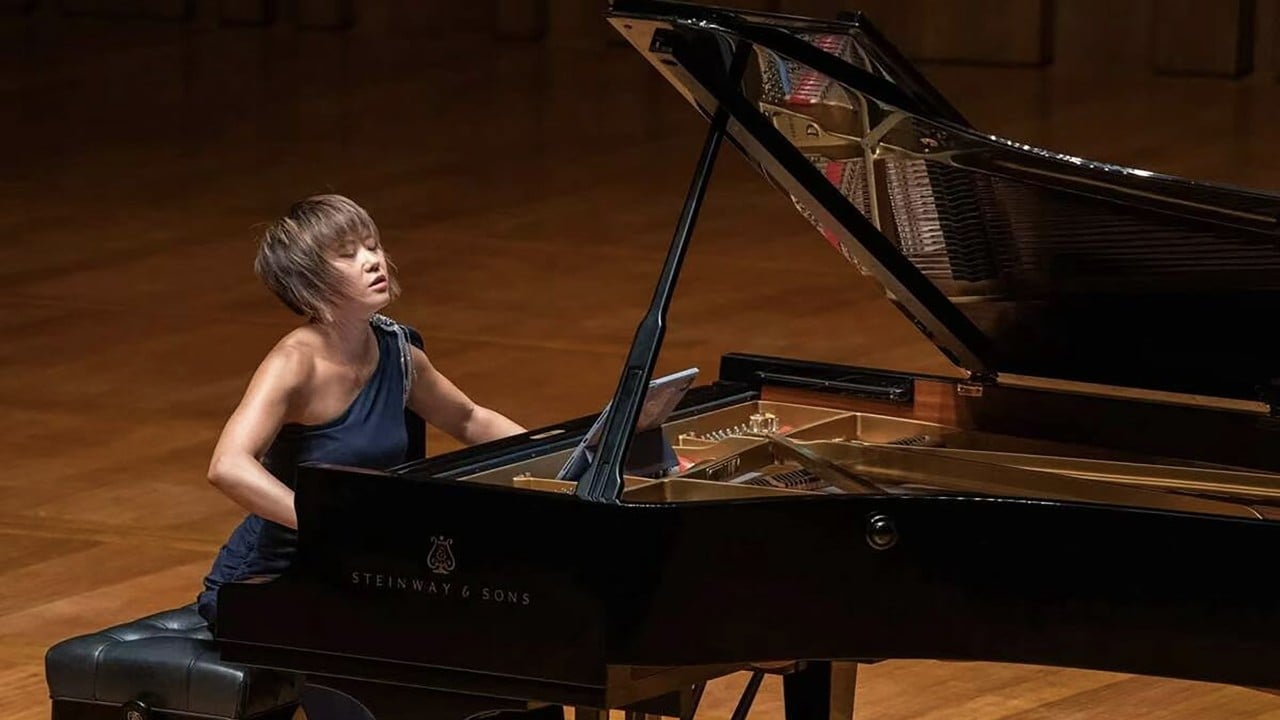
The house lights dim. The heavy velvet hush settles. The pianist walks out, bows deeply, sits on the leather bench, and adjusts the height by a millimeter.
And then, nothing happens.
One minute passes. Two. Five. Ten. Seventeen full minutes tick by on the glowing watch faces in the dark while the performer sits motionless before the black lacquer Steinway, eyes closed, waiting for what would later be described to an increasingly restless hall—and eventually to millions of outraged social media users across China—as "the right feeling."
When the news broke of the star pianist delaying a major concert in China for seventeen excruciating minutes just to locate an internal emotional spark, the internet did what the internet always does when art collides with commerce. It erupted. Comment sections turned into battlegrounds. Half the digital crowd branded the musician an entitled prima donna holding paying customers hostage to fragile artistic vanity. The other half rushed to defend the sacred, unpredictable mystery of live inspiration, arguing that true greatness cannot be summoned on a factory whistle.
Both sides missed the real story.
Because what happened during those 1,020 seconds on a Chinese concert stage wasn't merely a clash between a moody virtuoso and an impatient crowd. It was a collision between two completely incompatible clocks—the industrial clock of modern entertainment and the geological clock of human vulnerability.
The Architecture of a Modern Illusion
To understand why seventeen minutes feels like an eternity in a concert hall, you have to understand what modern audiences have been trained to buy.
When you stream a recording on Spotify or watch a polished clip on Douyin, you are consuming a ghost. You are listening to the fifteenth take, spliced seamlessly with the fourth take, edited in a soundproof booth in Berlin or New York where the temperature is a steady twenty-one degrees Celsius and nobody in the third row is coughing. We have become accustomed to perfection on demand. Press play, and the emotional climax arrives at precisely three minutes and forty-two seconds. Every single time.
Live classical music operates under a quiet, terrifying lie: we pretend a human being can replicate that recorded miracle in real time, on schedule, at 7:30 PM sharp on a Tuesday.
I remember the first time I stood backstage at a mid-sized conservatory hall before a solo recital—not as a star, just a nervous performer with cold hands and a racing pulse. Backstage smells like floor wax, stale coffee, and wool coats. You can hear the low, muffled roar of the audience through the fire door, sounding uncannily like ocean surf before a storm. In that hallway, time warps. Thirty seconds feels like five minutes; five minutes feels like a blink. You realize, with a sudden, cold drop in your stomach, that once you cross that threshold into the spotlight, there is no pause button, no second take, and nowhere to hide from eighty-eight keys that will broadcast every tremor in your nervous system at eighty decibels.
Now multiply that pressure by the expectations of a marquee international tour in China.
Over the past two decades, China has become the beating heart of the global classical music market. While audiences in Europe and North America have grayed and shrunk, Beijing, Shanghai, Guangzhou, and Shenzhen have built gleaming, acoustically transcendent halls packed with young, fiercely educated listeners. Parents bring children who practice scales before breakfast; young professionals treat symphony tickets the way peers in London treat indie rock festivals. The energy in a Chinese concert hall is electric, hungry, and deeply serious.
It is also unforgiving.
Tickets for top-tier soloists routinely sell out in minutes, often reaching prices that represent a genuine financial sacrifice for middle-class families. When a star steps onto that stage, the unspoken social contract is ironclad: We gave you our time, our money, and our reverence. Now, give us transcendence.
What Actually Happens in the Dark
Let us return to our hypothetical row in the audience as the clock ticks past minute eight.
At first, the stillness feels intentional, even thrilling. Experienced concertgoers know the ritual. Great pianists—from Glenn Gould humming over his hands to Sviatoslav Richter demanding near-total darkness—have always used silence as a canvas. A ten-second pause before the opening chord clears the static from the room. Twenty seconds builds unbearable anticipation.
At two minutes, Lin, our hypothetical architect, shifts in her plush red seat. She wonders if a pedal is broken.
At five minutes, a low murmur ripples through the balcony. Someone drops a program; the crisp slap of paper against wood echoes like a gunshot. Mr. Chen, the retired physics teacher, leans forward, squinting at the soloist’s shoulders. Are they rising and falling? Is this a medical emergency?
By minute twelve, the spell has curdled into awkwardness, and awkwardness is rapidly fermenting into anger.
Consider what happens next when silence stretches past the threshold of human comfort. In psychology, there is a well-documented phenomenon regarding violated expectations in shared spaces. When a group sits in enforced quiet, social norms prevent individuals from speaking up, creating a pressure cooker of shared anxiety. Nobody wants to be the philistine who coughs during a masterpiece—yet nobody knows if the masterpiece has even begun.
When the explanation finally surfaces—that the artist needed those seventeen minutes to "find the right feeling" before striking the first note—it hits the public nerve like salt in a fresh cut.
Why? Because to the person sitting in Row G, "finding the feeling" sounds suspiciously like disrespect.
In almost every other profession on earth, preparation happens before the curtain rises. A surgeon does not scrub in, stand over an open chest cavity, and stare at the ceiling for twenty minutes waiting to feel inspired. An airline pilot does not sit on the tarmac at Pudong Airport delaying takeoff because the vibe in the cockpit isn't quite right yet. Even in the performing arts, actors warm up in the wings; dancers stretch at the barre until sweat darkens their shirts.
To arrive on stage empty-handed—emotionally unready—and ask two thousand people to sit in silent captivity while you fish around in your own psyche for motivation feels, to many observers, like a breach of professional ethics.
The Invisible Stakes Behind the Keys
Yet before we convict the pianist in the court of public opinion, we have to look at the other side of the bench.
What does "the right feeling" actually mean to someone whose entire life is spent translating ink on a hundred-year-old page into living sound?
Think of a great piece of music—say, a late Brahms intermezzo or a Chopin nocturne—not as a sequence of notes, but as an emotional tightrope stretched over a canyon. Anyone who has graduated from a top conservatory can hit the right notes. Muscle memory takes care of that. Your fingers know where the F-sharp lives the way your tongue knows where your teeth are.
Playing the notes is easy. Making a stranger in the back row cry is nearly impossible.
To make music live, a performer has to summon a specific internal weather system. If you walk onto the stage carrying the residue of a delayed flight, a bitter argument on the phone, jet lag from three time zones, or the hollow numbness of playing the exact same program in twelve cities in fourteen days, your fingers will still hit the keys—and the music will sound completely dead. Like cardboard. Like an expensive player piano whirring away in an empty hotel lobby.
For an artist with an intact conscience, delivering a dead performance is its own kind of theft.
I once watched a seasoned cellist sit in a dressing room in Vienna, staring at his instrument with genuine terror twenty minutes before a performance of Elgar’s Concerto. He had played the piece four hundred times. He knew every shift, every vibrato speed, every bow distribution. "I can't feel it tonight," he whispered, sounding less like an arrogant star and more like a man trying to start a flooded engine in freezing weather. "If I go out there like this, I'm just sawing wood."
He went out anyway, played flawlessly, and walked off stage looking hollow and ashamed. The audience cheered; he felt like a fraud.
This is the central paradox of the performing arts, and we rarely talk about it honestly. We demand authenticity from artists—we want them to bleed on stage, to be raw, spontaneous, and possessed by the music—yet we schedule their vulnerability for 8:00 PM on a Friday night, sandwiched between a sponsor dinner and a morning flight to Tokyo.
When a pianist sits frozen for seventeen minutes in front of a Chinese audience, we are watching the gears of that impossible system grind to a halt. We are witnessing an artist refusing to "saw wood"—refusing to fake an emotion they haven't found yet—even at the cost of humiliating themselves in front of thousands of people.
The Cultural Fault Line
There is another layer to this story, subtle and deeply cultural, that explains why the backlash in China carried such a distinct sting.
In Chinese artistic tradition, mastery is inextricably linked to discipline, humility, and respect for the collective. Whether in calligraphy, Peking opera, or classical music, the prevailing ethos honors gongfu—hard-won skill forged through relentless practice until emotion flows effortlessly through form. The artist serves the audience; the individual ego dissolves into the craft.
Western Romanticism, by contrast, invented the myth of the tortured genius—the solitary hero whose inner turmoil excuses every social transgression. In the nineteenth-century European tradition, if Franz Liszt or Frederic Chopin kept a salon waiting because their soul was troubled, the room simply held its breath and considered themselves privileged to witness artistic agony up close.
When that nineteenth-century European myth collides with a twenty-first-century Chinese concert hall, sparks fly.
To many Chinese listeners, waiting seventeen minutes for a performer’s mood to align didn't look like Romantic genius. It looked like a failure of preparation—and worse, a subtle display of cultural arrogance. Online commentators were quick to ask a pointed, uncomfortable question: Would this star have sat motionless for seventeen minutes at Carnegie Hall in New York, or at the Musikverein in Vienna, or at the Berlin Philharmonie?
Maybe. Maybe not.
That question lingers because audiences in emerging powerhouse markets have grown fiercely sensitive to double standards. Nobody wants to feel like a practice run, or a secondary stop where standards of punctuality and professionalism bend in ways they wouldn't in Europe. Even if the pianist's hesitation came from genuine artistic paralysis rather than condescension, perception in a darkened auditorium hardens fast. Once an audience suspects they are being taken for granted, every passing second feels like an insult.
Where the Contract Breaks
Let us trace what happens when that trust fractures.
Suppose Lin, our hypothetical architect in Row G, finally hears the first note at 7:47 PM.
Is it transcendent? Perhaps. Maybe those seventeen minutes of agonizing stillness allowed the pianist to strip away the noise of the tour, find the exact weight of the opening chord, and deliver a performance of breathtaking intimacy.
Or perhaps—and this is the far more common tragedy—the tension in the hall has already poisoned the air.
Music does not happen inside a piano; it happens in the invisible space between the stage and the seats. It is a closed circuit. When two thousand people are leaning forward in trust, their attention lifts the performer, carrying them over technical hurdles and into states of grace they could never reach alone in a practice room. When two thousand people are sitting with crossed arms, checking their watches, nursing a quiet resentment over missed trains and wasted money, the air in the room turns to lead.
Even Beethoven cannot cut through a wall of two thousand irritated minds.
And what happens outside the hall? In 2026, a concert does not end when the stage lights come up. Within minutes of the final bow, smartphones light up like fireflies. Clips, timestamps, and furious reviews flood Weibo, Xiaohongshu, and international music forums. A seventeen-minute silence becomes a permanent digital scar attached to the artist's name—reducing a lifetime of devotion to the keyboard into a single headline about self-indulgence.
The Discipline of Summoning the Spark
So where does that leave the artist, and where does it leave us?
If you ask veteran performers—the ones who sustain forty-year careers without burning out or alienating their audiences—how they handle the nights when "the feeling" refuses to show up, you get a remarkably consistent, unglamorous answer.
They build a bridge out of craft.
Great athletes do not wait until the third quarter to see if they feel competitive; they rely on pre-game rituals designed to trigger focus on command. Great writers do not stare at a blank screen for three hours waiting for the muse; they write badly for twenty minutes until the gears catch and truth starts flowing.
In music, that bridge is built backstage, long before the doors open. It lives in breathing exercises that slow a racing heart, in mental visualization of the opening phrase, in accepting that some nights you start at seventy percent and let the music itself warm your hands as you go. Sometimes, paradoxically, you don't find the right feeling before you play the first note. You find it by playing the first note—by stepping off the cliff and trusting that your wings will open on the way down.
Sitting frozen on stage for seventeen minutes isn't courage. It is terror disguised as purity. It is the refusal to risk playing an imperfect opening bar in front of strangers.
And yet.
Even knowing all of this—knowing the ticket prices, the subway rides in the rain, the babysitters, the violated schedule, the professional duty to show up ready—part of me still hesitates before casting the final stone.
Think about the world we actually live in right now.
We live in an era of algorithmic smoothness, AI-generated melodies, lip-synced stadium spectacles, and hyper-optimized entertainment where nothing is ever late, nothing is ever off-script, and nothing ever risks failing in public. Every edge has been sanded down so nothing can snag our attention or waste our time.
Against that backdrop, there is something strangely, stubbornly human about a lone figure sitting in front of a wooden box strung with steel wire, refusing to make a sound until it means something. Foolish? Yes. Unprofessional? Almost certainly. Expensive for everyone in the building? Without question.
Imagine the lights dimming once more, the coughs dying away, and those eighty-eight black and white keys gleaming under the spotlight—waiting, just like the rest of us, for someone brave enough to break the silence.