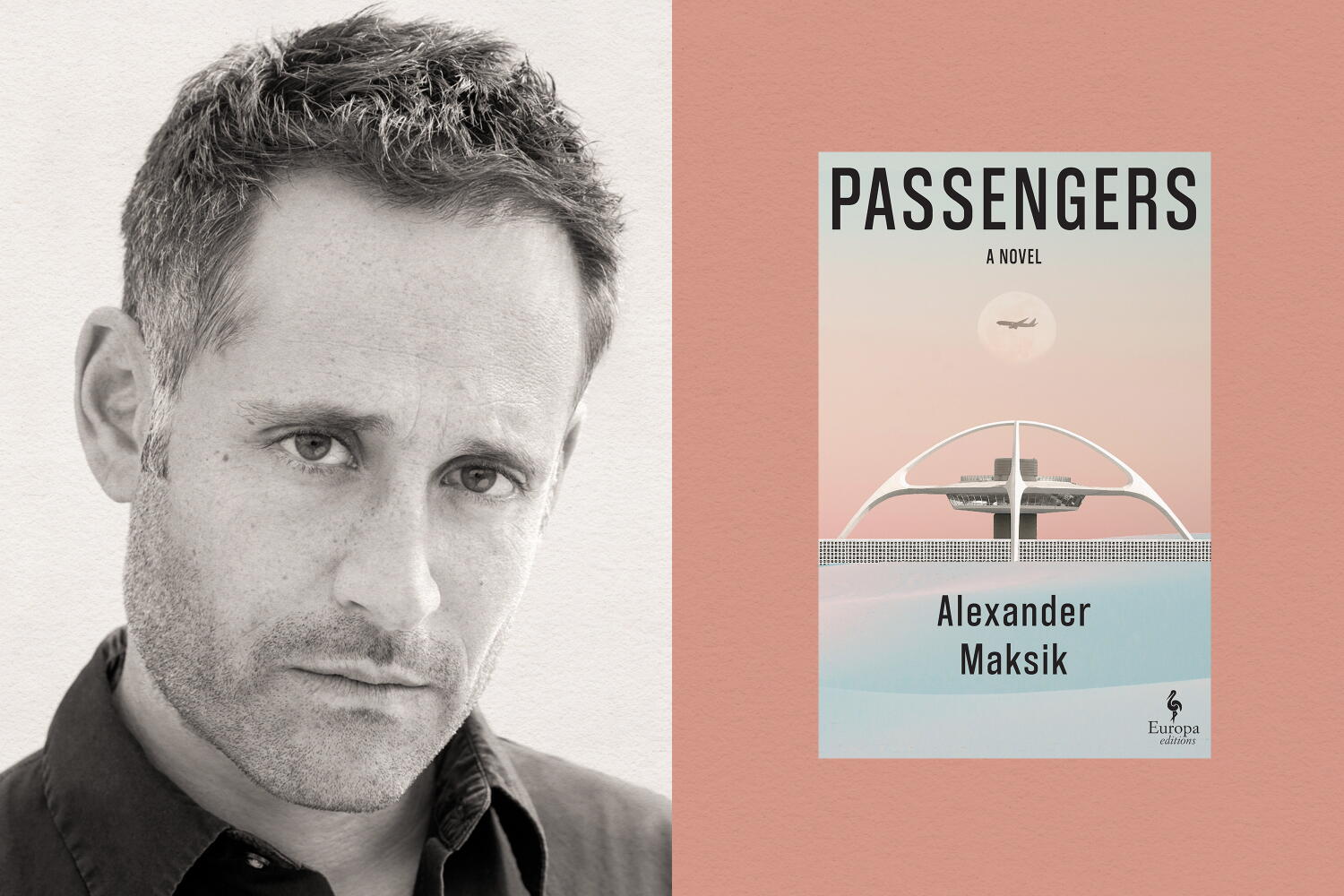
Most thrillers set in airports feel like cheap cardboard cutouts. You know the drill. A ticking clock, a rogue agent sprinting past a Cinnabon, and a vague threat that magically shuts down every gate without anyone noticing the logistics. Honestly, it's lazy writing. When you trap a story inside a real-world transit hub like Los Angeles International Airport, you're inviting every traveler who has ever missed a connection on the 405 to call your bluff.
That's why setting a thriller inside LAX is such a massive creative gamble. Yet Alexander Maksik took that exact bet and turned one of the most stressful, fluorescent-lit mazes in America into an unforgettable psychological pressure cooker.
If you've ever dragged a broken roller bag through the Tom Bradley International Terminal at two in the morning, you already know the raw material he had to work with. LAX isn't glamorous. It's loud, slightly sticky, weirdly hypnotic, and packed with people who are all half-asleep or deeply anxious. Most novelists avoid that mundane friction because they think it slows down the plot. Maksik did the opposite. He leaned right into the purgatory of modern air travel and used the building itself as an antagonist.
The Problem With Airport Thrillers
To understand why Maksik's approach works so well, you have to look at why almost everyone else gets airport fiction wrong. Usually, writers treat an airport as a neutral backdrop. It's just a big box where bad guys hide behind pillars.
Think about the classic mistakes you see in commercial suspense novels:
- Ignoring actual security bottlenecks. Characters somehow slip past TSA checkpoints, tarmac doors, and customs booths like they're walking through a suburban shopping mall. Anyone who has spent forty minutes taking off their shoes in Terminal 4 immediately checks out of the story.
- Over-relying on ticking-bomb clichés. Instead of building tension from human behavior, the plot depends entirely on a countdown timer on a laptop screen.
- Forgetting the emotional exhaustion of travel. Airports strip people of their normal routines. You eat terrible food at weird hours, sit next to strangers, and surrender total control over your schedule. Most thrillers ignore how that mental fatigue actually makes people crack.
When a writer skips these details, the setting feels fake. You stop worrying about the characters because you don't believe the room they're standing in.
How LAX Changes the Rules of Suspense
LAX is a completely different beast compared to smaller hubs or sleek European terminals. Spread out in a giant horseshoe—the Central Terminal Area—it's a fragmented collection of nine terminals connected by congested roadways, underground tunnels, and endless walkways.
You can't just "run across the airport" at LAX. Doing so takes twenty minutes of brisk walking, three escalators, and a near-death experience at a crosswalk.
Alexander Maksik understands that geography dictates tension. Instead of fighting the awkward layout of Los Angeles International Airport, he weaponizes it. When your characters are stuck in a sprawling, hyper-monitored bottleneck where every exit is choked with idling Uber drivers and concrete bollards, claustrophobia sets in fast. Even in a massive open concourse, there's nowhere to hide. Every square inch is watched by cameras, TSA officers, airline staff, and thousands of bored passengers staring at their phones.
That specific kind of public isolation is pure gold for a thriller writer. You're surrounded by fifty thousand people, and not a single one of them is going to help you.
Alexander Maksik and the Art of Psychological Pressure
Before tackling a high-stakes airport narrative, Maksik built his reputation on intense, character-driven literary fiction like You Deserve Nothing and A Marker to Measure Drift. Those books aren't standard beach reads. They're obsessed with guilt, displacement, memory, and what happens when ordinary people get pushed past their moral breaking points.
Bringing that literary sensibility to a thriller inside LAX changes the entire equation.
Instead of giving us a muscular action hero who knows twelve martial arts, Maksik focuses on interior dread. His characters carry heavy emotional baggage long before they ever reach the check-in counter. When you drop someone who is already fraying at the edges into the sensory overload of LAX—the constant PA announcements, the hum of jet engines vibrating through the floor, the harsh white lights—the environment amplifies their paranoia.
Here's what separates his execution from standard genre fare:
- Pacing tied to real transit rhythms. Travel is a weird mix of dead stillness and sudden panic. You wait for three hours, and then you have four minutes to make your boarding group. Maksik mirrors that exact rhythm in his prose. Quiet, observational stretches suddenly snap into frantic motion.
- Hyper-specific sensory details. He doesn't just say "the terminal was crowded." He notices the smell of burnt coffee, the scuff marks on linoleum floors, the particular blank stare of a gate agent dealing with a delayed flight. Those details anchor the suspense in reality.
- Moral ambiguity over clear villains. In a real airport, everyone looks suspicious if you stare at them long enough. Maksik plays with that uncertainty, making the reader question who is actually a threat and who is just another exhausted traveler trying to get home.
Why Modern Readers Crave Grounded Settings
Readers today are sharp. We spend half our lives navigating complex systems, reading live flight trackers, and watching real-world security breakdowns unfold on our phones. You can't fool an audience with Hollywood nonsense anymore.
When a thriller respects your intelligence by getting the environment right, the payoff is massive. You don't just read the story—you feel your own shoulders tense up because you recognize the exact feeling of being trapped in a terminal with nowhere to go. Maksik proves that you don't need international espionage rings or secret underground bunkers to write a page-turner. Sometimes, a delayed flight, a questionable stranger at Gate 42, and the relentless grind of LAX are more than enough to keep someone up until three in the morning.
What Writers and Readers Can Take Away From This
If you're a writer trying to build tension—or just a reader looking for smarter suspense—pay attention to how setting does the heavy lifting.
- Stop inventing exotic locations when mundane ones are scarier. A crowded airport terminal, a late-night laundromat, or a gridlocked highway carries built-in stress that readers already understand in their bones.
- Use real-world friction as plot obstacles. Don't let characters magically bypass security lines, dead phone batteries, or traffic jams. Force them to solve problems inside the actual rules of the space.
- Match the character's internal state to the room. If your protagonist is losing control, put them somewhere designed to strip away personal agency.
Pick up Alexander Maksik's work next time you're planning a trip—just maybe don't read it while sitting at the Tom Bradley terminal waiting for a delayed red-eye.