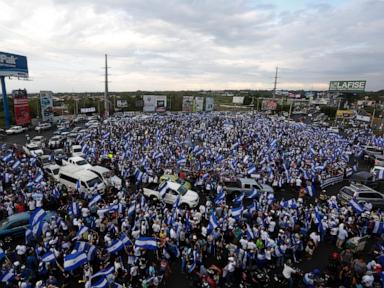
When governments send vulnerable people back into the hands of their abusers, international law stops being a safeguard and starts looking like an empty promise. That harsh reality hit home recently when Jeffrey Jarquín, a survivor of horrific state torture in Nicaragua, was deported from the United States and immediately thrown back behind bars in Managua.
It is a chilling playbook. Critics and human rights groups have spent months warning that deporting political dissidents back to Daniel Ortega's administration amounts to handing them a prison sentence or worse. Yet, bureaucratic immigration policies keep steamrolling human safety standards.
The Dangerous Illusion of Safe Deportations
For anyone tracking Central American politics, the risks facing political dissidents are not secret. Jeffrey Jarquín—often known locally as "El Nene"—had previously been imprisoned and tortured for participating in the historic 2018 anti-government protests. After weathering that nightmare, he managed to secure a release under a local self-amnesty law, prompting him to flee first to Costa Rica and eventually seek asylum in the United States.
He thought he had found safety. Instead, after a minor legal run-in in Miami that was swiftly resolved with a fine, immigration authorities caught him in their net. Despite having an active asylum claim that documented his genuine history of persecution, his plea was brushed aside by a system fixated on speedy expulsions.
Human rights organizations like Human Rights Watch have repeatedly sounded alarms about these practices. Under international treaties, nations are legally barred from returning individuals to territories where they face credible threats of torture or systemic persecution. When immigration enforcement agencies label someone strictly as a routine immigration violator while ignoring context, they bypass the very protections built to save lives.
Inside the Broken Asylum Pipeline
Why do these tragic deportations keep happening? The disconnect lies in how immigration courts and detention centers process individuals who stumble into minor domestic legal troubles while waiting for their day in court.
When Jarquín was detained in Miami, his legal team successfully handled a local assault accusation, resulting in dismissed charges and a paid fine. But local infractions often trigger automatic transfers to Immigration and Customs Enforcement (ICE) custody. Once inside that pipeline, detainees face steep uphill battles to highlight their political backgrounds.
Immigration attorneys frequently point out that Department of Homeland Security filings tend to strip away essential political context, reducing complex human rights cases to simple paperwork violations. When an asylum seeker is generalized as an ordinary undocumented migrant, the life-and-death stakes of their home country background vanish from the docket.
The Broader Crackdown on Nicaraguan Exiles
Jarquín's case is far from an isolated administrative hiccup. It highlights an aggressive pattern by the Nicaraguan regime to hunt down dissent even beyond its borders, combined with tightening immigration restrictions across North America.
Human rights monitors have documented numerous cases where exiled citizens—many of whom were stripped of their citizenship or forced out on notorious mass expulsion flights—find themselves trapped by shifting foreign policies. Rather than receiving refuge, several dissidents detained by ICE have faced either direct deportation back to Managua or expulsion to third-party transit countries where they remain vulnerable to local state pressures.
When asked by journalists about Jarquín's reimprisonment upon arrival, representatives of the Nicaraguan government offered chilling indifference, responding with dismissive remarks. That callous reaction underscores the exact danger human rights advocates have highlighted for years.
Protecting refugees requires looking past administrative checkboxes. Until immigration enforcement agencies overhaul how they assess real-world political violence, survivors of torture will continue to pay the ultimate price for bureaucratic negligence.
Check out this Nicaraguan political prisoners report to understand the broader context of political repression and exile challenges facing dissidents.


