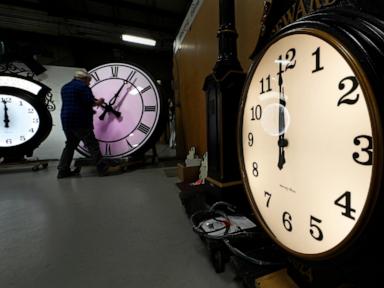
The United States Senate will not pass permanent daylight saving time anytime soon, regardless of presidential pressure or public frustration over biannual clock changes. While Donald Trump has repeatedly demanded an end to the twice-yearly ritual—calling the practice inconvenient and costly—senators on both sides of the aisle remain deeply divided over which clock to keep. The legislative bottleneck has nothing to do with partisan loyalty. It comes down to a brutal geographical reality, fierce opposition from sleep scientists, and the haunting memory of a catastrophic 1974 federal experiment that forced Congress to repeal permanent daylight saving time after just eight months.
Every spring and autumn, millions of Americans groan as they reset microwaves, lose an hour of sleep, or suddenly drive home from work in pitch darkness. On the surface, locking the clocks in place looks like the easiest bipartisan win in Washington. Politicians love popular, low-cost issues. Yet whenever a bill to make daylight saving time permanent reaches the upper chamber, it stalls out in committee or dies quietly on the legislative calendar.
The Geography Trap Splitting Capitol Hill
To understand why the Senate drags its feet, look at a map of American time zones. Under the Uniform Time Act of 1966, states have the legal authority to exempt themselves from daylight saving time and remain on permanent standard time—which is exactly what Hawaii and most of Arizona do. However, federal law strictly prohibits states from adopting permanent daylight saving time on their own. Only an act of Congress can make that change nationwide.
That federal mandate creates a mathematical nightmare for senators representing different edges of the exact same time zone.
Consider the Eastern Time Zone. It stretches from the eastern tip of Maine all the way to western Indiana and parts of Michigan. The sun does not rise at the same moment across that vast expanse of territory. Under permanent daylight saving time, winter sunrises in eastern cities like Boston or New York would happen around 8:15 AM in late December. Annoying, certainly, though manageable for many commuters.
Now shift your gaze west within that very same time zone. In cities like Indianapolis, Grand Rapids, or Detroit, permanent daylight saving time pushes winter sunrise past 9:00 AM. In northwestern North Dakota, which sits on the western edge of the Central Time Zone, the sun would not crest the horizon until nearly 9:45 AM in the dead of winter.
Senators from western-edge states know precisely what happens when their constituents are forced to wake up, commute, and send children to school in total darkness for four consecutive months. Phone lines melt down. Local school boards revolt. A senator from Florida might enthusiastically champion permanent summer hours to boost evening tourism and retail spending, while a senator from Indiana or Ohio—belonging to the exact same political party—will quietly kill the bill behind closed doors to protect their own voters from brutal dark mornings.
We Already Tried This in 1974
Skeptical senators do not have to guess what happens when America locks the clocks on daylight saving time. They have the congressional record from 1974.
During the height of the OPEC oil embargo in late 1973, President Richard Nixon signed the Emergency Daylight Saving Time Energy Conservation Act. The logic seemed sound at the time. By shifting an hour of daylight from the morning to the evening, Congress hoped Americans would turn on fewer lights and use less electricity during peak evening hours, thereby conserving precious heating oil and fuel.
The law went into effect on January 6, 1974. Public approval stood at roughly 79 percent before the clocks changed. Within weeks, that support collapsed into nationwide fury.
Across the country, parents were forced to send elementary school children out to wait for buses in pitch-black freezing temperatures. Reports of early-morning traffic accidents involving school-age children spiked in several states, most notably in Florida, where eight children were killed in traffic incidents during the first few weeks of the dark-morning commute. Governors demanded immediate reversals. School districts delayed opening times by an hour or two, creating chaos for working parents whose own job shifts remained unchanged.
Meanwhile, the promised energy savings proved negligible. People simply turned their heaters and lights on in the dark, freezing mornings instead of the evenings. By October 1974—less than ten months after enacting the law with overwhelming bipartisan majorities—Congress voted overwhelmingly to repeal the experiment and return the country to standard time for the winter.
Veteran lawmakers and their senior staffers know this history well. When Trump or high-profile sponsors like Senator Marco Rubio push for the Sunshine Protection Act, older institutionalists in the Senate see a political trap waiting to snap shut the very first January after passage.
The Medical Consensus Against Permanent Daylight Saving Time
If geography provides the political friction, biology supplies the scientific ammunition. Over the past decade, a massive coalition of medical organizations—including the American Academy of Sleep Medicine, the American Medical Association, and the Society for Research on Biological Rhythms—has waged an aggressive lobbying campaign on Capitol Hill. Their message to senators is blunt. Stopping the clock change is a great idea, provided we choose permanent standard time, not permanent daylight saving time.
To understand why, you have to look at how the human circadian rhythm actually functions. Your body relies on an internal master clock located in the hypothalamus of the brain. This biological pacemaker governs hormone release, body temperature, metabolism, and alertness. Crucially, the human circadian clock does not run on an exact 24-hour cycle on its own; it requires daily calibration from natural sunlight to stay synchronized with the Earth's rotation.
Morning sunlight is the biological trigger that shuts off melatonin production—the hormone that makes you sleepy—and initiates a healthy surge of cortisol to wake you up and sharpen your focus. Conversely, exposure to bright light late into the evening suppresses melatonin and delays your ability to fall asleep, even if your alarm clock still goes off at 6:30 AM.
Permanent daylight saving time systematically starves the human brain of morning light during winter while flooding it with evening light during summer. Sleep researchers refer to the resulting condition as social jet lag—a chronic misalignment between your internal biological clock and the social clock dictated by your job or school schedule.
Decades of epidemiological data link chronic circadian misalignment to severe public health consequences:
- Higher rates of cardiovascular disease and stroke
- Increased incidence of metabolic disorders, including obesity and type 2 diabetes
- Elevated rates of seasonal depression and mood disorders
- Greater sleep deprivation among adolescents, whose biological clocks naturally shift later during puberty
Standard time, by contrast, aligns solar noon—the moment when the sun reaches its highest point in the sky—as closely as possible with 12:00 PM on the wall clock. Neurologists and chronobiologists testified repeatedly before Senate committees that permanent standard time is vastly superior for human health, workplace productivity, and road safety. For a senator weighing a vote, going directly against the unified consensus of the nation's top doctors carries serious political risk.
The Strange Alliance of Lobbyists Fighting Over Your Watch
Whenever a bill touches the clock, an invisible army of corporate lobbyists descends on Washington. Time is money, quite literally, for industries whose revenue depends on when consumers are awake, driving, and spending.
On one side sits the pro-daylight saving coalition. Retail giants, golf course operators, youth sports leagues, convenience store chains, and the hospitality sector have poured millions into lobbying for permanent daylight saving time. Their business model thrives on evening light. People are far more likely to stop at a strip mall, play nine holes of golf, buy barbecue supplies, or dine out on a patio when the sun is still shining at 7:30 PM than when darkness falls at 5:00 PM. During the 1986 expansion of daylight saving time, the golf industry famously estimated that a single extra month of evening sunlight generated hundreds of millions of dollars in additional greens fees and equipment sales.
On the other side sits a quieter, equally entrenched opposition. Major agricultural groups have historically resisted permanent daylight saving time because livestock operate on solar schedules, not federal statutes. Dairy cows need to be milked at consistent intervals relative to sunrise, and morning dew on crops dictates when harvesting equipment can enter the fields. Pushing the clock forward permanently disconnects rural farm schedules from the rest of the commercial supply chain, complicating trucking pickups and market deliveries.
Broadcast television networks also harbor deep reservations. Prime-time viewing numbers drop significantly when it is still bright outside at 8:00 PM, cutting into advertising revenue. Meanwhile, airline executives face massive logistical headaches whenever the United States alters its time rules out of sync with Canada, Mexico, and European trading partners, forcing costly recalculations of international flight slots and crew rest mandates.
How the 2022 Senate Fluke Exposed the Divide
Advocates for permanent daylight saving time love to point out that the Senate actually passed the Sunshine Protection Act in March 2022. What they rarely mention is how it passed—and what happened immediately afterward.
The 2022 passage was not the result of a floor debate or a roll-call vote. It happened via unanimous consent, a parliamentary shortcut used for non-controversial bills where a senator asks to pass a measure quickly if nobody on the floor objects at that exact moment. Due to a staff communication breakdown, several senators who opposed the bill were not on the floor when Senator Rubio made the request, allowing it to slip through without a single vote being cast.
Within hours, the backlash began. Senators who missed the floor action expressed outrage that a massive alteration to American daily life had been waved through without debate. When the bill moved over to the House of Representatives, Speaker Nancy Pelosi and Energy and Commerce Committee Chair Frank Pallone refused to bring it to the floor, noting that lawmakers were nowhere near consensus on whether permanent daylight saving time or permanent standard time was the right choice.
Since that parliamentary accident, Senate leadership has ensured that no time-change bill will ever sneak through via unanimous consent again. Any future attempt will require full committee markups, public hearings, floor amendments, and a formal 60-vote threshold to overcome a filibuster.
Why Presidential Pressure Cannot Break the Stalemate
Donald Trump's vocal frustration with daylight saving time injects high-wattage political theater into an otherwise wonky policy debate. When a president or party leader attacks the biannual clock change on social media, it forces reporters to ask senators where they stand and briefly revives dormant legislation.
Yet executive pressure hits a wall when the underlying conflict is geographic rather than ideological. Party whips can twist arms over tax rates, judicial nominees, or border spending because those issues map cleanly onto partisan platforms. A Republican senator from Alabama and a Republican senator from Michigan share nearly identical views on deregulation and conservative judges, yet they represent constituents experiencing completely different solar realities every winter morning.
The same split fractures the Democratic caucus. Senator Ed Markey of Massachusetts has long favored expanding daylight saving time, while Democratic lawmakers from Pacific Northwest states like Washington and Oregon—where winter daylight is already scarce—have watched their own state legislatures debate shifting toward permanent standard time instead.
Even if Trump were to throw the full weight of the White House behind a specific bill, he would immediately confront a fatal tactical choice. Backing permanent daylight saving time alienates western-edge senators, parents worried about dark school bus stops, and the entire medical establishment. Backing permanent standard time infuriates the retail, tourism, and golf lobbies while disappointing millions of voters who genuinely love long summer evenings.
The Structural Fix Nobody Wants to Debate
There is a third option sitting quietly in the policy toolbox, though almost no politician dares touch it. Instead of forcing the entire continental United States onto a single uniform rule, Congress could amend the Uniform Time Act to grant individual states the freedom to choose either permanent standard time or permanent daylight saving time.
On paper, federalism solves the geography problem. Florida could keep its sunny winter evenings; Indiana could keep its bright winter mornings.
In practice, state-by-state autonomy terrifies the business community. Imagine driving from New York to Chicago and changing your watch three times, or managing corporate meetings across four states that each observe different seasonal rules. Before the Uniform Time Act standardized the calendar in 1966, chaotic local time zones caused train collisions, missed airline connections, and massive financial confusion. Corporations would lobby furiously against turning the American time zone map into a patchwork quilt.
Until Congress either accepts the medical consensus for permanent standard time or finds a way to bend the laws of planetary rotation, Americans will keep losing an hour of sleep every March and gaining it back every November, while senators quietly let every time-change bill expire in committee.