Picture a carton of milk sitting at the back of your refrigerator. The stamped date on the plastic jug says it expired three weeks ago. You unscrew the cap, lean in, and take a cautious sniff. Your brain runs an immediate risk-reward calculation based on a single printed number, even though you know that refrigeration temperature, pasteurization quality, and how often the door was opened actually dictate whether that milk will ruin your morning coffee.
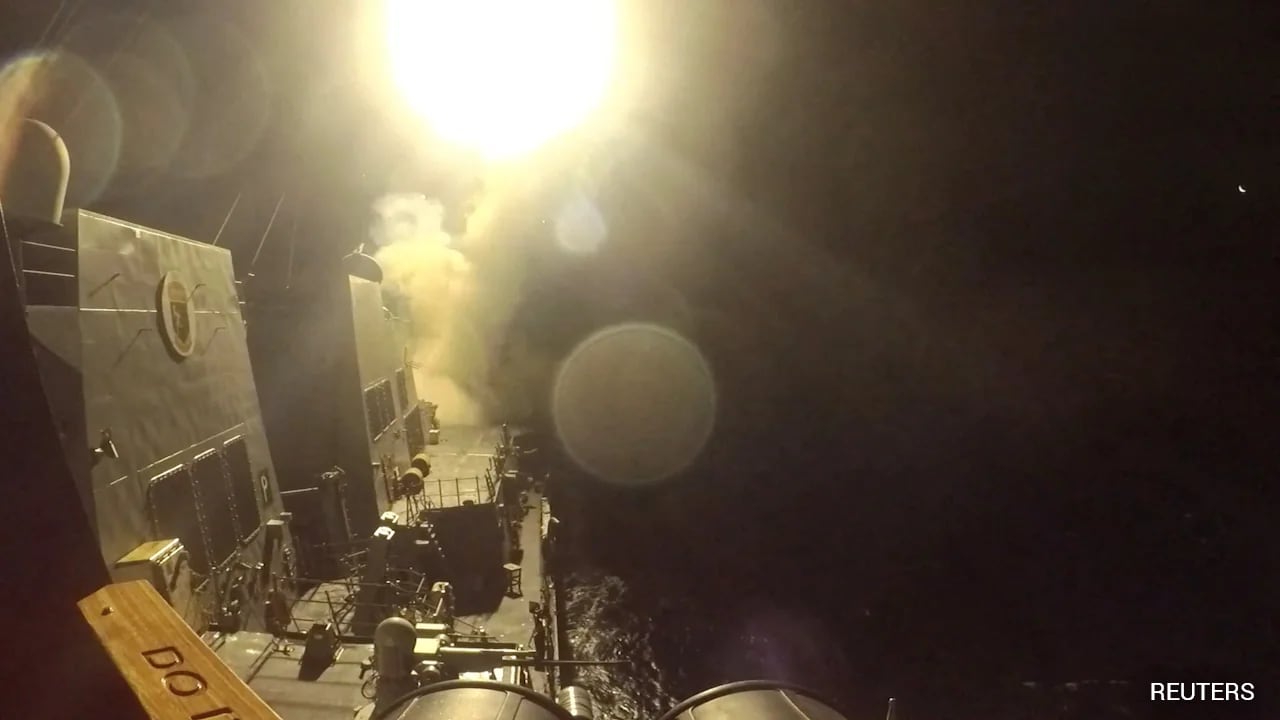
Now, scale that anxiety up by roughly two million dollars per carton, attach a turbofan engine, pack it with a thousand pounds of high-explosive warhead, and launch it from the vertical deck of an Arleigh Burke-class destroyer in the middle of a shooting war.
When word leaked out of the Pentagon that the United States military had fired "expired" Tomahawk land-attack missiles during combat operations against Iran, the reaction across cable news chyrons and social media feeds was visceral. To the average taxpayer, the word expired conjures images of a corner-cutting bureaucracy, a hollowed-out arsenal, or reckless commanders gambling with defective hardware while sailors stand on steel decks thousands of miles from home. It sounds like desperation. It sounds like failure.
Wait.
Stop and look closely at what actually happened inside those vertical launch tubes, because the truth behind why a top Pentagon official defended the use of past-date munitions reveals something far more fascinating than bureaucratic negligence. It exposes a quiet, high-stakes collision between cold engineering math, global supply chain bottlenecks, and the brutal arithmetic of modern warfare.
The Anatomy of a Thirty-Year Promise
To understand why a missile carries a "best by" date in the first place, we have to step away from the theater of war and walk onto the floor of a defense manufacturing facility in Tucson, Arizona, or down into the concrete bunkers of a naval weapons station in Seal Beach, California.
Let us construct a hypothetical character to ground this reality—call him Marcus, a fifty-two-year-old ordnance engineer who has spent half his life certifying solid-fuel rocket boosters. When Marcus and his colleagues sign off on a newly minted BGM-109 Tomahawk cruise missile, they aren't guessing when it will break. They are establishing a warranty.
A Tomahawk is not a simple metal tube filled with gunpowder. It is a twenty-foot-long, GPS-guided, terrain-hugging flying robot packed with delicate circuit boards, lithium batteries, rubber O-rings, hydraulic actuators, and a solid-propellant booster that kicks the 3,500-pound weapon out of its launch canister before its tiny jet engine ignites. Every single one of those components ages differently. Rubber seals dry out and lose elasticity. Solid rocket fuel slowly degrades at a microscopic chemical level, altering how fast or hot it burns. Electronic capacitors drift out of calibration.
When the U.S. Navy buys a batch of Tomahawks, the manufacturer guarantees peak, near-zero-failure performance for a specific window—typically fifteen years before a mandatory mid-life recertification, and roughly thirty years total service life. That date stamped on the maintenance log is not a magical midnight clock where the missile turns into a pumpkin. It is an actuarial boundary. Beyond that date, the contractor's liability ends, and the statistical probability of a misfire begins to creep upward by fractions of a percent.
In peacetime, the military treats that boundary like gospel. Nobody wants to explain to a congressional oversight committee why a two-million-dollar missile splashed harmlessly into the Pacific Ocean during a training exercise because someone ignored a calendar. So, in peacetime, the "expired" missiles get pulled from the front lines, stacked in climate-controlled magazines, and wait in line for a massive, expensive overhaul—a process known in defense circles as recertification, where technicians strip the airframe down to its ribs, swap out the aging seals and propellant, upgrade the guidance computers, and reset the clock for another fifteen years.
Peacetime rules, however, have a habit of evaporating the moment the first radar warning receiver starts screaming.
When the Magazine Runs Thin
Consider what happens when a regional conflict ignites and demands precision strikes at scale.
During the intense exchanges involving Iranian forces and allied proxies across the Middle East, U.S. Navy cruisers, destroyers, and guided-missile submarines became the primary instruments of long-range deterrence and retaliation. Unlike fighter jets, which require diplomatic overflight permissions from neighboring countries and put human pilots directly into the crosshairs of sophisticated surface-to-air missile batteries, a Tomahawk launched from international waters asks permission from nobody. It drops to wave-top height, skims over desert ridges at 550 miles per hour, and threads itself through a specific window of a hardened bunker or radar installation from a thousand miles away.
Because it is the weapon of choice when nobody wants to risk a downed pilot, commanders reach for the Tomahawk button first. And they reach for it often.
In a single night of coordinated strikes, a handful of destroyers can ripple-fire dozens of these missiles. Over weeks and months of sustained combat operations, the expenditure rate climbs into the hundreds. Meanwhile, back home, the industrial base that builds replacements moves at the speed of specialized manufacturing—not the speed of war. Raytheon, the prime contractor, can only produce so many new Tomahawks per year. Supply chains for microchips, specialty alloys, and energetic materials stretch across continents and take months to spool up.
If you are the Pentagon official staring at a war-room map—let us visualize her standing under the harsh fluorescent lights of the Joint Staff situation room at three in the morning—you are suddenly forced to play a terrifying game of inventory chess.
On one side of the board, you have an active conflict requiring immediate strikes to protect ships at sea and troops on the ground. On the other side, you have the Indo-Pacific, where military planners constantly calculate how many thousands of long-range precision munitions would be needed to deter a major conflict across the Taiwan Strait. Every fresh, newly certified Tomahawk fired in the Middle East is one fewer fresh Tomahawk sitting in a forward-deployed magazine in Guam or Yokosuka.
And sitting right behind those fresh missiles in the inventory database is a stockpile of older Tomahawks—missiles that crossed their nominal service-life threshold months or even a couple of years ago, waiting for their turn in the refurbishment depot.
You have a choice. Do you hoard your brand-new stock for a hypothetical future crisis and leave your current commanders rationed? Or do you look at the engineering data on those "expired" missiles and ask a blunt question: Will they still fly?
The Engineering Reality Behind the Headline
When a senior Defense Department official finally stepped up to the podium to address reports that past-expiration Tomahawks had been launched during the Iran campaign, the explanation wasn't an excuse. It was a lesson in how the military actually manages risk when the shooting starts.
The official explained that "expired" in the context of naval ordnance rarely means broken, unsafe, or obsolete. Instead, it means the weapon has passed its scheduled depot-level maintenance window.
Think back to that carton of milk, or better yet, think about the timing belt in your car. The manufacturer's manual tells you to replace it at 100,000 miles. At 100,001 miles, your engine does not spontaneously detonate on the highway. The engineers who designed that belt built in a massive safety margin because they knew real-world conditions vary wildly. A car driven gently in a mild climate might run smoothly to 130,000 miles on the original belt, while a car abused in extreme heat might snap at 85,000.
Missiles live inside climate-controlled canisters. Unlike a car bouncing over potholes in freezing rain and desert heat, a Tomahawk sits sealed in dry nitrogen inside a steel launch cell, monitored constantly by diagnostic sensors. Before any commander authorizes firing a missile that has passed its nominal shelf life, ordnance specialists run deep telemetry checks. They test the batteries. They verify the gyros and GPS receivers. They review the lot history of the solid rocket propellant—because the military regularly pulls random older missiles from storage and test-fires them on domestic ranges specifically to measure how an entire manufacturing batch is aging.
If a particular batch from 1998 shows that its rocket motors still burn cleanly and its guidance fins still respond within milliseconds, granting a life-extension waiver isn't reckless. It is calculated pragmatism.
By pulling those older, waived missiles into the firing rotation during operations against Iran, the Pentagon accomplished two critical objectives at once. First, it cleared out aging inventory that would otherwise have cost millions of dollars to tear down and rebuild—turning a looming maintenance liability into immediate combat utility. Second, it preserved the newest, most advanced Block V Tomahawks—variants equipped with upgraded seekers capable of hitting moving targets at sea—for the strategic contingencies where their cutting-edge electronics are indispensable.
The Invisible Stakes on the Deck
Still, it would be dishonest to pretend there is zero downside to firing past-date ordnance, and this is where the human element demands our attention.
Ask anyone who has served aboard a guided-missile destroyer—sailors working twelve-hour shifts in cramped, humming combat information centers or conducting hazardous topside inspections—and they will tell you that trust in your gear is sacred. When a crew hits the launch key, a complex chain of pyrotechnics and electronics executes in less than two seconds. Explosive bolts shear away the hatch cover. The booster ignites inside the belly of the ship, venting white-hot exhaust through an armored plenum inches away from dozens of other live warheads.
A catastrophic booster failure inside a Vertical Launching System cell—known grimly in the Navy as a "restrained firing"—is one of the worst nightmares a surface warship can face.
That is why the decision to waive an expiration date is never made lightly by a supply clerk with a stamp. It requires senior engineering sign-off, rigorous batch testing, and a clear understanding of where the true risks lie. Statistically, the most common failure mode of an aging cruise missile isn't blowing up in the tube; it is an in-flight flameout or a guidance glitch that causes the weapon to miss its target or crash prematurely into empty desert.
In a high-stakes strike package, military planners account for that exact math. If intelligence determines a target requires two direct hits to be neutralized, and the squadron is firing missiles with a slightly lower statistical reliability rating due to age, planners might allocate three missiles instead of two. They absorb the slight dip in individual probability through volume, ensuring the mission succeeds while still saving the newest inventory for later.
It is an unglamorous, gritty form of logistics—the kind that never makes it into recruiting commercials, where every weapon gleams like chrome and every mission unfolds with cinematic perfection.
The Mirror Held Up to American Power
Perhaps the real reason the story of the "expired" Tomahawks struck such a nerve has very little to do with the chemistry of solid rocket propellant and everything to do with a growing unease about American industrial capacity.
For three decades following the Cold War, the United States operated under a comforting illusion: that modern wars would be short, sharp, and decided by a relatively small number of ultra-expensive "silver bullet" weapons. Defense contractors consolidated. Production lines shrank to save money. The Pentagon grew accustomed to a "just-in-time" manufacturing philosophy borrowed from commercial automakers—keeping small stockpiles and assuming factories could simply ramp up if trouble brewed.
The conflicts of the 2020s shattered that illusion violently.
From the artillery duels in Eastern Europe to the drone and missile exchanges in the Red Sea and across the Middle East, modern warfare has proven to be an insatiable furnace of munitions. Precision weapons are no longer rare surgical scalpels used once in a blue moon; they are expended like machine-gun ammunition. And when you burn through missiles faster than your factories can rivet them together, you are forced to dig deep into the vaults of the past.
Using past-date Tomahawks against Iran was not a sign that the U.S. military was falling apart. On the contrary, it was a testament to how over-engineered and durable Cold War and post-Cold War American hardware actually is—weapons built so soundly that thirty years later, after sitting in steel tubes across decades of deployments, they can still wake up, orient themselves by the stars and satellites, and fly a thousand miles to strike within meters of an aimpoint.
Yet it was also a quiet warning siren echoing through the corridors of the Pentagon. You can only stretch a shelf life so far. You can only grant so many engineering waivers before chemistry and physics collect their debt.
Down in the climate-controlled bunkers, technicians are still unbolting canisters, checking gauges, and running diagnostics on missiles built when flip phones were considered high technology. Out at sea, watch officers stand under the red glow of combat lighting, ready to send those aging airframes screaming into the night sky if the order comes down. The date stenciled on the side of the steel tube says one thing, the cold math of survival says another, and somewhere between the two, the actual margin of deterrence is being tested one launch at a time.