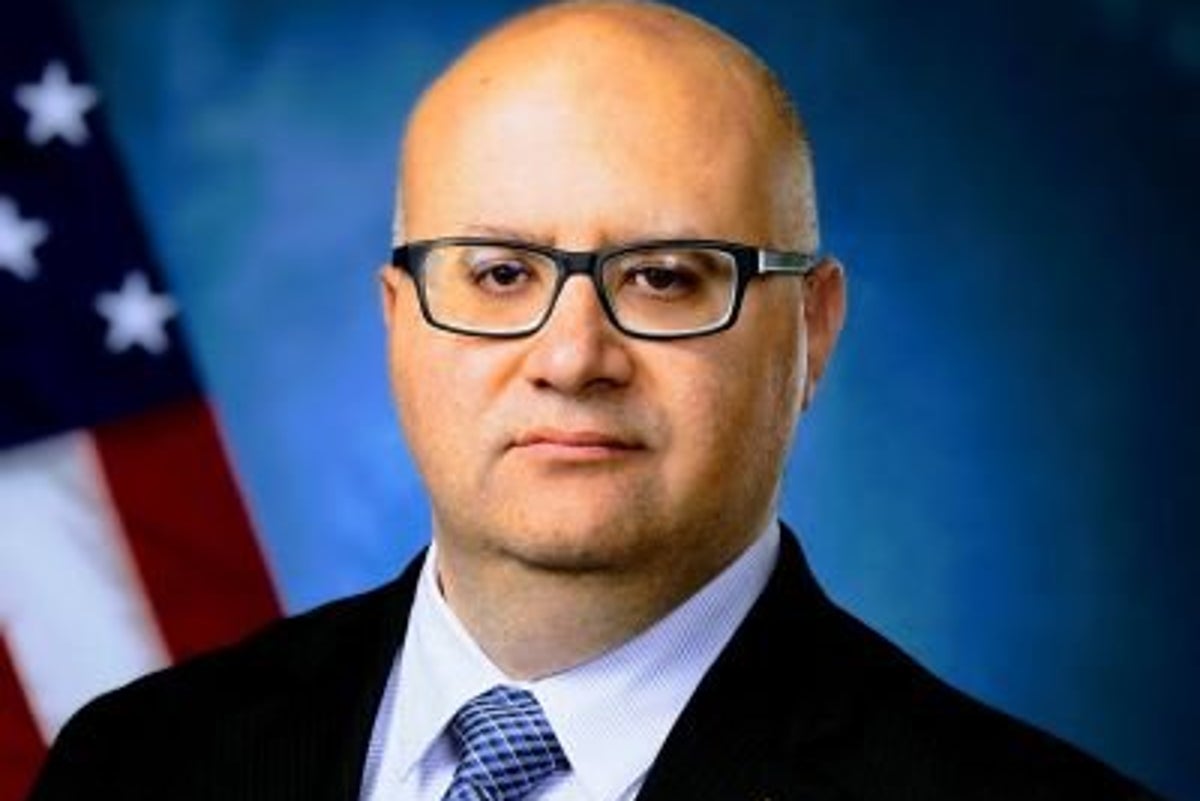
The media wants you to believe the latest crisis at the United States Secret Service is a standard internal disciplinary matter. Headlines scream about suspended communications chiefs, mysterious investigations by the Office of Professional Responsibility, and a sudden outbreak of administrative accountability.
It is a convenient fiction.
When top communications director Anthony Guglielmi and two other civilian staffers are abruptly stripped of their security clearances and locked out of their devices, this is not about a sudden bureaucratic epiphany regarding workplace etiquette. This is a containment strategy. The agency is not cleaning house; it is bleeding out from information control failures, and the communications office is the designated scapegoat for a systemic hemorrhage.
Look past the sanitized agency statements. Examine the operational reality.
The Leak Panic Behind The Curtain
The lazy consensus in mainstream reporting treats this suspension as an isolated administrative event. That perspective ignores the intense operational friction building inside federal protective details over the last year.
Consider the sequence of events leading up to this moment. Over the summer, federal investigators launched intense leak probes into high-stakes movements, including security maneuvers surrounding executive travel in Turkey and friction points on Vice President JD Vance's protective detail. Sensitive operational details regarding travel logistics, aircraft switches, and internal security friction kept bleeding into the press.
When state secrets or embarrassing operational friction leak consistently, executive leadership faces a binary choice: fix the operational culture or punish the people whose job it is to interface with the journalists receiving the leaks. Bureaucracy always chooses the latter.
Communications personnel in high-profile federal agencies sit at the most dangerous intersection in Washington. They are tasked with spinning institutional failure while being entirely cut out of tactical decision-making. When operational details regarding protectee movements become public, the agency's internal security apparatus does not hunt down tactical operatives; they look at call logs, messaging histories, and media contacts of the public affairs office.
The Myth Of Agency Accountability
For years, I have watched federal agencies use administrative leave as a velvet-glove firing mechanism to appease congressional committees. When an agency faces continuous existential embarrassment—ranging from historical security failures in Butler, Pennsylvania, to ongoing threat escalations—the pressure valve has to blow somewhere.
Public relations chiefs make ideal lightning rods. They are non-law enforcement personnel embedded in a hyper-paramilitary culture. They lack the institutional tribal protection of sworn special agents. When executive management needs to prove to the White House and oversight committees that heads are rolling, they sacrifice the press office. It sends a superficial signal of aggressive internal policing without disrupting the actual operational units executing field details.
To understand how Washington handles institutional failure, imagine a scenario where a commercial airline experiences repeated structural engine fires. Instead of overhauling the engineering department, the airline fires the corporate communications team for issuing defensive statements. It alters nothing about the mechanical failure, but it changes the headline.
That is precisely what is happening inside the Office of Professional Responsibility right now.
The Real Crisis Is Information Bleed
The obsession with "misconduct" masks the actual pathology destroying the Secret Service: an absolute collapse of internal trust.
When agents and staffers feel compelled to talk outside official channels, it signals that the chain of command is broken. Protective details operate on absolute, unquestioned vertical loyalty. Once operational security breaks down to the point where travel arrangements and internal security debates become front-page news, the agency stops functioning as a secure protective unit.
Suspending a top spokesman does not plug a leak. It only ensures that the next leak will be more defensive, more covert, and even harder to trace. The agency is treating a symptom of systemic rot as a standalone disciplinary infraction.
Stop buying the narrative that a paper-pushing misconduct inquiry explains the sudden paralysis of an elite federal communications apparatus. The administration is not investigating a mystery. They are burying a panic.
The next time an agency claims it is upholding the highest standards of integrity through sudden, unexplained high-level suspensions, check who is actually losing their job. It is never the people making the operational errors. It is always the people caught standing too close to the truth when the walls finally cave in.