The room in the Jaffna Magistrate’s Court smells of old paper, damp concrete, and the salt air drifting in from the lagoon. For more than a decade, this room has held the weight of a heavy, suffocating silence. It is the silence of mothers waiting for sons who went out for cigarettes and never walked back through the front gate. It is the silence of a country trying to look at its past without screaming.
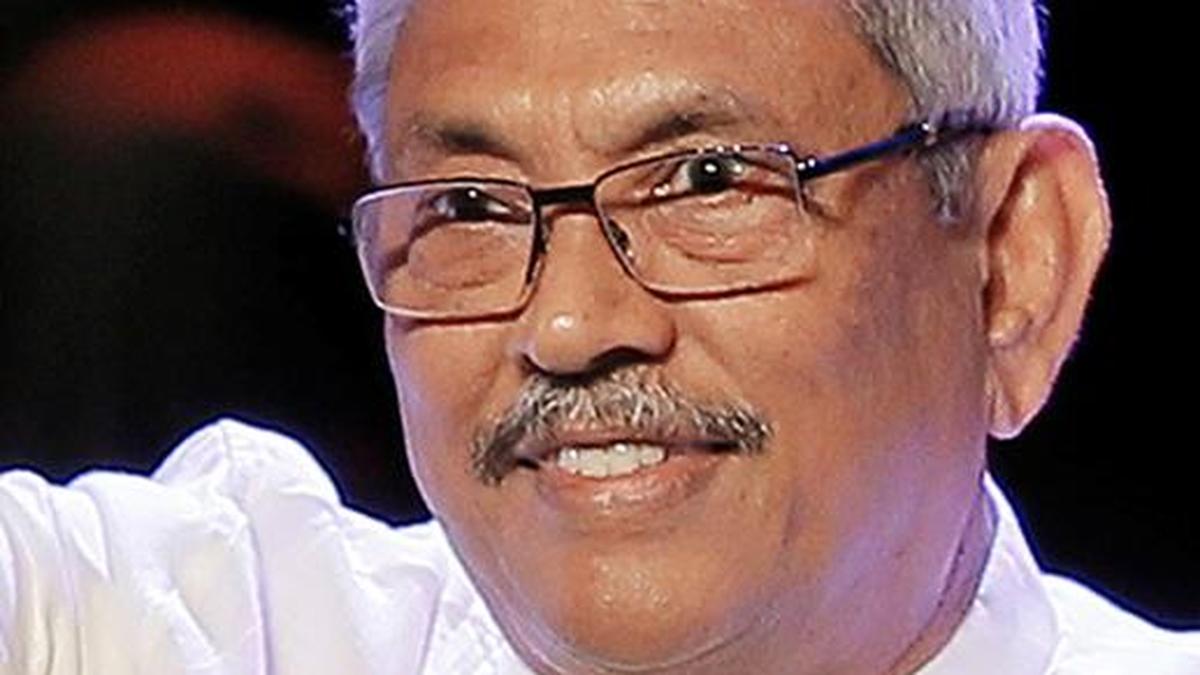
On a routine Tuesday, that silence shifted. The court made a decision that sounds, on its surface, like a dry procedural update: Gotabaya Rajapaksa, the former President of Sri Lanka, would be allowed to give his testimony via a video link. He would not have to sit in the witness box. He would not have to look into the eyes of the people who have spent fourteen years asking him a single, devastating question.
He would be a face on a screen.
To understand why a pixelated video feed in a provincial courthouse matters, you have to understand the geography of grief in Sri Lanka.
The Weight of a Missing Name
In December 2011, the civil war had been over for two years. The tropical sun was hot, and the northern peninsula was settling into a fragile, nervous peace. Lalith Kumar Weeraraj and Kugan Muruganathan were not soldiers. They were political activists, the kind of people who believed that peace without accountability was just a different kind of war. They were organizing a press conference to highlight the plight of families whose loved ones had disappeared during the final, bloody stages of the conflict.
Then, they vanished.
They were last seen in Avariwatta, near Jaffna. No ransom notes arrived. No bodies were found. They were simply swallowed by the landscape. In Sri Lanka, this phenomenon has a name that chills the blood: the white van syndrome. For years, unmarked vans would pull up, men would be bundled inside, and the world would move on, minus one human being.
Consider the reality of a disappearance. A death has a funeral. It has a grave. It has a finite, terrible ending that allows the living to begin the long, agonizing process of healing. A disappearance is a ghost that sits at the dinner table every night. It is a mother keeping a plate warm for a decade. It is every knock on the door causing a heart to stop.
Lalith’s father, Arumugam Weeraraj, did what any father would do. He refused to let his son become a footnote. He filed a habeas corpus petition, a legal demand for the state to produce the body or the person of his son.
At the time of the disappearances, Gotabaya Rajapaksa was not the president. He was the wartime Defense Secretary, a man whose very name commanded absolute authority. He controlled the military, the police, and the intelligence apparatus. If two prominent activists disappeared from a heavily militarized zone, the logic of the court petition was simple: the man at the top of the command chain had to know something.
But power has a way of moving the goalposts.
The Distance of Power
For years, the legal battle dragged on, a slow-motion bureaucratic crawl that wore down the families more than any physical threat could. Rajapaksa ascended to the presidency in 2019, wrapping himself in the immunity of the highest office. The court could not touch him then. The law protected the palace.
Then came 2022.
The economy collapsed. Fuel lines stretched for miles. People starved, and anger boiled over into the streets of Colombo. The palace was stormed. In a twist of cinematic irony, the powerful president was forced to flee his own country on a military jet, resigning from abroad. The immunity vanished. The man who once ruled by decree was suddenly a citizen again, vulnerable to the subpoenas of the courts he once overshadowed.
The Jaffna Magistrate’s Court summoned him to testify. The families believed that, finally, they would see him stand in the same air they breathed. They would watch him take an oath. They would see if his hands shook.
Instead, his legal team argued that it was too dangerous. They cited security concerns. They painted a picture of a former leader under threat, a man for whom a trip to the north of the island was a logistical and physical gamble.
The court agreed. The magistrate ruled that Rajapaksa could testify online from his residence in Colombo.
The decision is a technical victory for the legal process—after all, the testimony is being secured—but it feels like a profound emotional defeat for those sitting in the gallery. It creates a digital buffer zone. It allows a man accused of overseeing an era of terror to participate in the reckoning of that terror from the comfort of an air-conditioned room, hundreds of miles away.
The Architecture of the Virtual Witness
The problem with technology in the pursuit of justice is that it flattens human emotion.
When a witness sits in a courtroom, justice is visceral. The judge can hear the catch in the throat. The lawyers can watch the sweat bead on the forehead. The public can witness the hesitation before an answer. There is an undeniable power in physical presence; it forces an acknowledgement of shared humanity.
When you move that interaction to a Zoom call or a Microsoft Teams link, something vital is lost. The witness becomes a character on a television. If the questions get too difficult, there is always the specter of a bad connection, a frozen screen, or a muted microphone. The technology that connects the modern world also serves as a perfect shield for those who wish to remain distant.
Imagine sitting in that Jaffna courtroom. You have saved money for months just to afford the bus fare to get there. Your shoes are worn thin from walking the corridors of justice for fourteen years. You look up at a monitor, and there is the man you believe holds the key to your son’s fate, looking back at you through a camera lens. He is in a secure, private space. You are in a crowded, humid room surrounded by armed guards.
The power dynamic has not been leveled. It has just been digitized.
The Unresolved Ledger
Sri Lanka is a nation built on unresolved ledgers. The government’s own data acknowledges that tens of thousands of people remain missing from the decades-long conflict. Each one is a story. Each one is a family frozen in time.
The case of Lalith and Kugan is not unique because they disappeared; it is unique because their families refused to let the system forget them. They pushed the legal machinery until it creaked and groaned, forcing it to call one of the most powerful men in modern South Asian history to account.
But what does accountability look like when it arrives via a fiber-optic cable?
The legal team representing the missing activists argued passionately against the online testimony. They knew that the medium changes the message. They knew that allowing a former president to avoid the physical courtroom sets a precedent. It suggests that some citizens are still too important to face the raw, uncomfortable reality of the law.
The state, however, views it as a pragmatist’s compromise. The court gets its statement. The legal box is checked. The case moves forward by one millimeter.
But justice is not just about checking boxes. It is about validation. It is about the state looking its citizens in the eye and acknowledging their pain.
The sun begins to set over the Jaffna lagoon, casting long, dark shadows across the concrete floors of the courthouse. The lawyers pack up their briefcases. The families walk out into the evening heat, their faces lined with a exhaustion that no court ruling can alleviate.
The date for the online testimony is set. The screens will be turned on. The connection will be established.
A mother will look at a monitor, searching the digital layout for a flicker of truth, while a former president looks back from the safety of a world she will never be allowed to enter. The trial will continue, but the distance between the powerful and the powerless remains exactly as wide as it has always been.